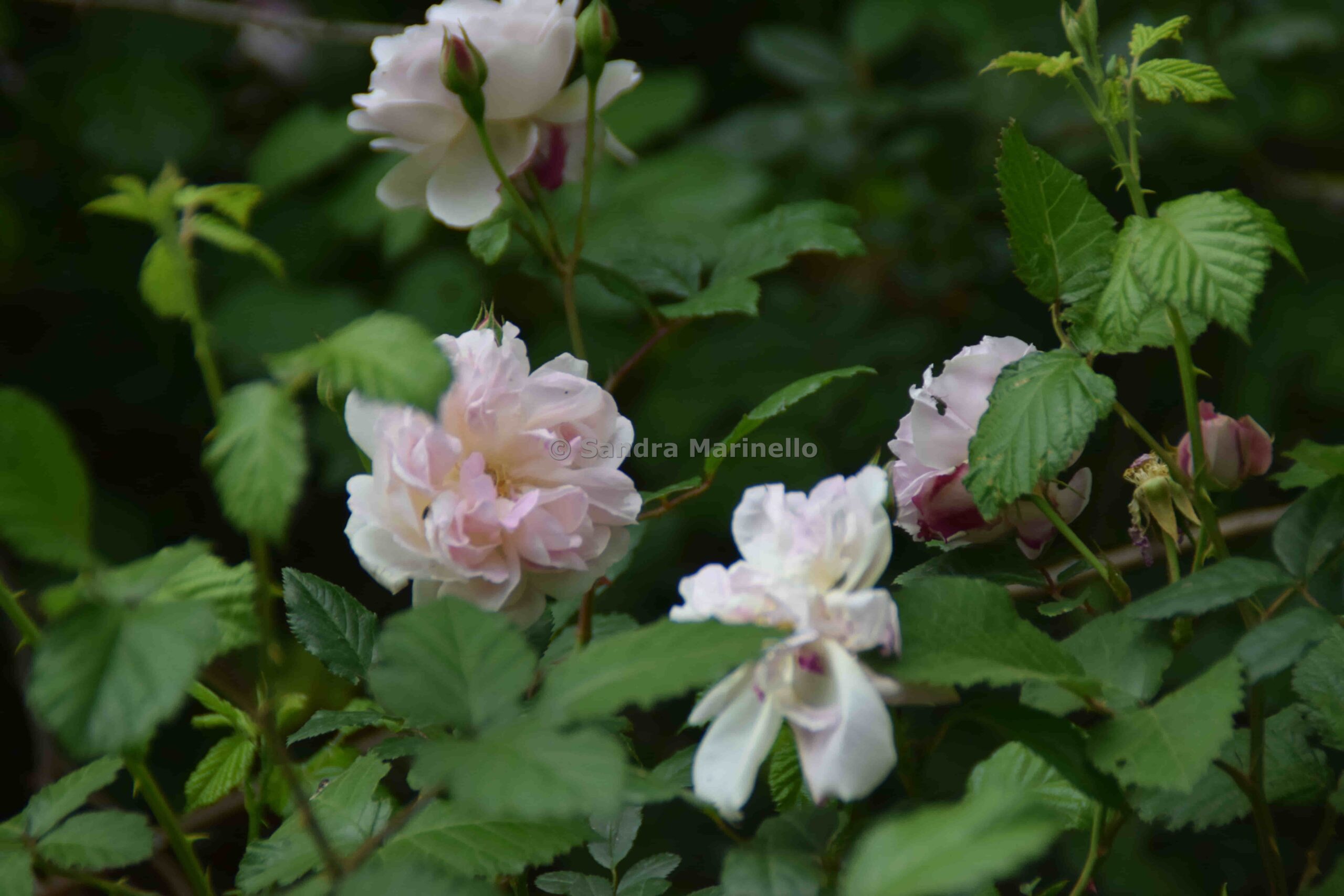


Explore the flora
Nature’s hidden treasures
The Path of Beauty is enriched by the presence of a wide range of plant species. Discover the secrets of the local plants, their uses in the area, and let yourself be embraced by the peace and beauty that surround you.
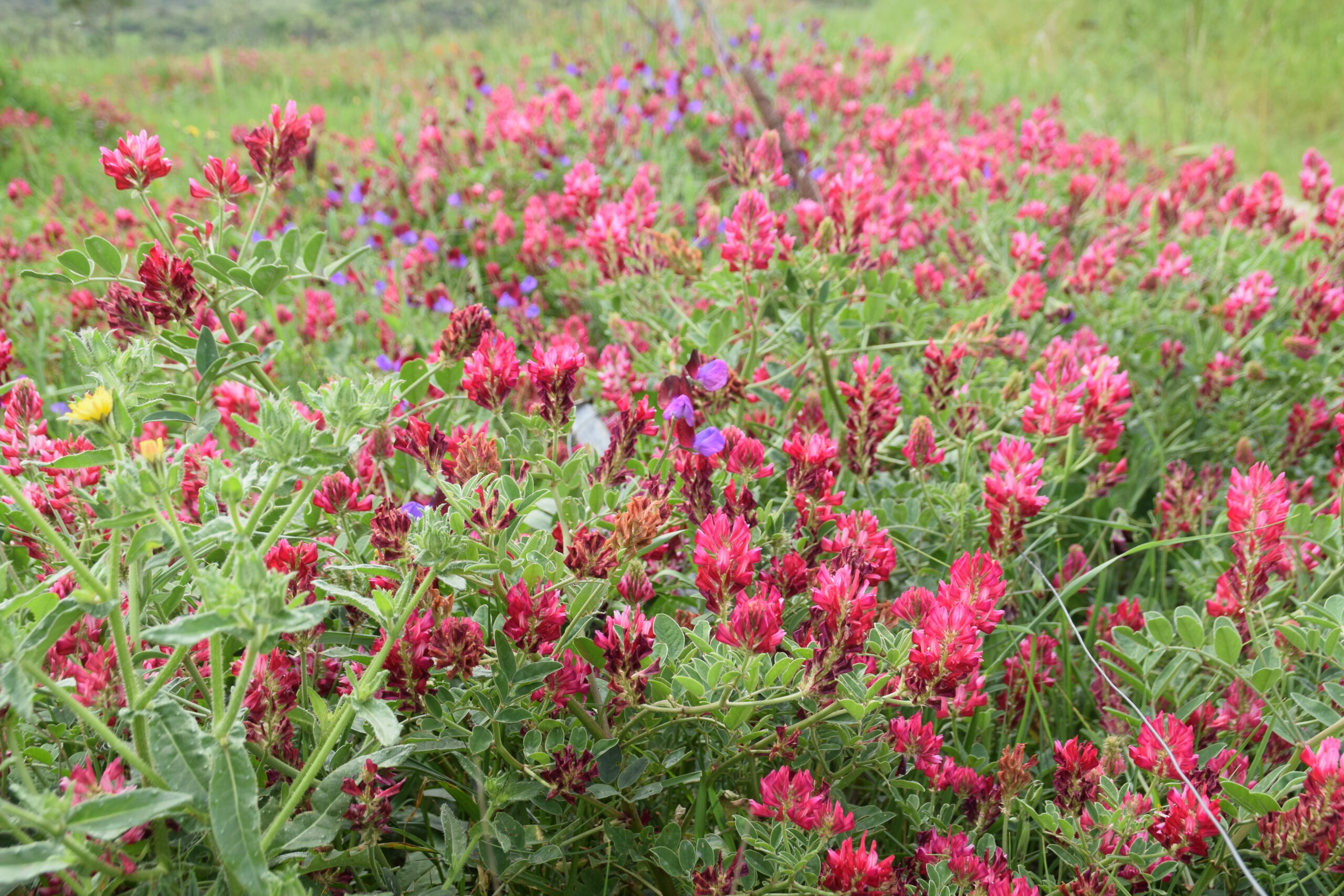
Sprouts
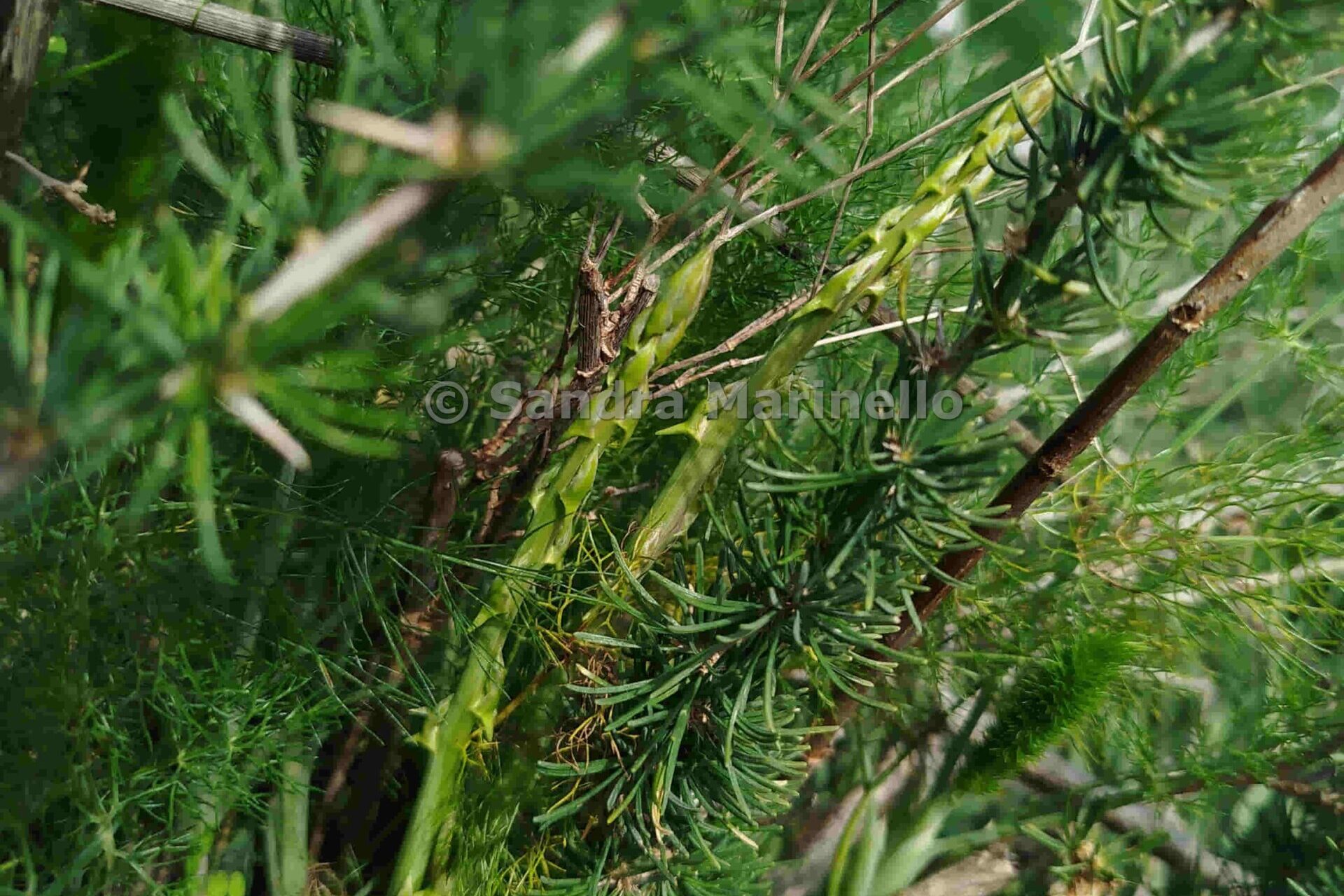
Wild asparagus (Asparagus acutifolius)
Description: Thorny perennial plant with thin green stems, from which tender shoots are harvested in spring.
Period: Shoot harvesting from February to April; flowering in late summer.
Habitat: Scrublands, open woods, and dry environments.
Toxicity / Uses: The shoots are edible, highly sought after, and consumed in omelettes or soups. No known toxicity.
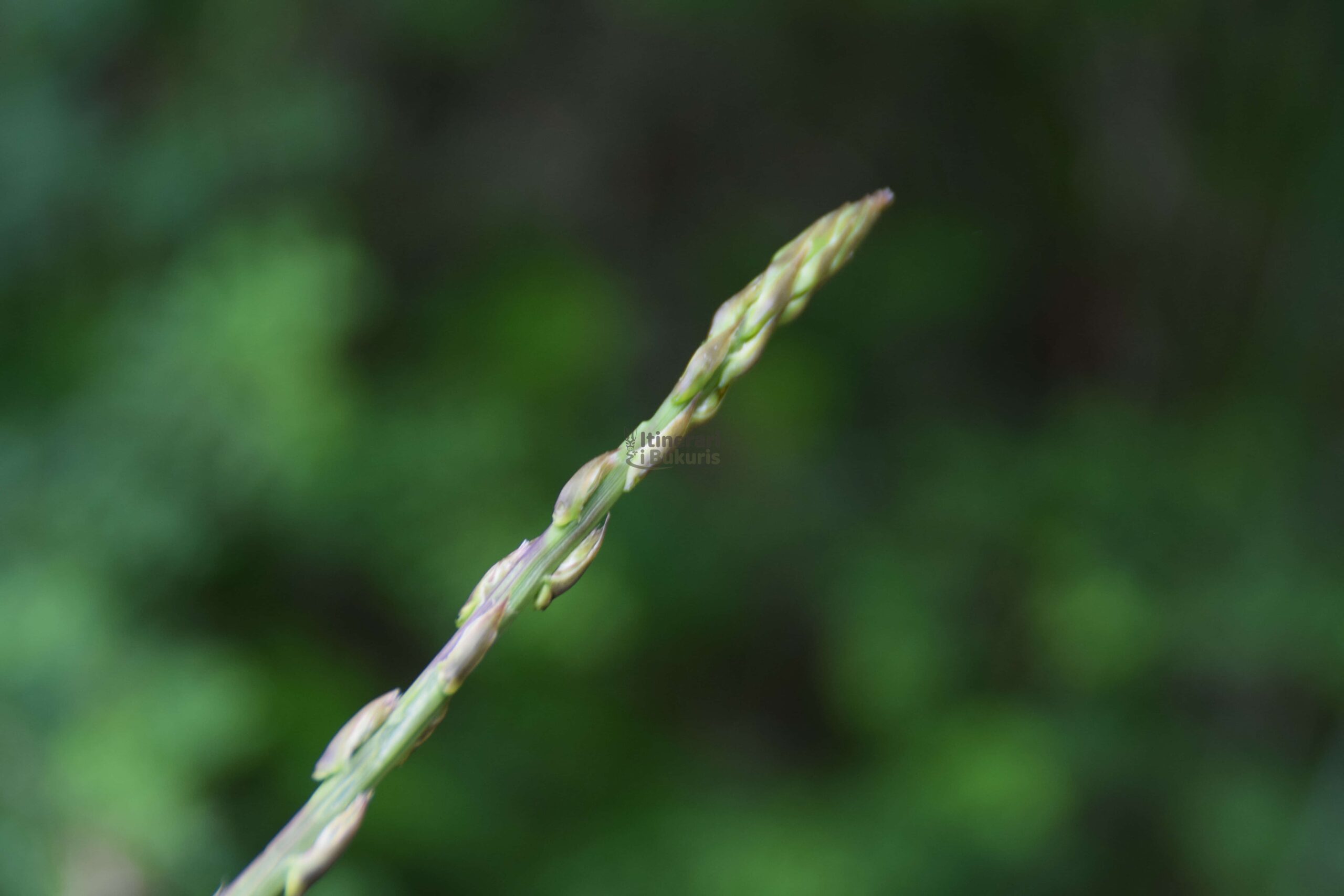
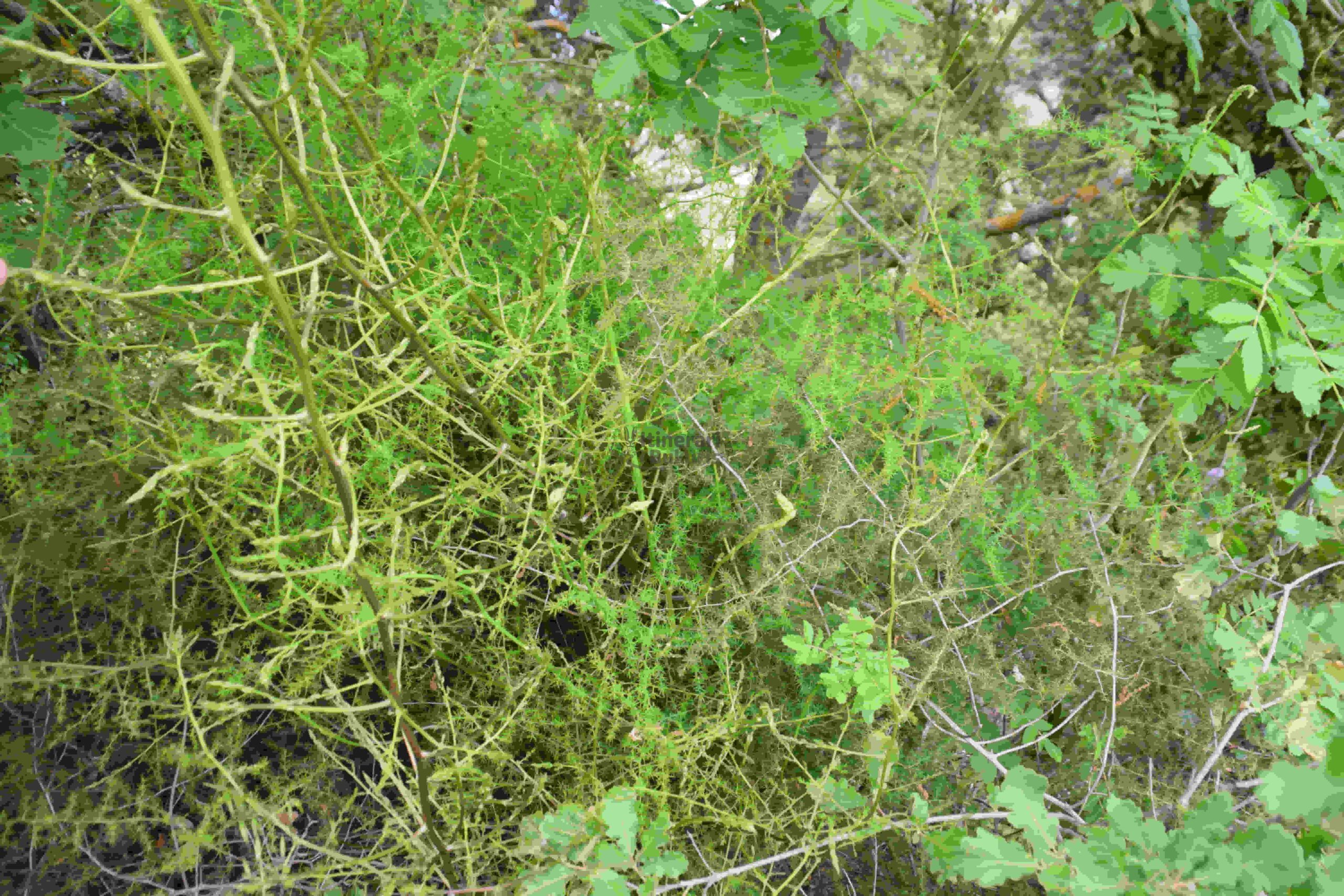
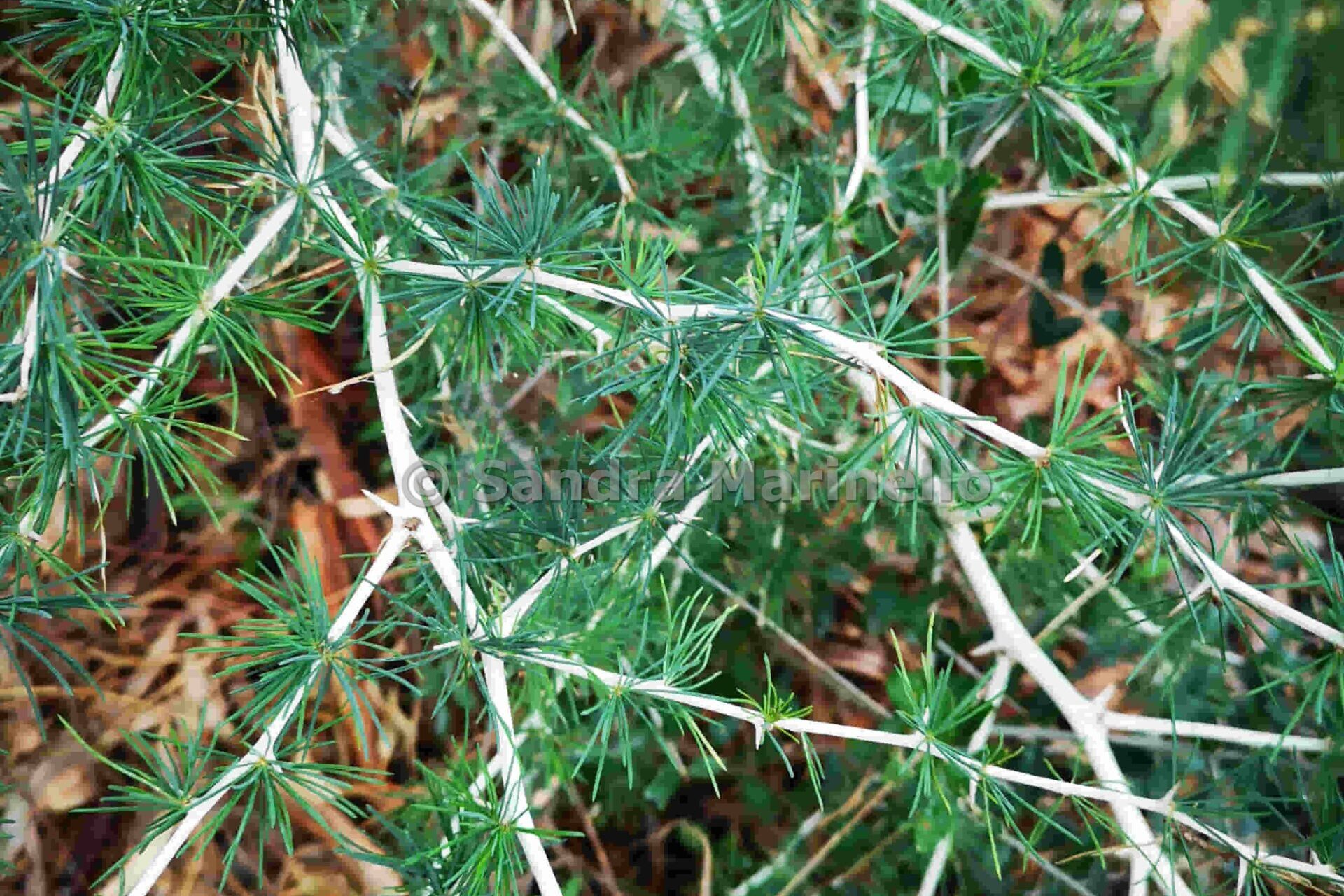
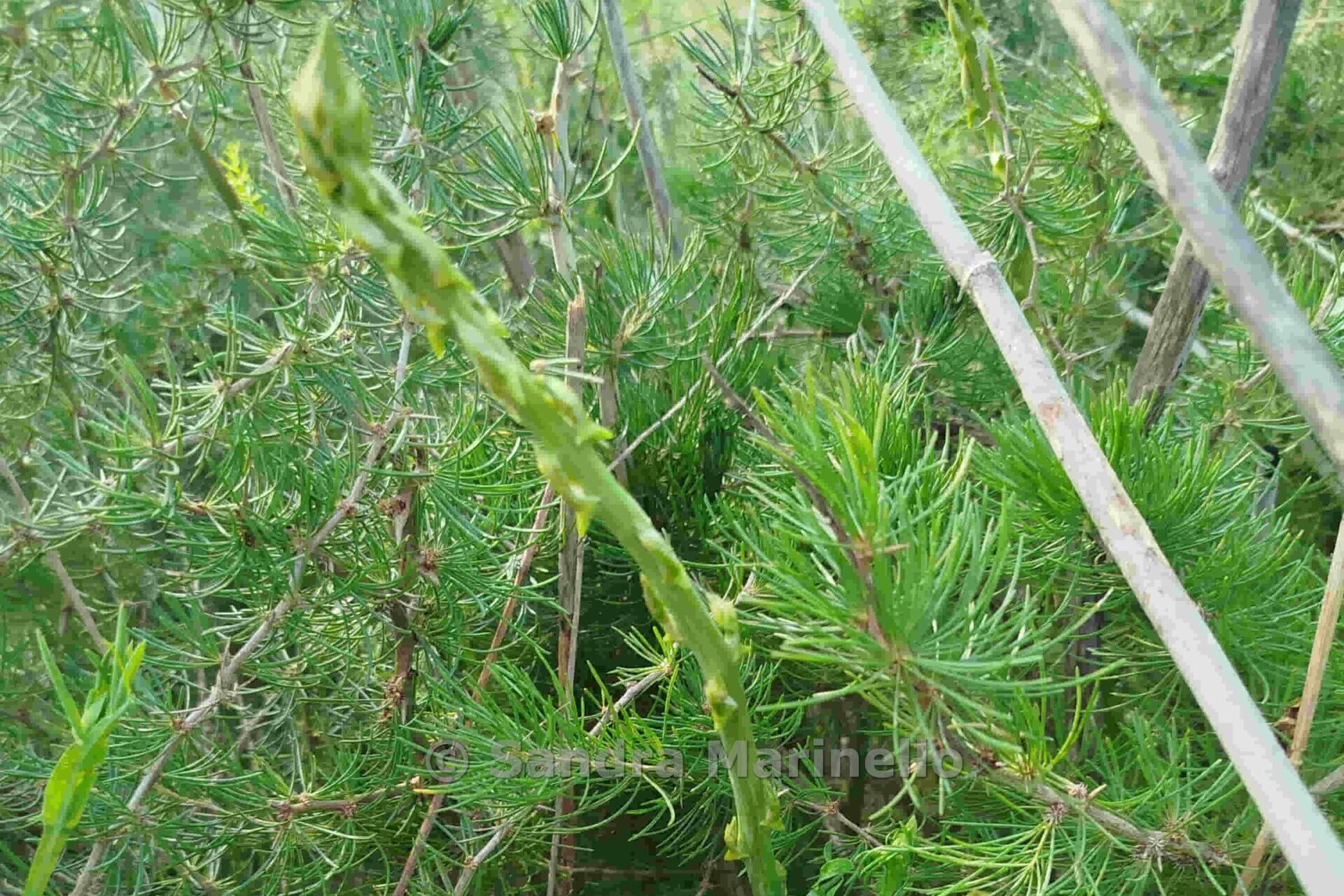
White asparagus (Asparagus albus)
Description: Evergreen shrub with thin, spiny branches. The shoots, less known than those of the acutifolius species, are also edible.
Period: Summer flowering; fruiting in autumn.
Habitat: Arid areas, garrigue, and rocky slopes of the Mediterranean scrub.
Toxicity / Uses: Edible shoots, although less commonly harvested. Non-toxic plant.
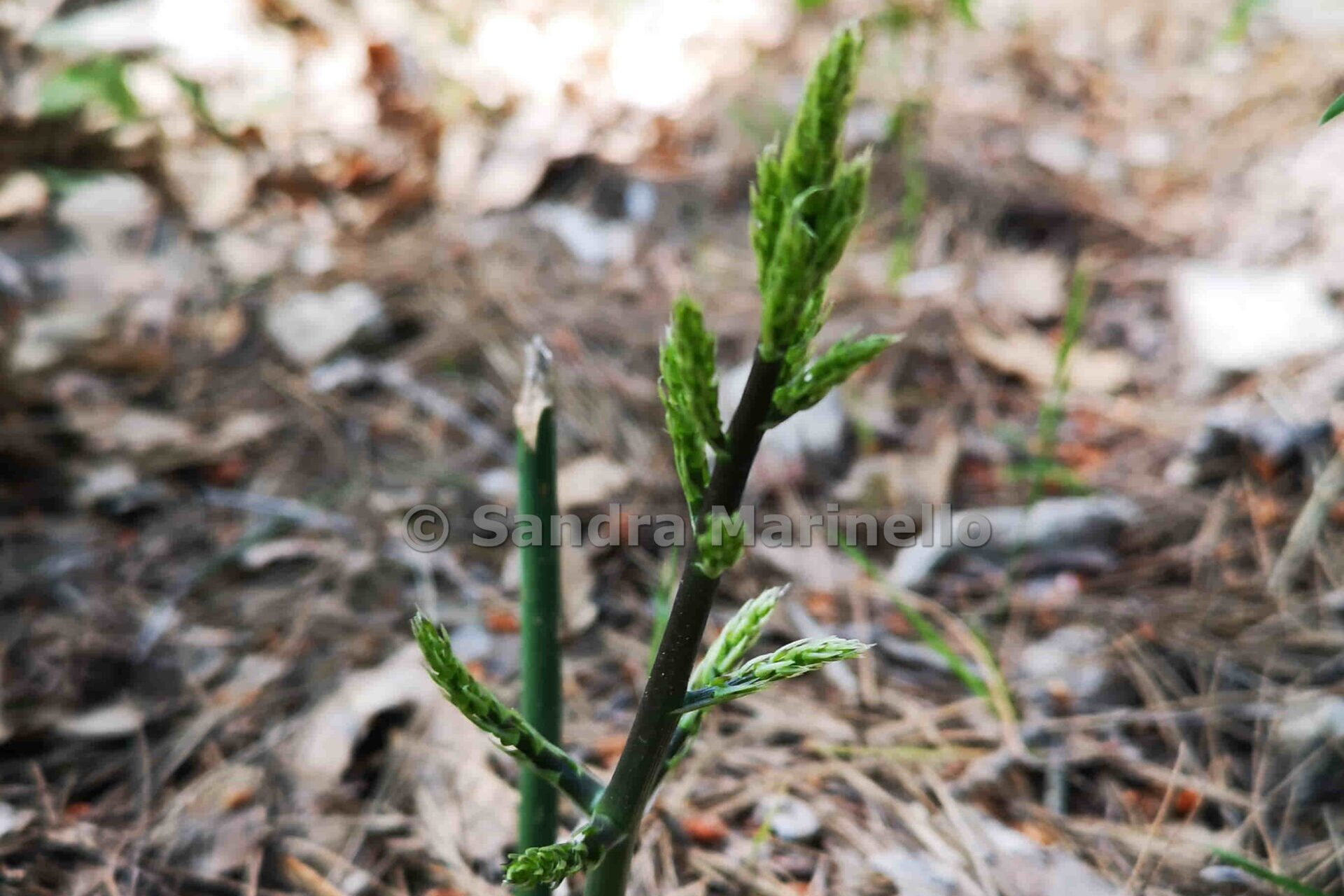
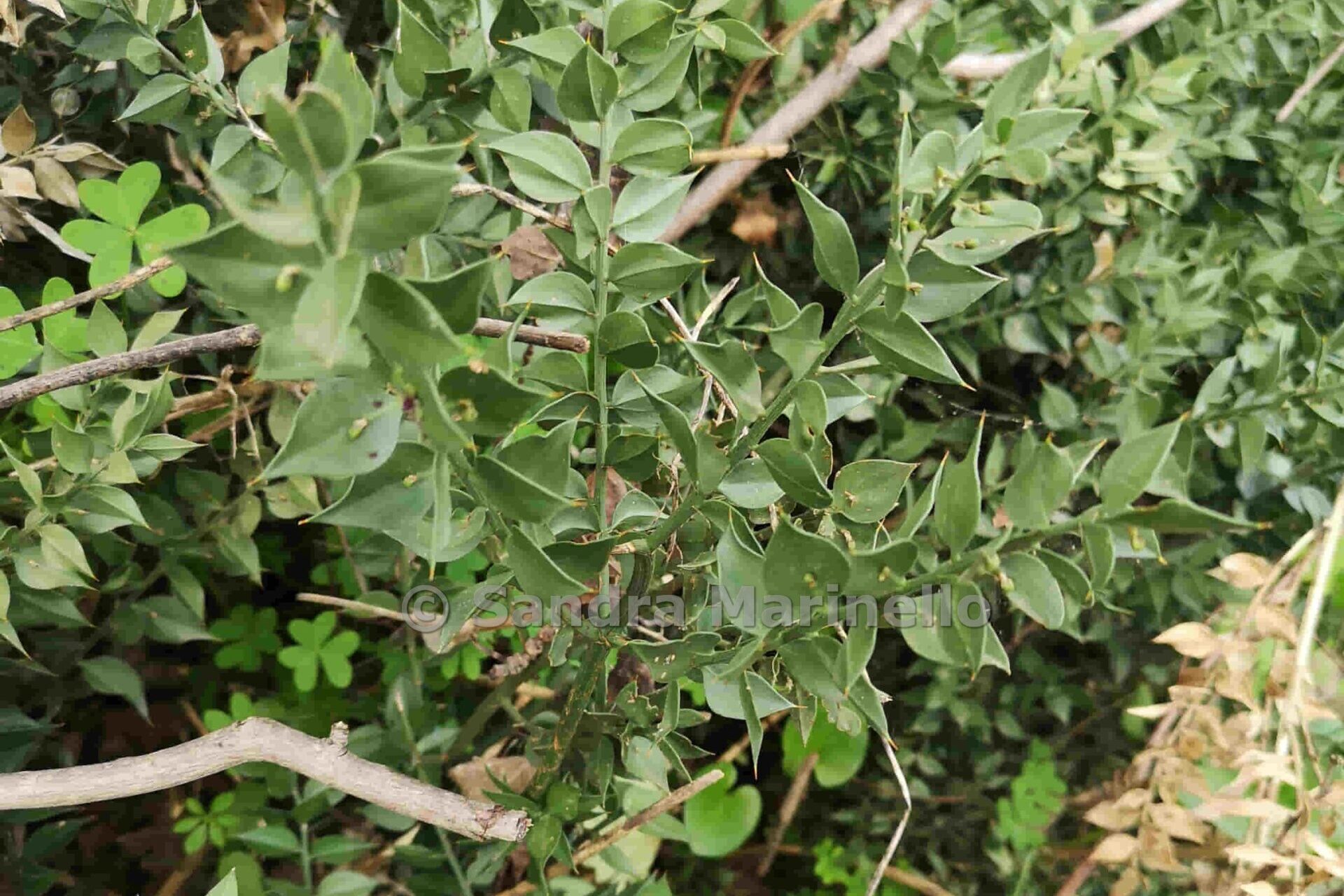
Butcher’s broom (Ruscus aculeatus)
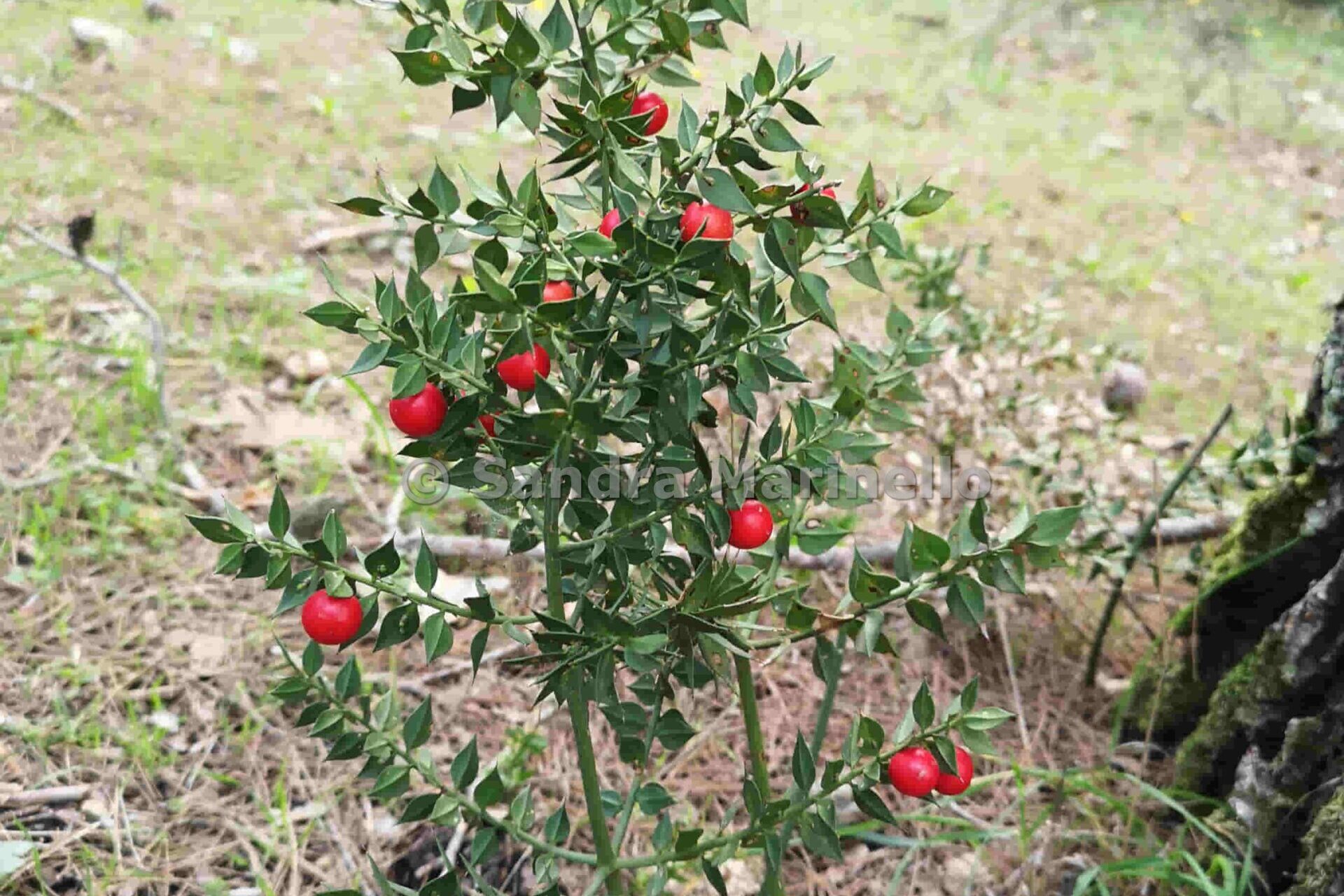
Description: Evergreen shrub with a low, compact habit, featuring stiff and prickly “leaves” (actually cladodes). The fruits are very showy red berries.
Period: Flowers in autumn-winter; red fruits appear in winter and spring.
Habitat: Shady forests, Mediterranean scrub, and understory in hilly and mountainous areas.
Toxicity / Uses: The berries are mildly toxic if ingested. Young shoots are edible, similar to asparagus, and are traditionally harvested in spring for food use.
⚠️ The harvesting of butcher’s broom shoots or sprouts is regulated by Regional Law no. 10/2000, which sets a daily limit of 0.5 kg per person.
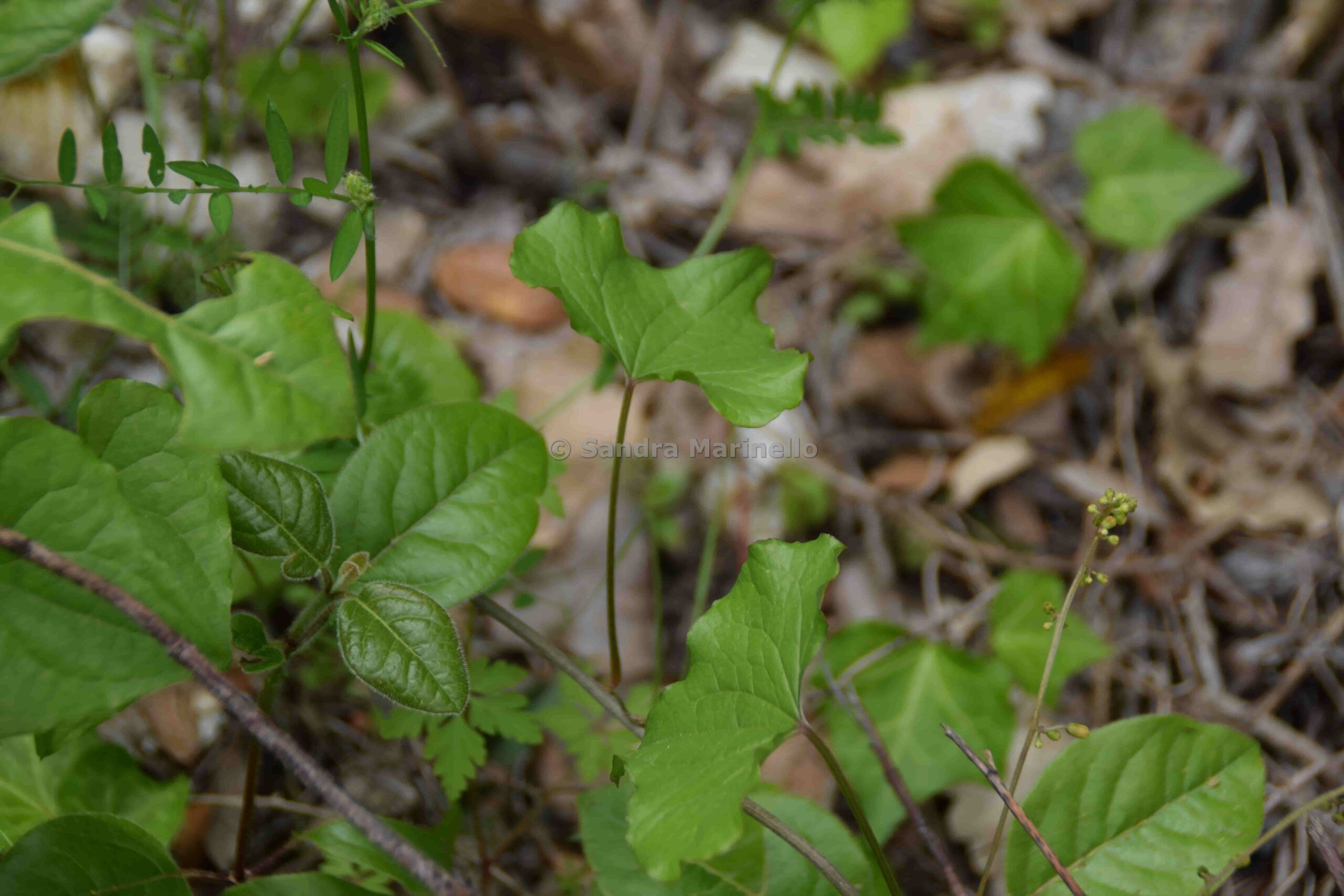
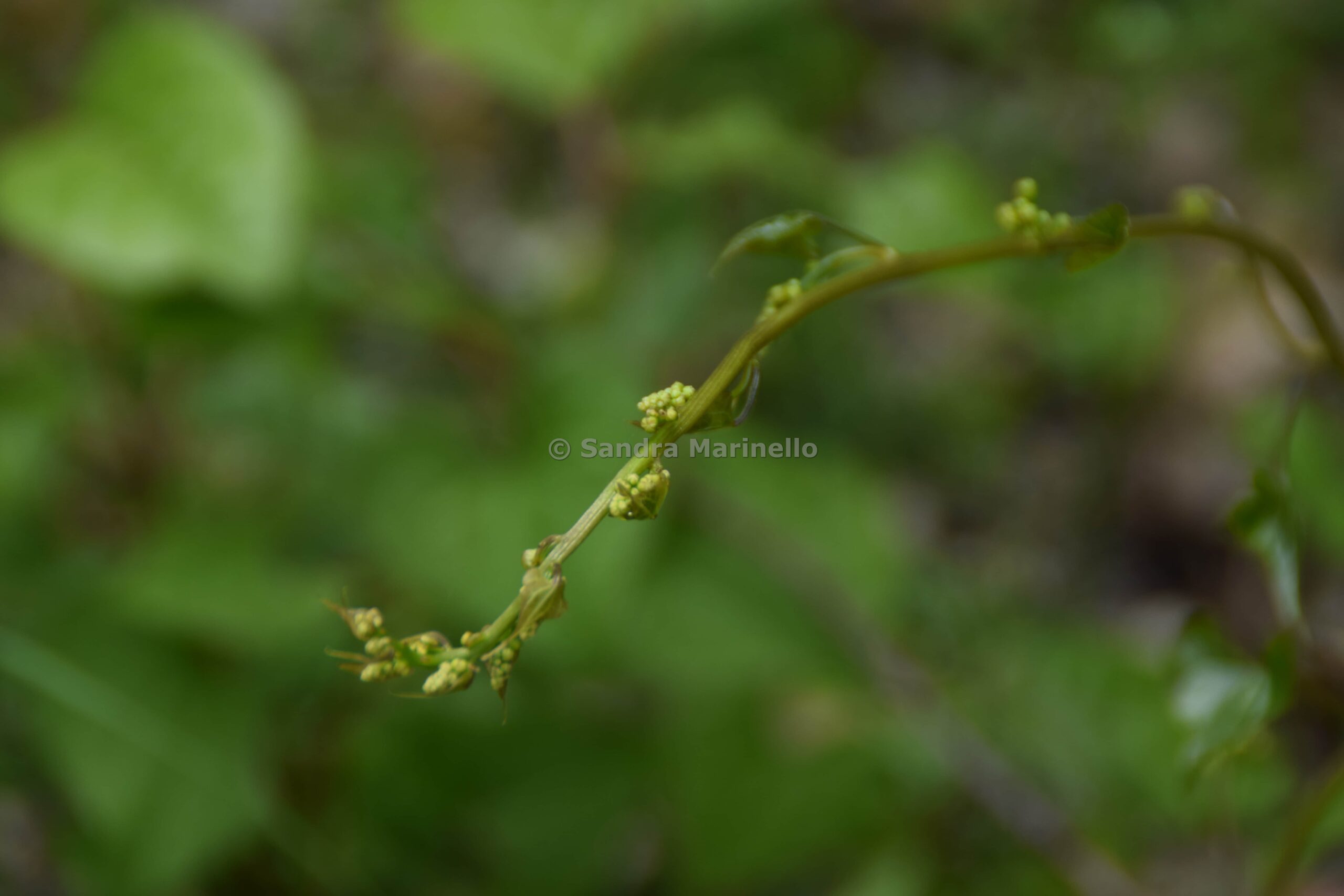
Tamaro (Dioscorea communis)
Description: Climbing plant with thin stems and heart-shaped leaves. The flowers are inconspicuous, and the plant produces clusters of poisonous red berries.
Period: Flowers in spring; fruits mature in summer and autumn.
Habitat: Hedges, forest edges, hilly areas with spontaneous vegetation.
Toxicity / Uses: The shoots are considered edible after cooking; the fruits are highly poisonous, and contact with the leaves can cause skin irritation.
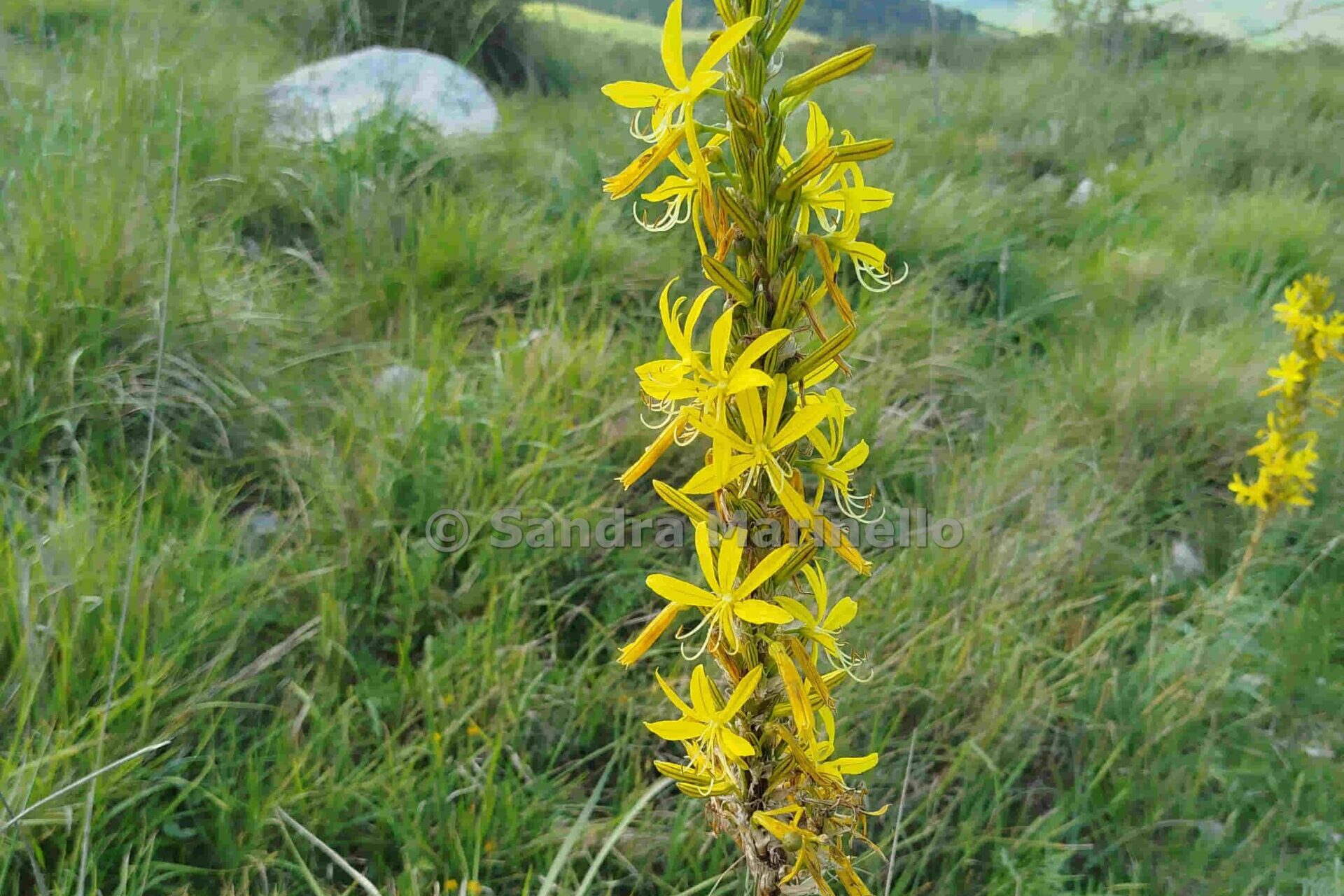
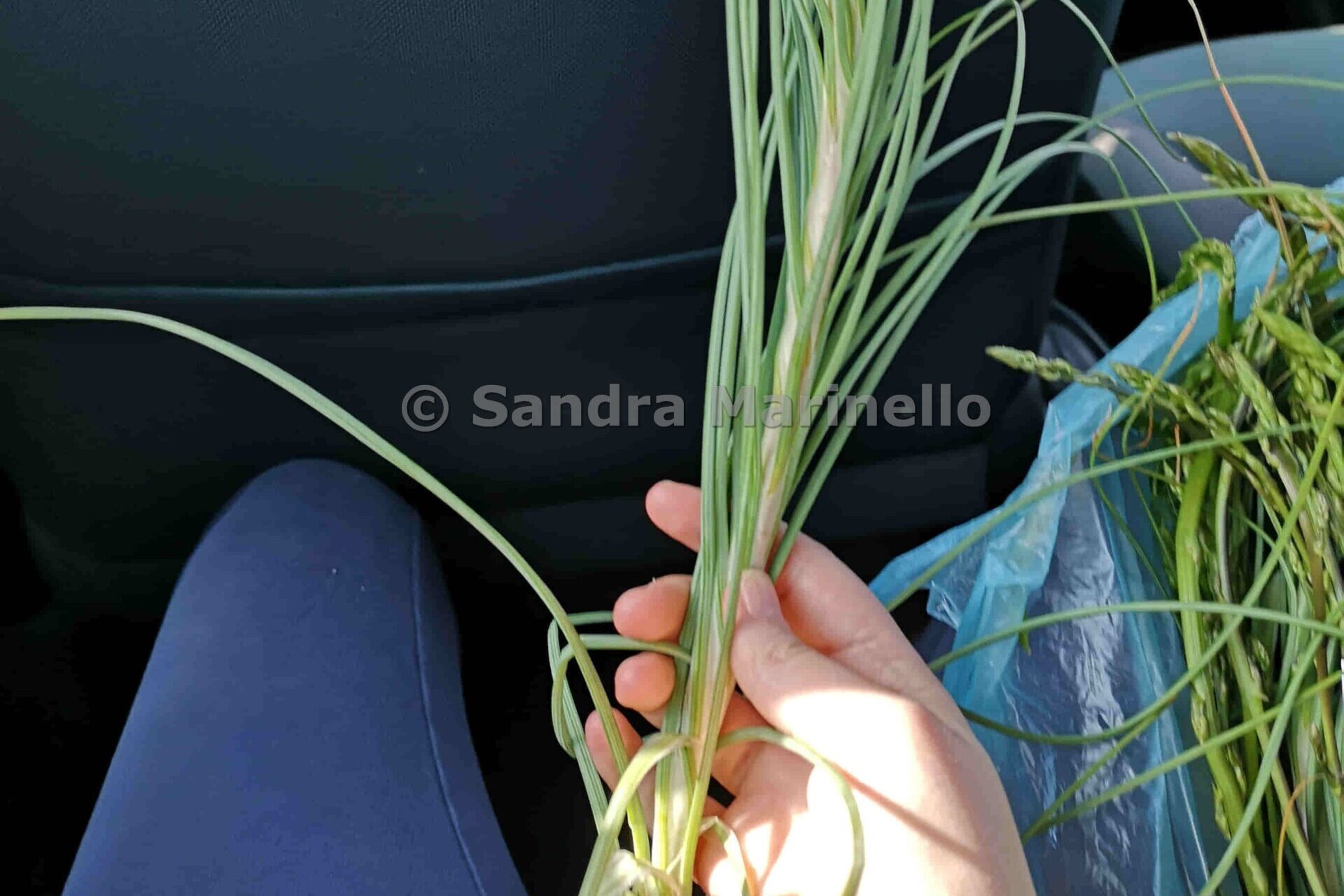
Asphodel (Asphodeline lutea)
Description: Herbaceous plant with tall yellow inflorescences and long, narrow leaves. One of the most striking species of late spring.
Period: Flowering from April to June.
Habitat: Dry meadows, hilly pastures, clearings.
Toxicity / Uses: Young shoots (before flowering) are edible after boiling, traditionally used as a spring vegetable. The root was historically used in folk medicine but is not recommended for food use.
Herbaceous plants
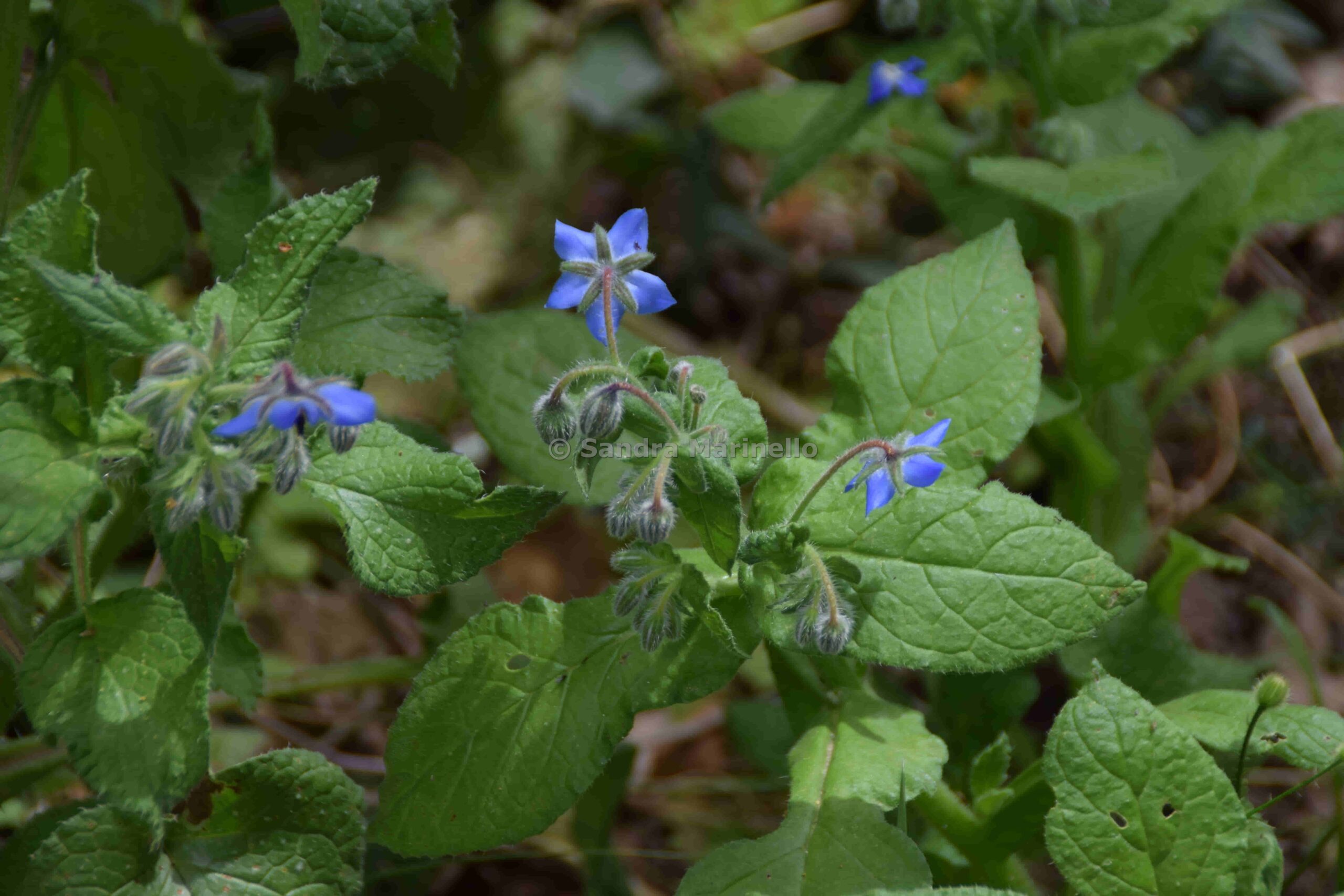
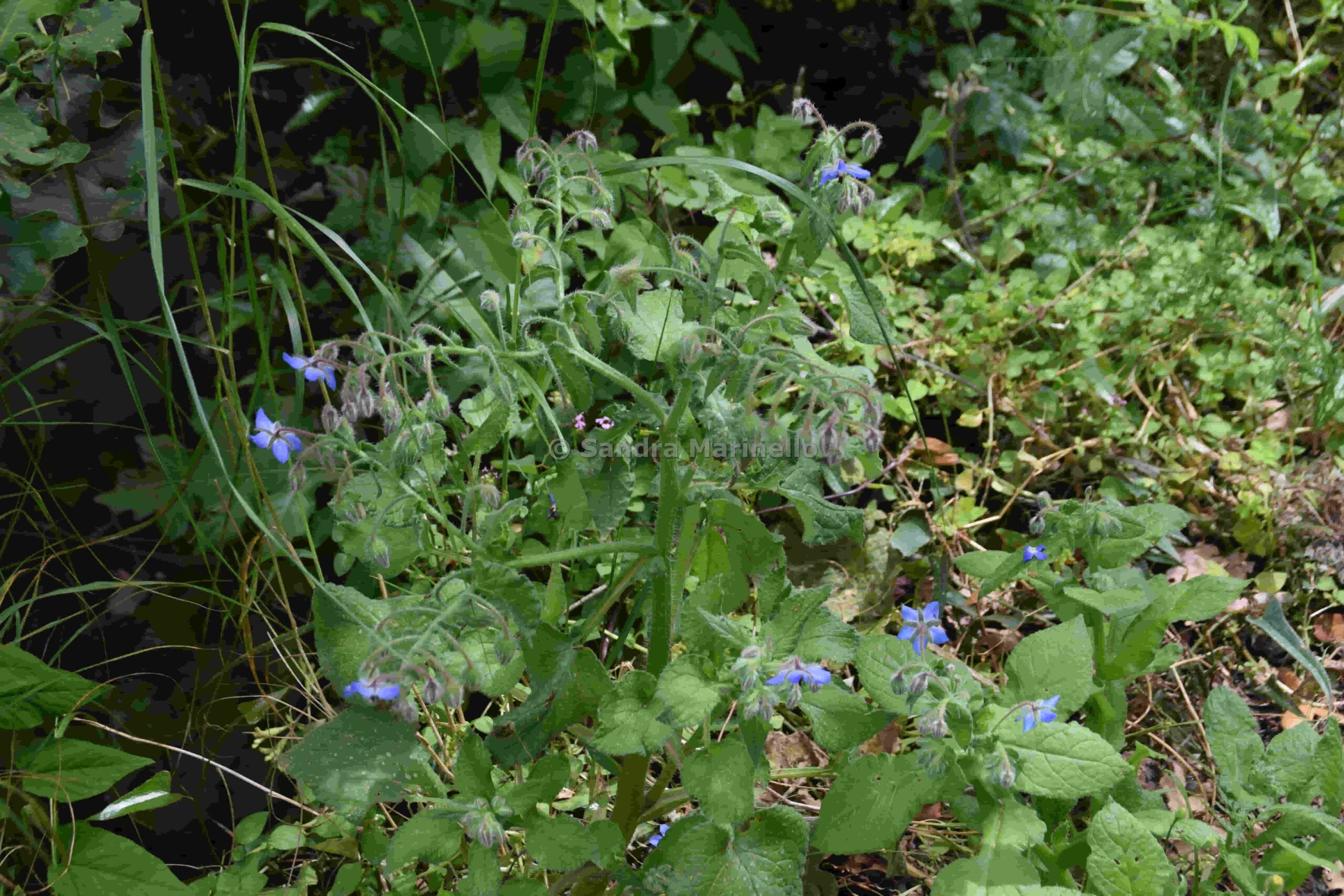
Borage (Borago officinalis)
Description: Annual herbaceous plant with hairy stems and leaves, and star-shaped blue flowers. Also known for culinary and medicinal uses.
Period: Flowering from March to September, depending on altitude.
Habitat: Wastelands, roadside edges, gardens, and cultivated fields.
Toxicity / Uses: Leaves and flowers are edible.
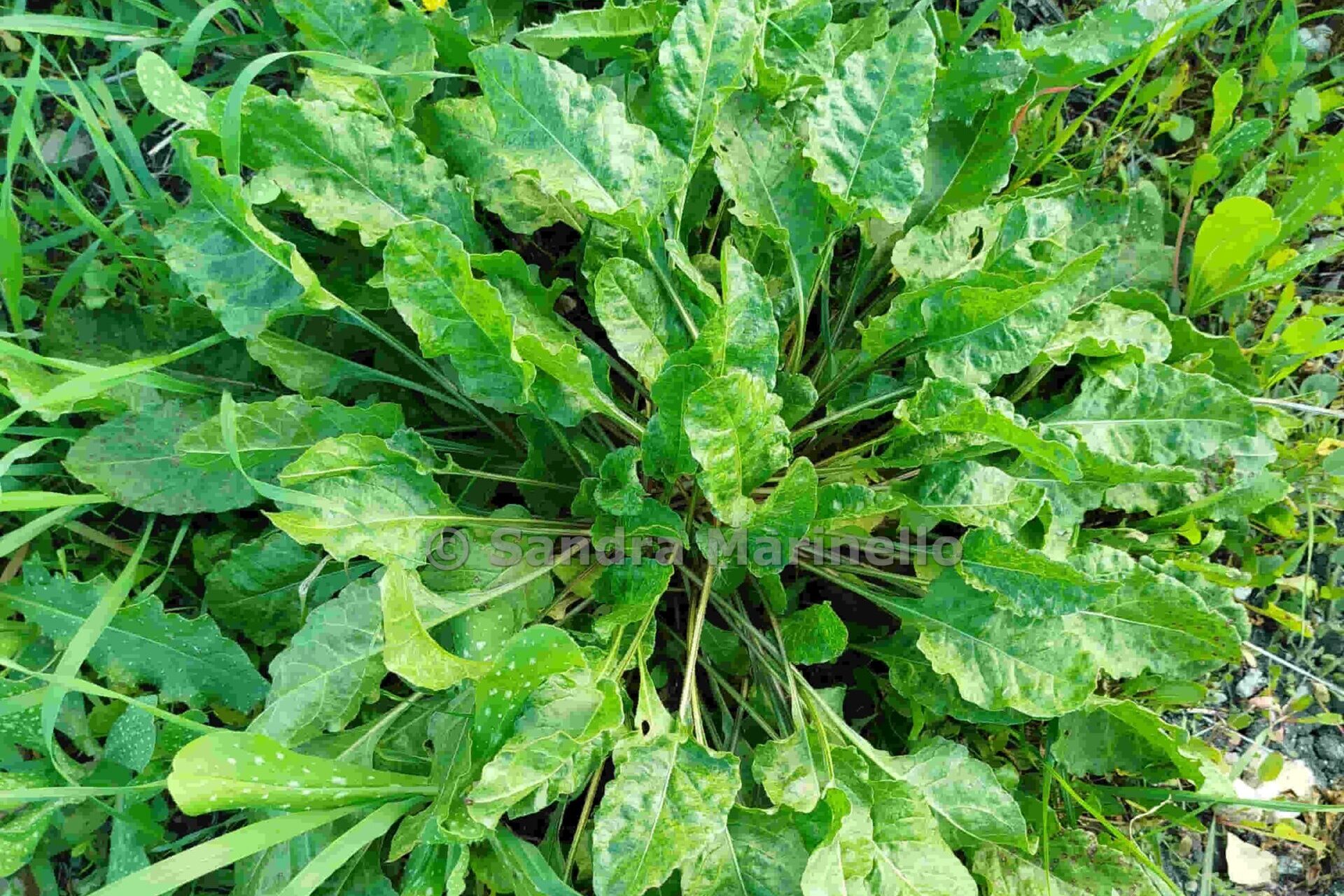
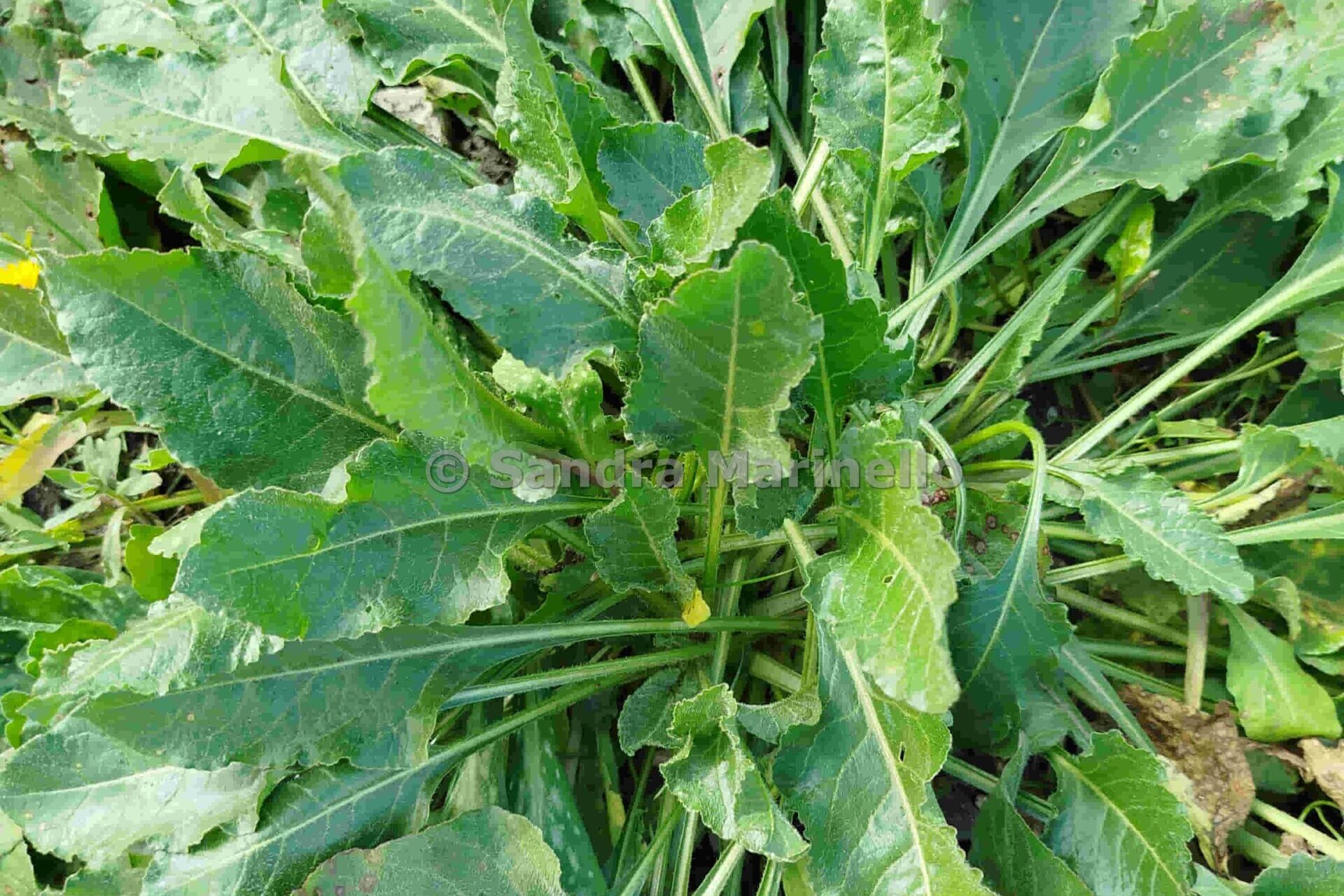
Common chard (Beta vulgaris)
Description: Herbaceous plant with broad, glossy leaves, sometimes reddish. It is the ancestor of cultivated chard varieties.
Period: Present all year round; flowering from May to August.
Habitat: Cultivated fields, edges, rich and well-drained soils.
Toxicity / Uses: Edible. Young leaves are harvested and eaten cooked, as a vegetable.
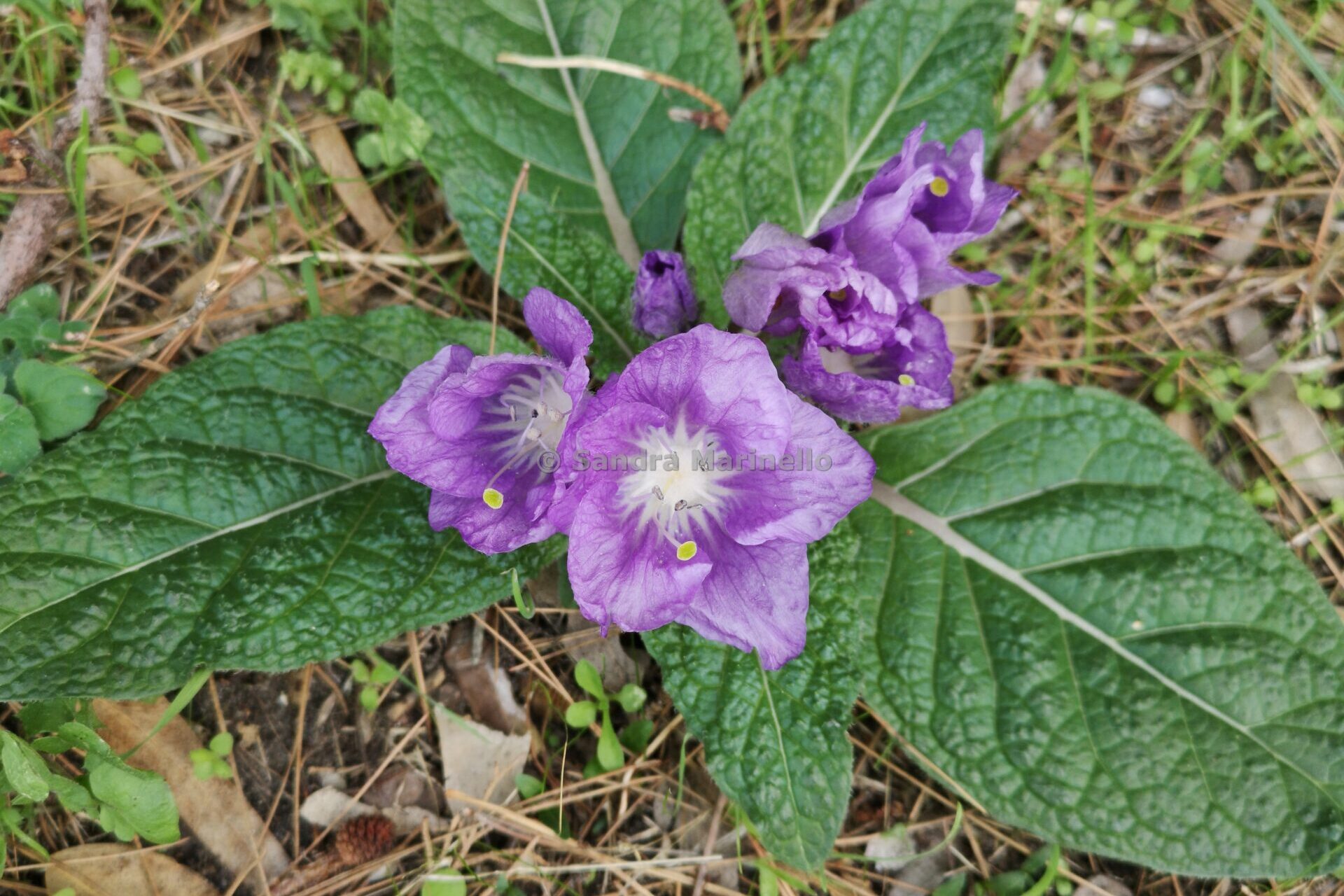
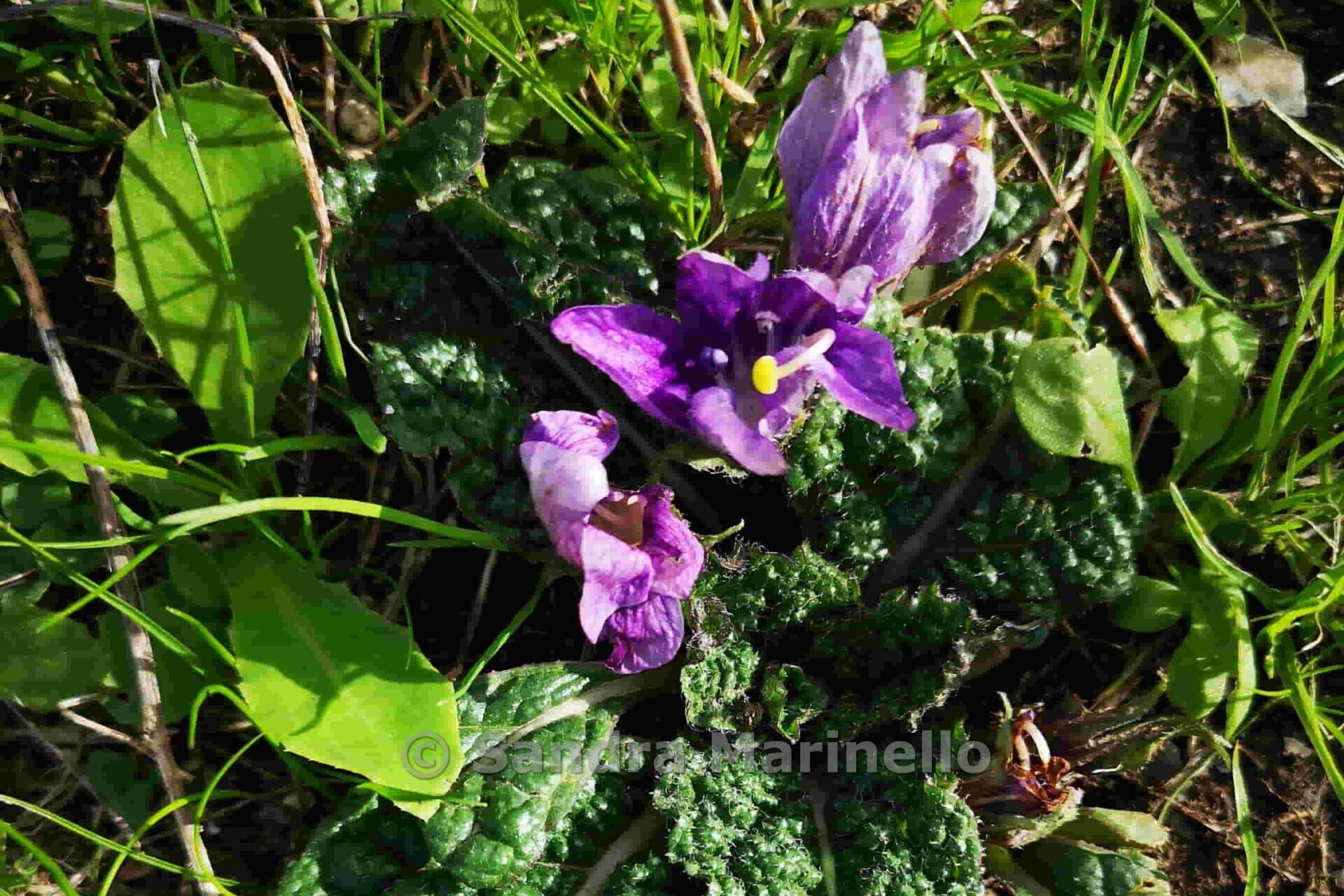
Mandrake (Mandragora officinarum)
Description: Low-growing herbaceous plant with broad basal leaves and violet flowers. Famous for its forked root and its history linked to magic and folk medicine.
Period: Flowers in autumn-winter; fruits appear in spring.
Habitat: Calcareous soils, dry meadows, path edges.
Toxicity / Uses: Extremely toxic in all parts, especially the root, which contains alkaloids.
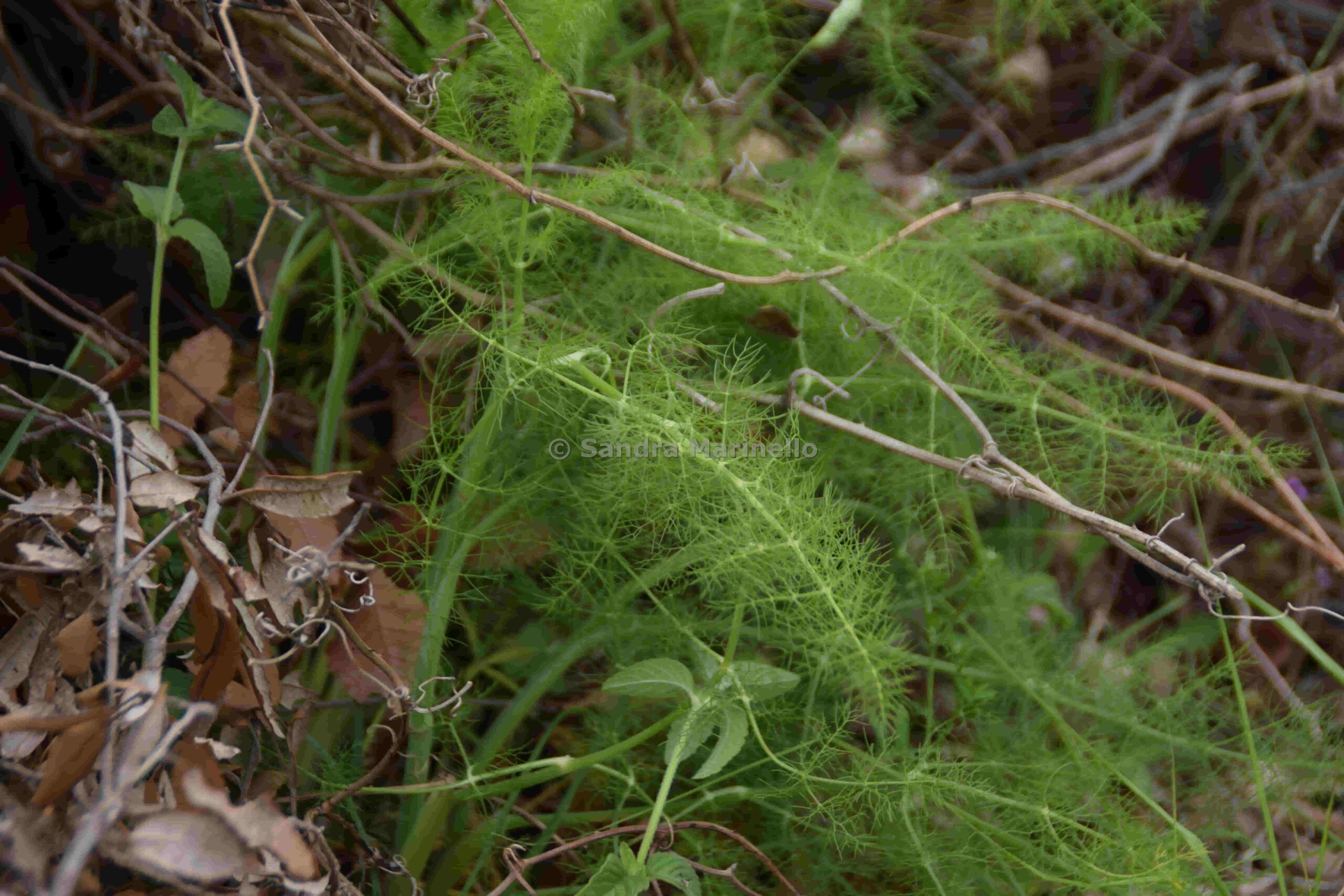
Wild fennel (Foeniculum vulgare)
Description: Aromatic plant with finely divided leaves and umbels of small yellow flowers.
Period: Flowering between May and September.
Habitat: Wastelands, roadside edges, well-drained soils.
Toxicity / Uses: Edible. The shoots, seeds, and leaves are used in cooking. It has digestive and aromatic properties.
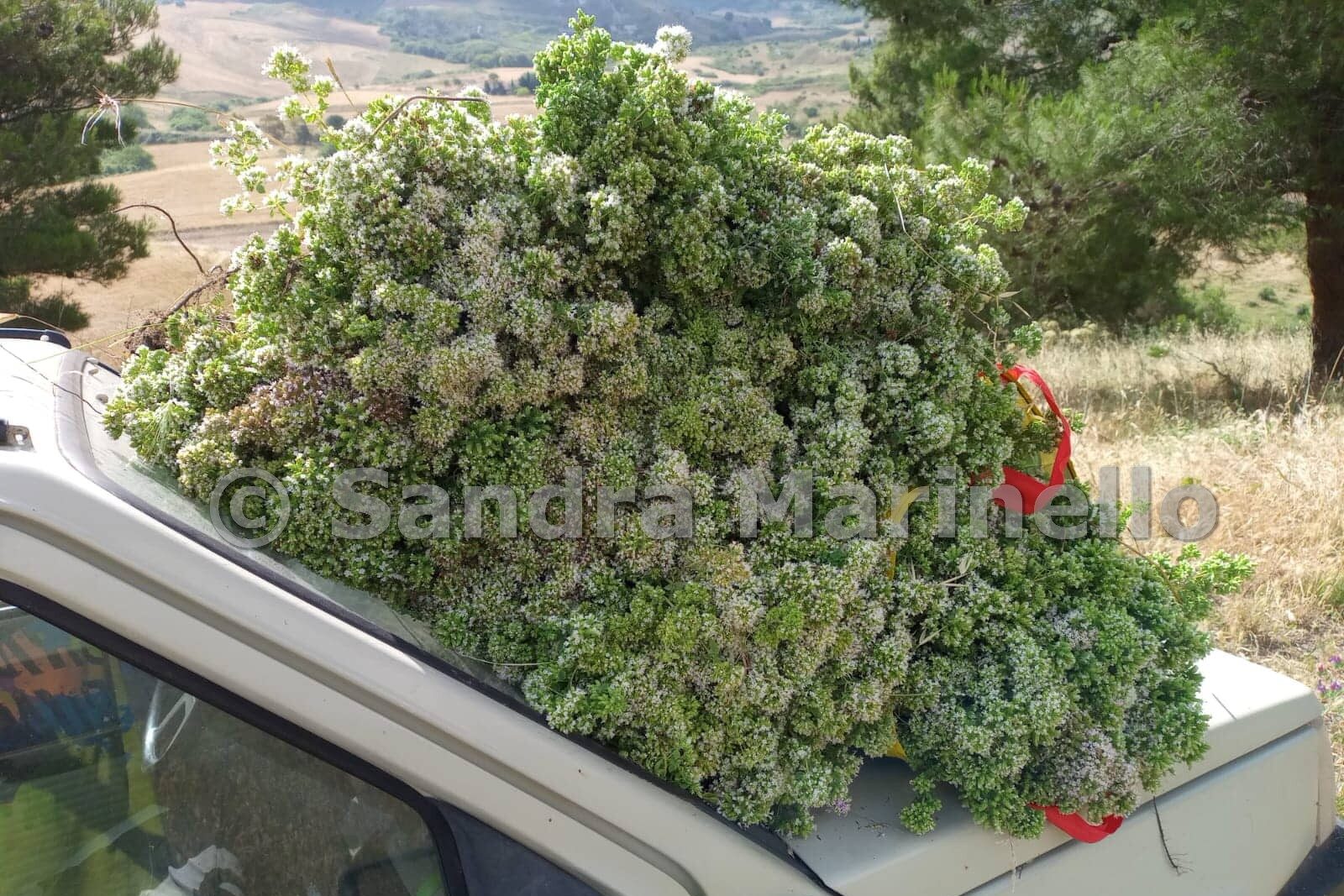
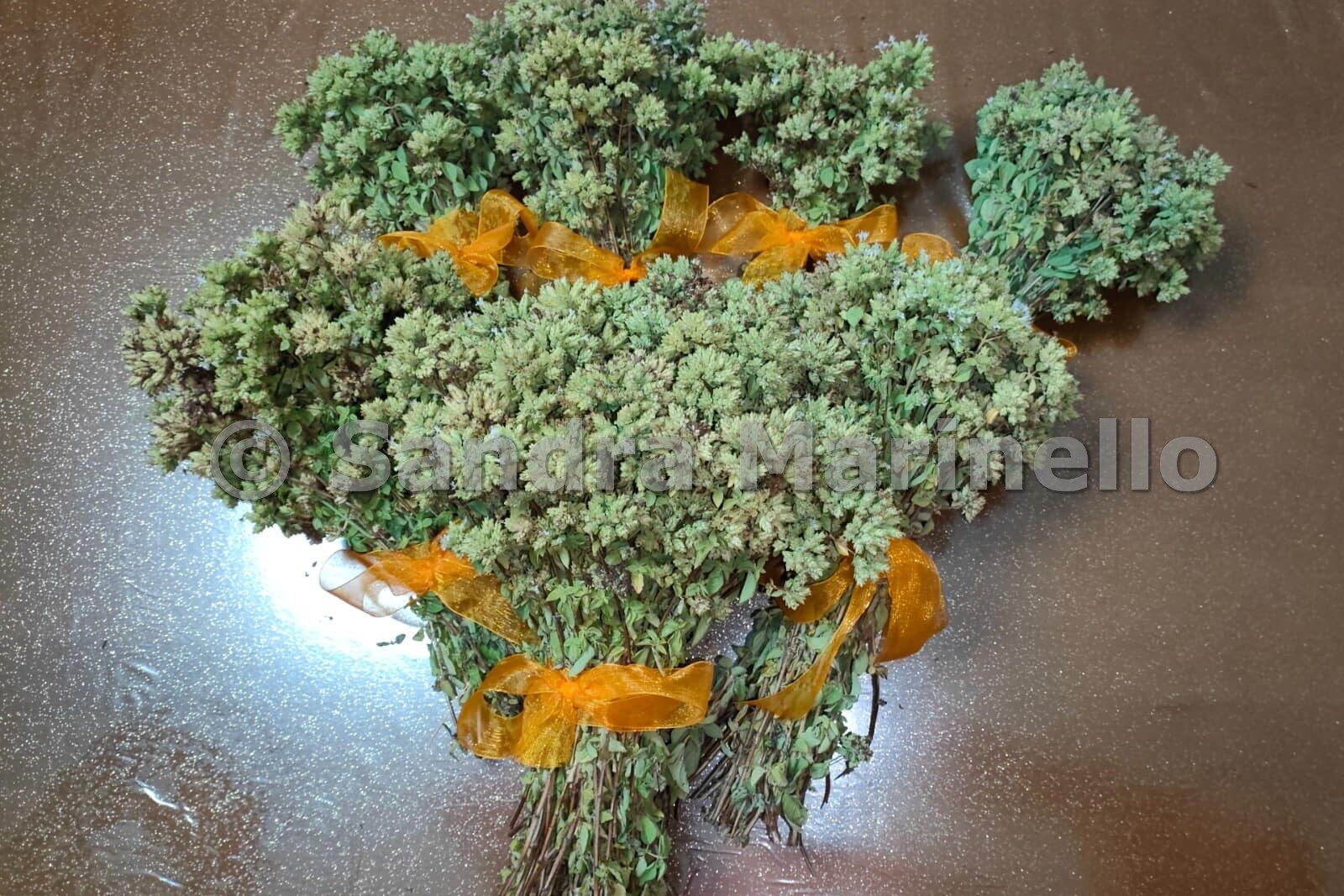
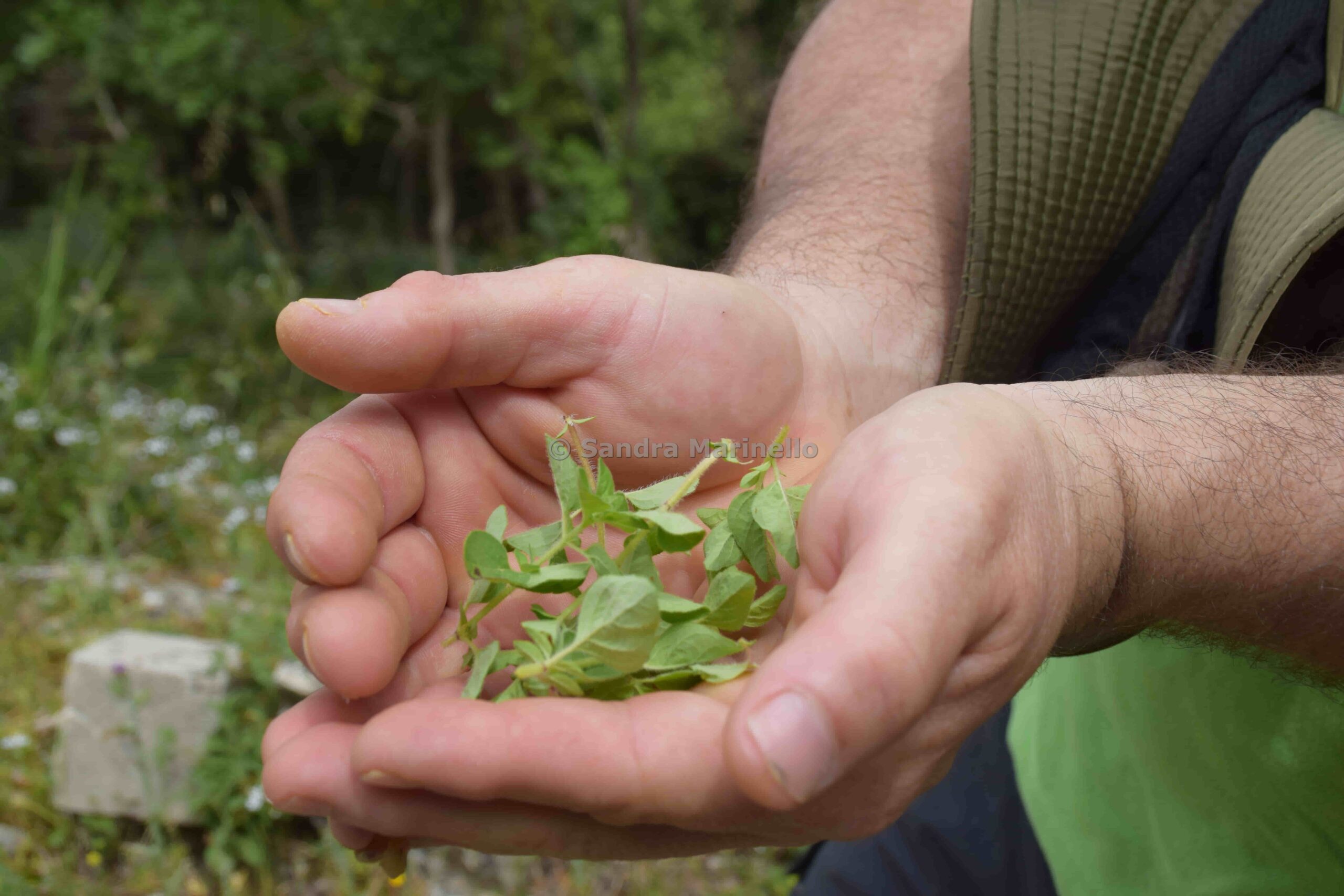
Oregano (Origanum vulgare)
Description: Perennial aromatic herbaceous plant with small pink-violet flowers grouped in dense inflorescences at the tips of the branches. Oval, strongly fragrant leaves.
Period: Flowering from June to September.
Habitat: Sunny slopes, trail edges, wastelands, and dry stone walls, preferably on calcareous soils.
Toxicity / Uses: Edible and medicinal. The leaves and flowering tops are used dried as a spice and for infusions. It has digestive, antiseptic, and balsamic properties.
Fruits
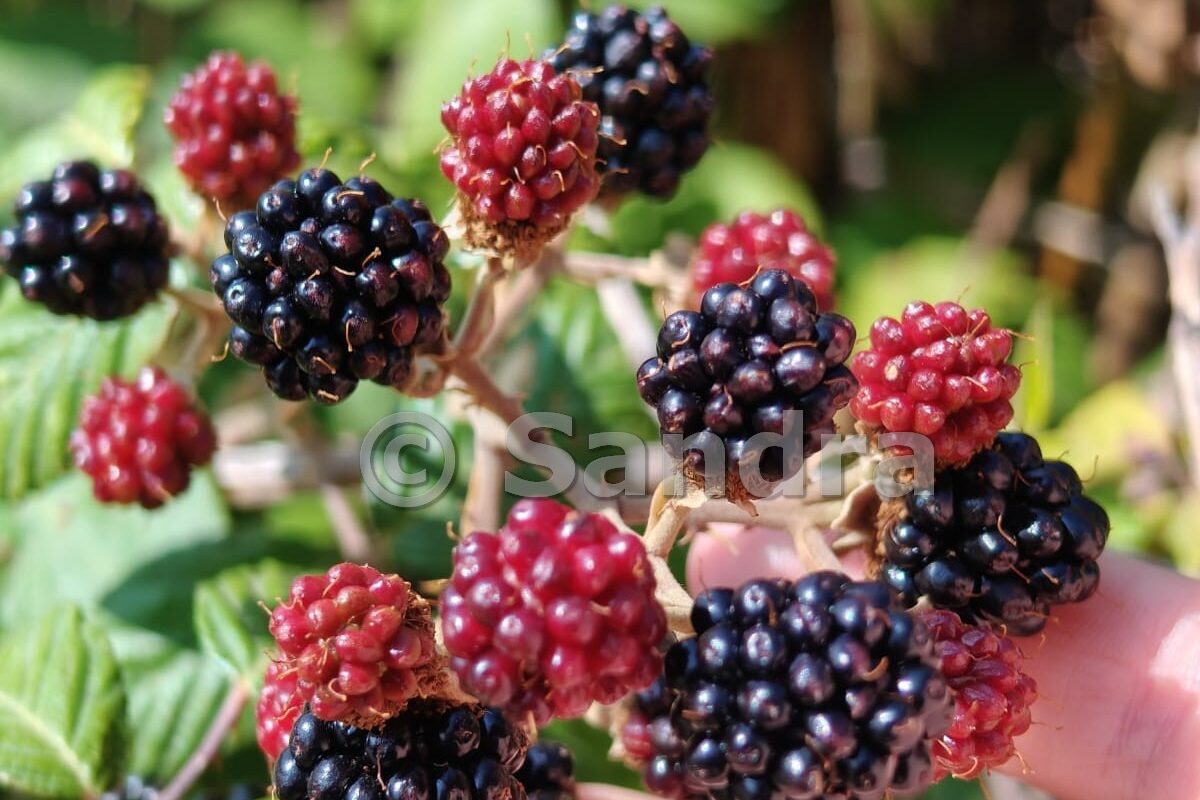
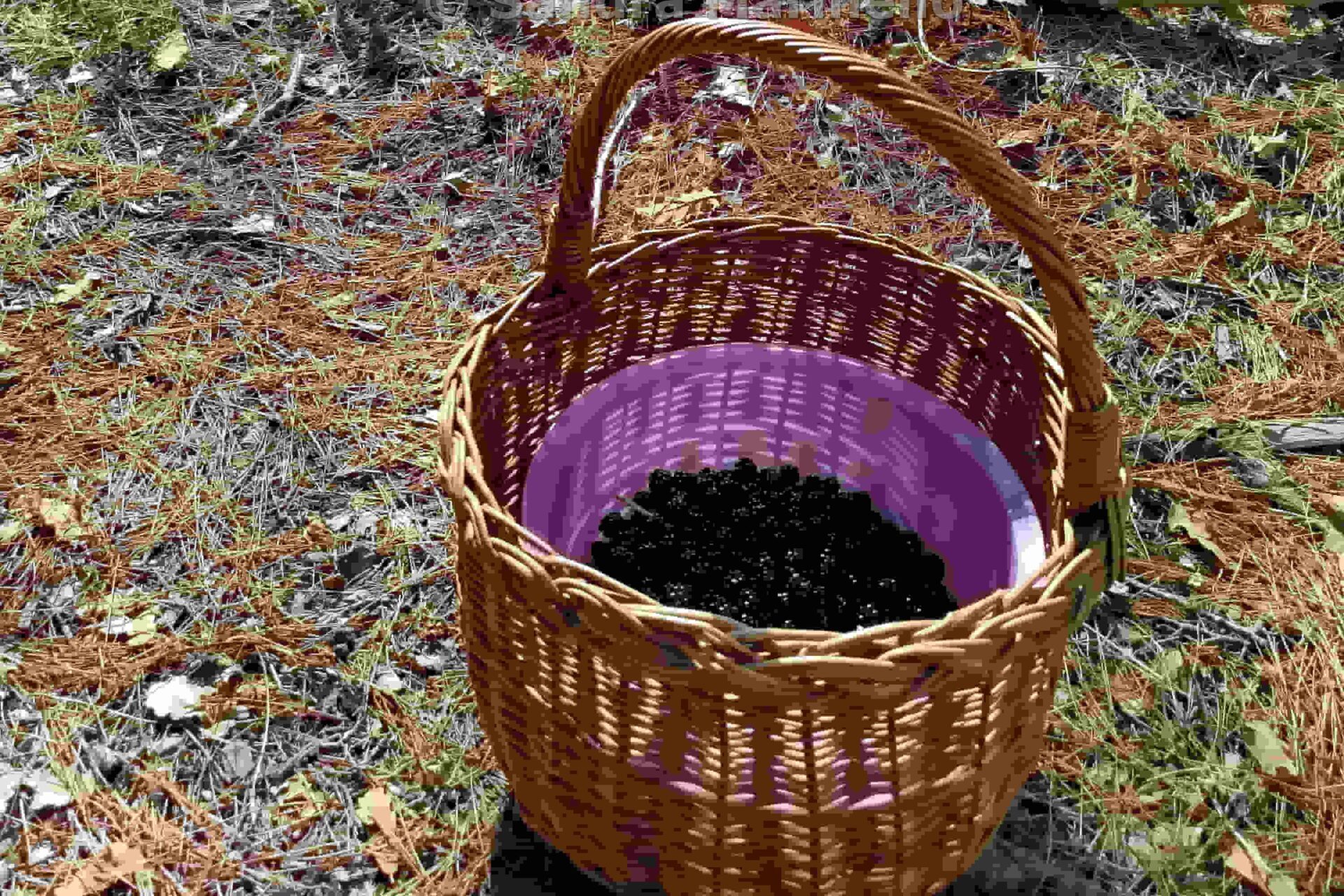
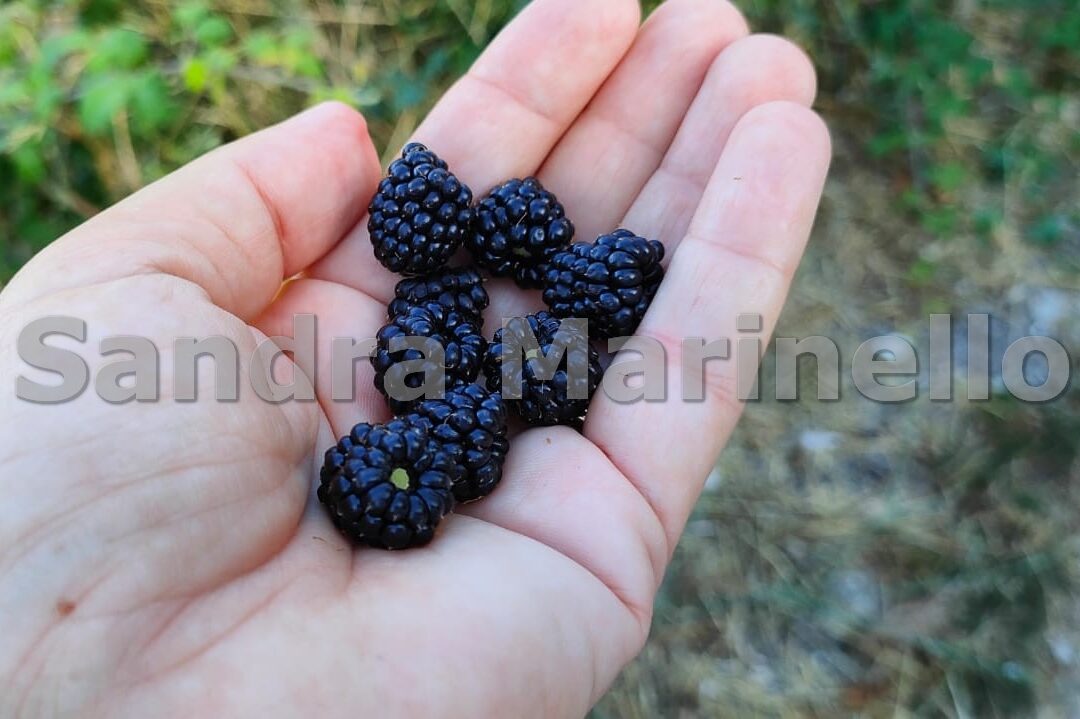
Wild bramble (Rubus ulmifolius)
Description: A widespread thorny shrub that produces pink flowers and edible blackberries. An important refuge for wildlife.
Period: Flowering from May to July; fruits from August to October.
Habitat: Hedges, forest edges, clearings, and degraded environments.
Toxicity / Uses: Blackberries are edible and rich in antioxidants. The leaves were traditionally used for infusions. No toxicity.
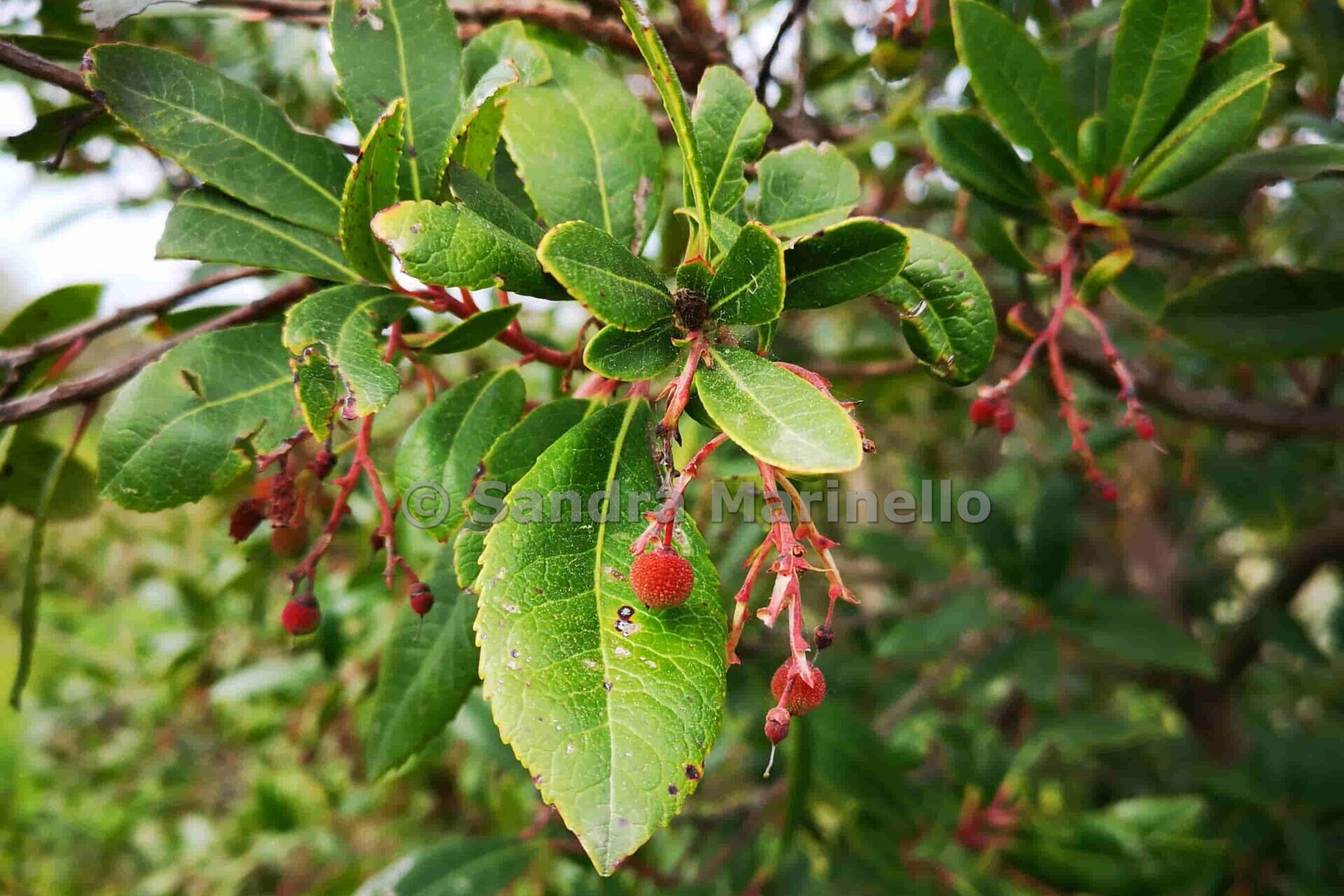
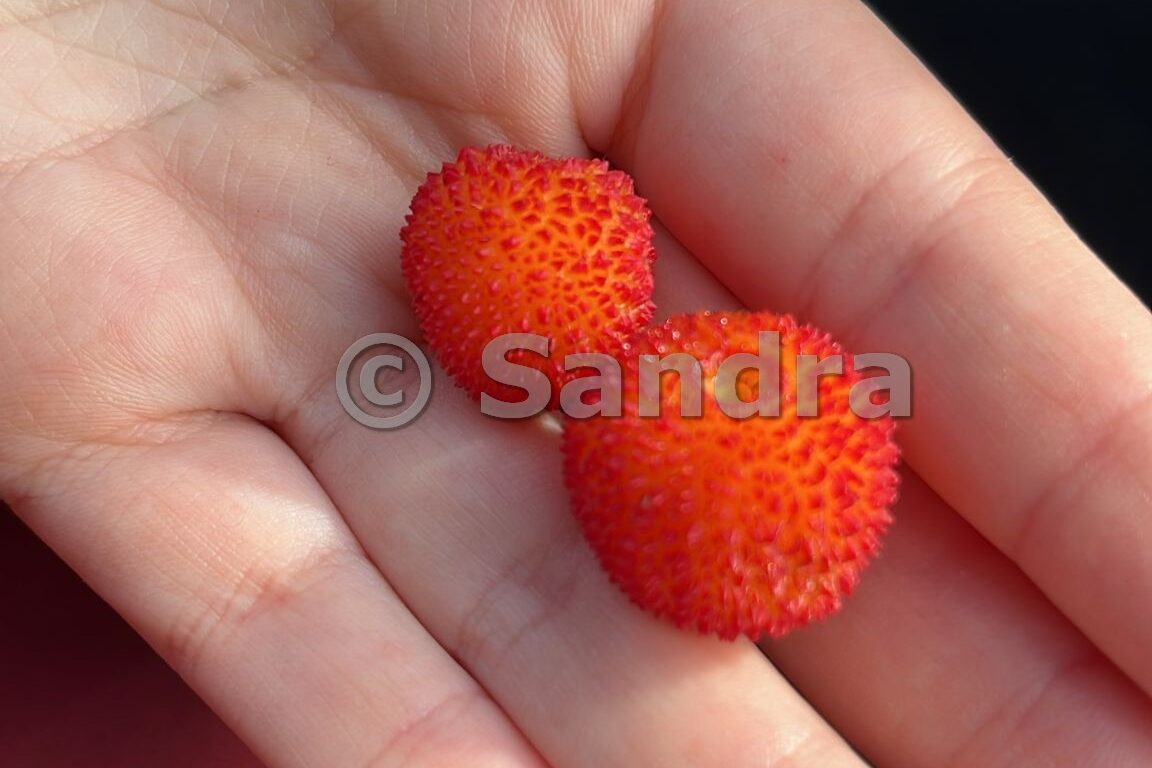
Strawberry tree (Arbutus unedo)
Description: Evergreen shrub or small tree with glossy leaves and edible round red fruits that ripen in autumn.
Period: Flowers in autumn; fruits ripen between October and December.
Habitat: Mediterranean scrub, sunny slopes, acidic or siliceous soils.
Toxicity / Uses: The fruits are edible, though they can be astringent. No toxicity.
Flowers
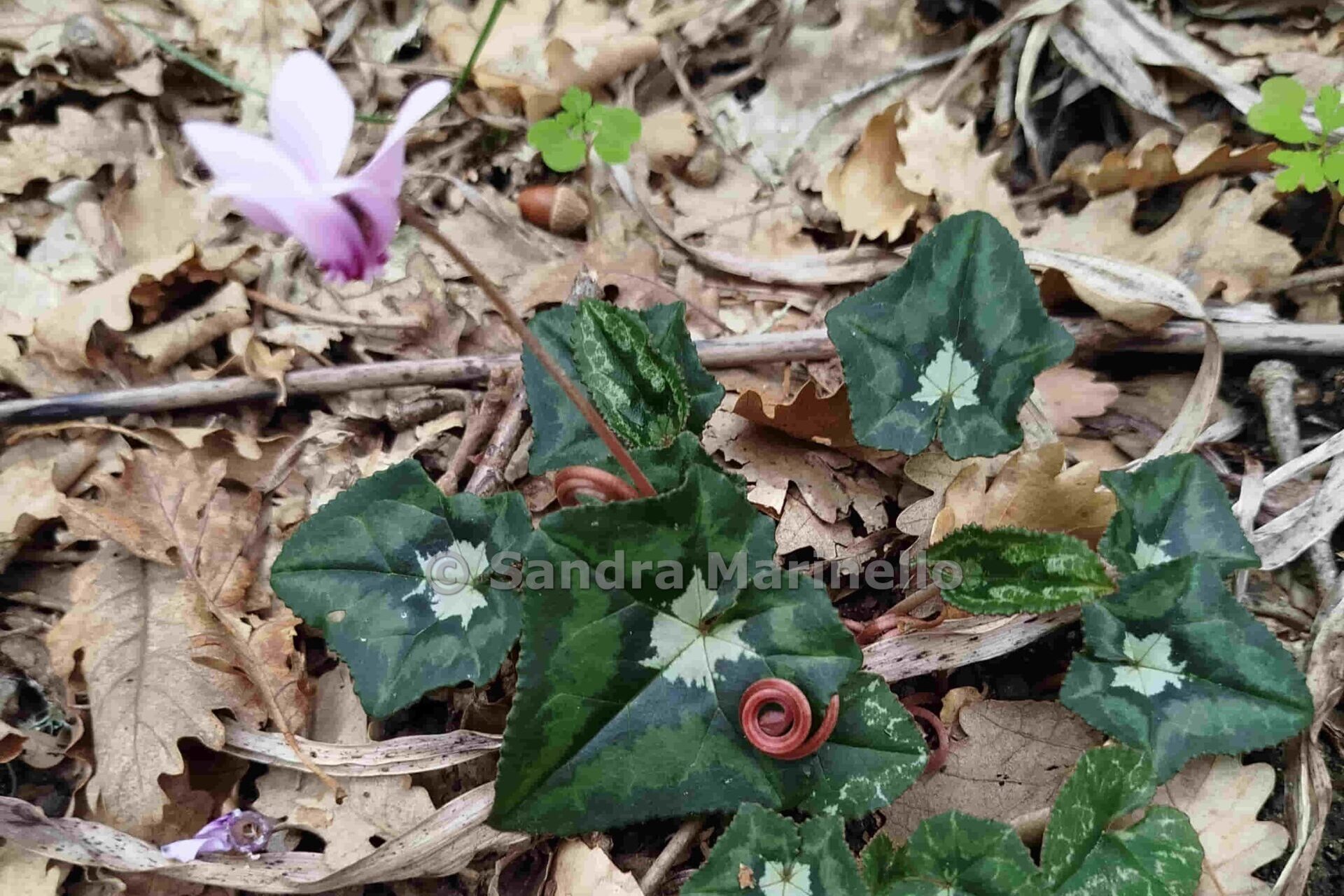
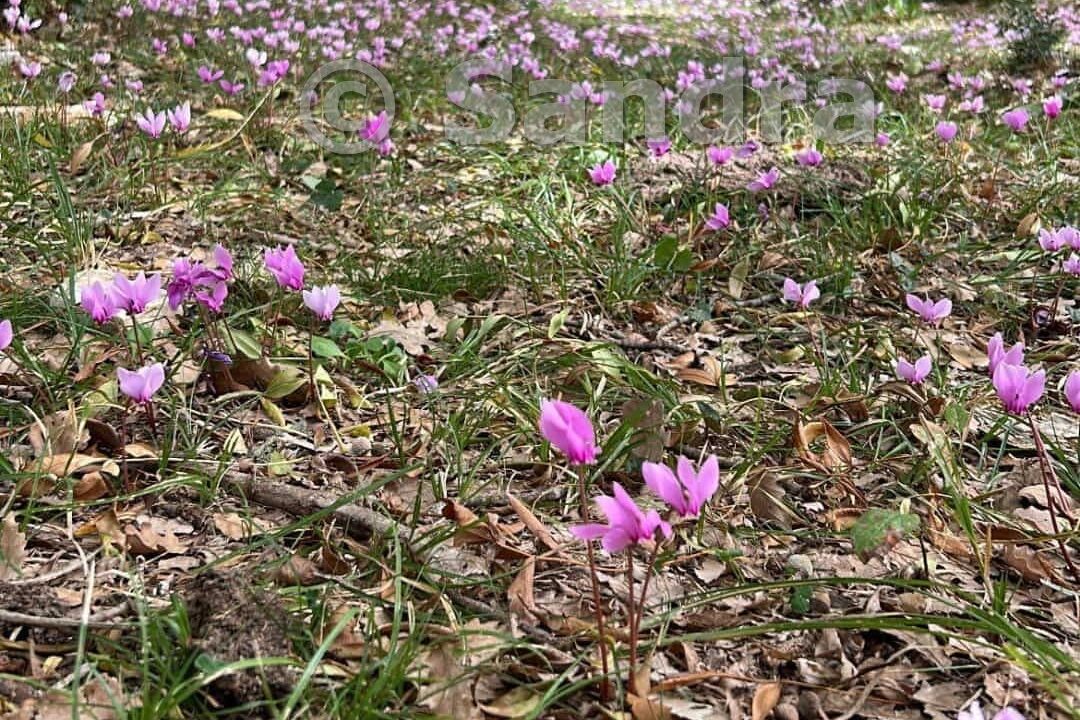
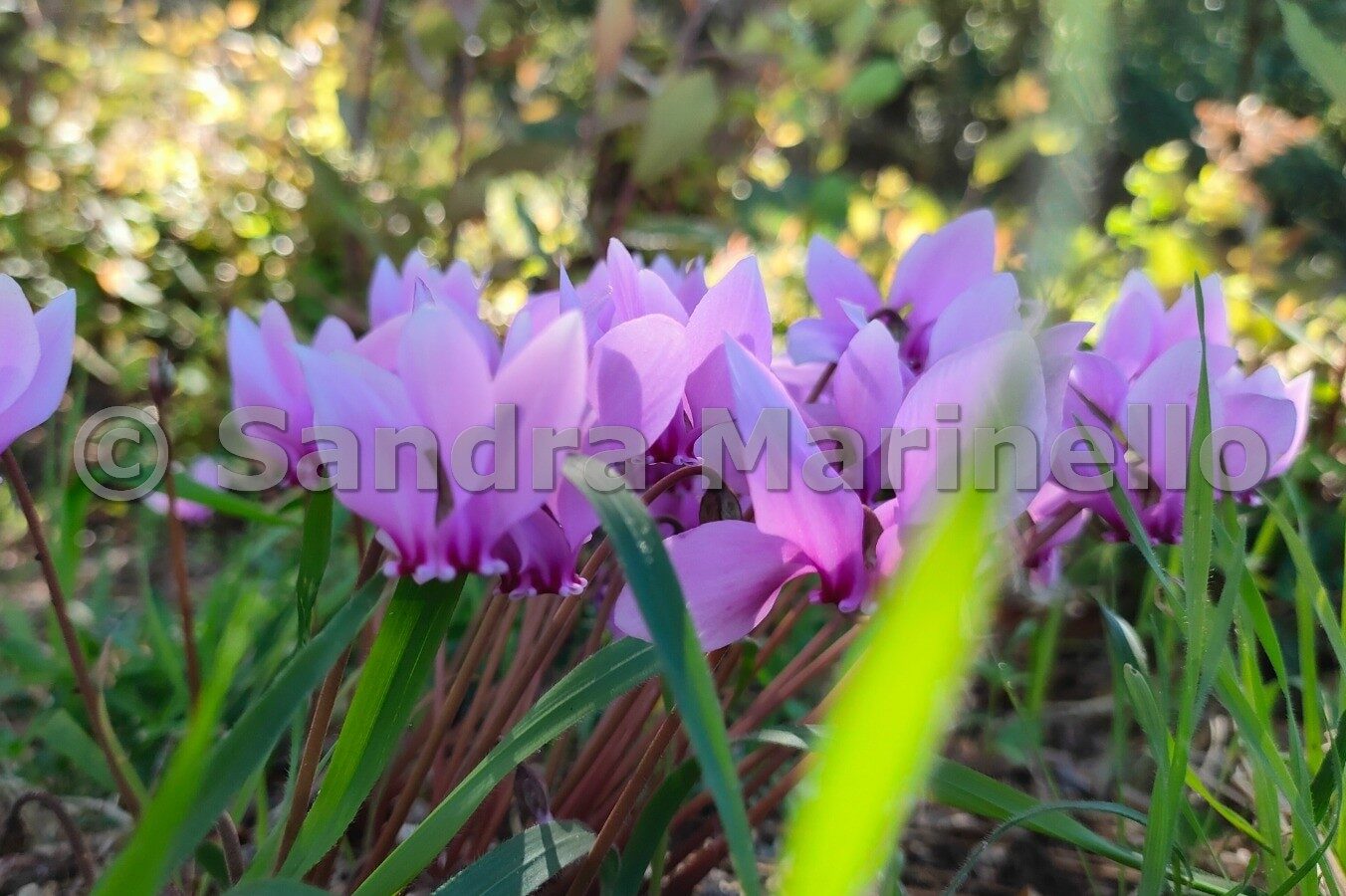
Cyclamen (Cyclamen hederifolium)
Description: Herbaceous plant with pink or purple flowers and decorative heart-shaped leaves, often marbled.
Period: Flowers between August and November.
Habitat: Shady understory, hills, and mountainous areas.
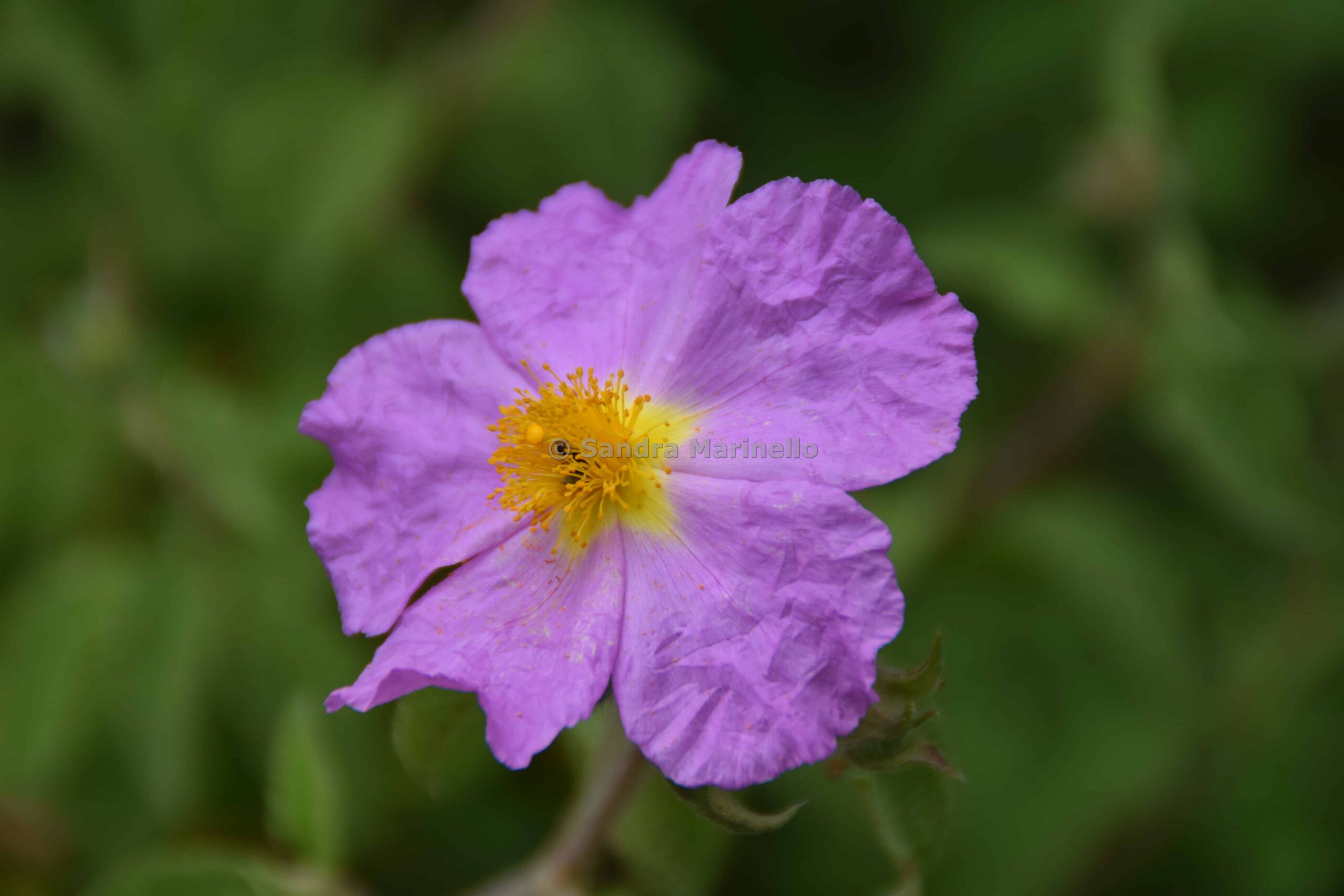
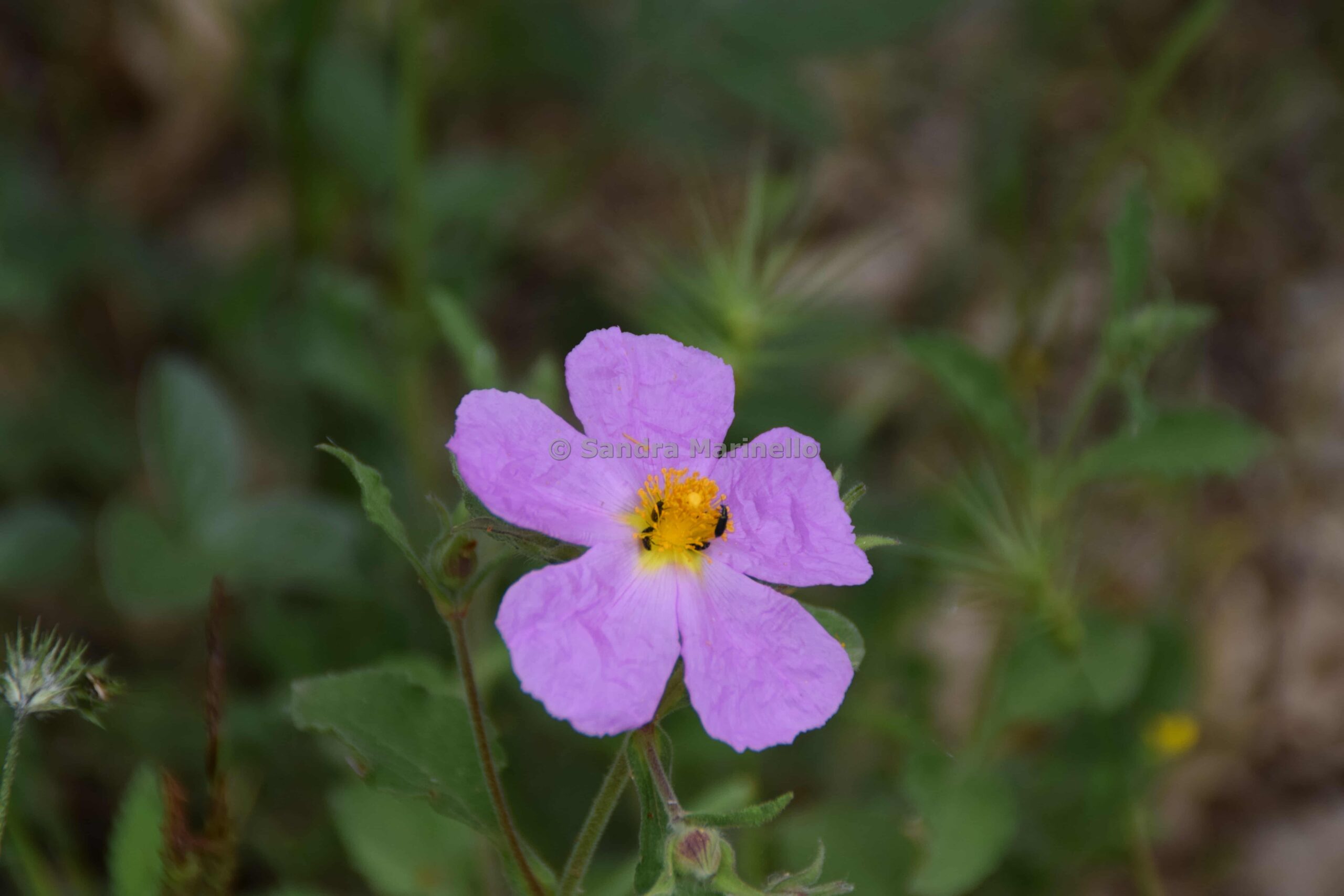
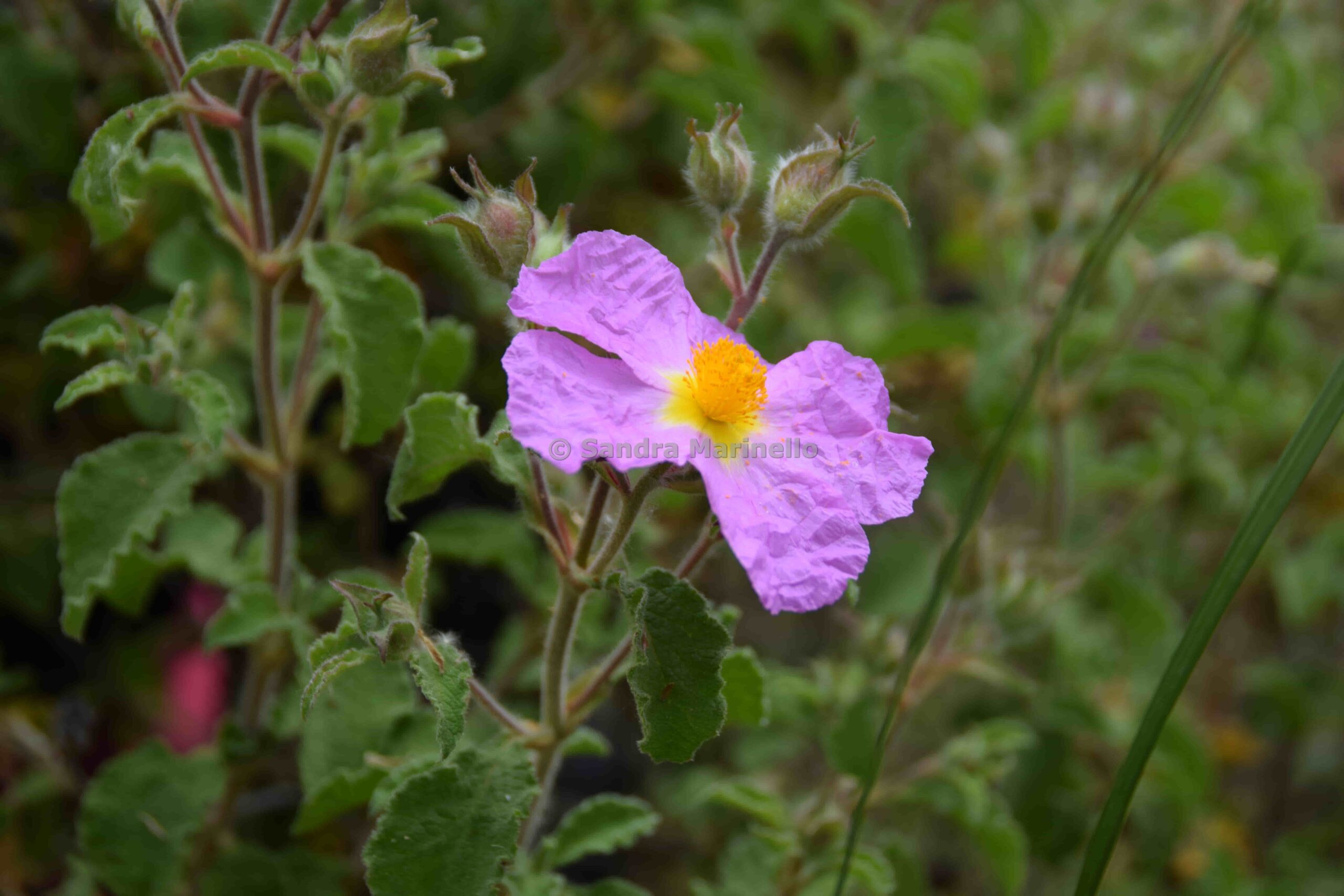
Pink rockrose (Cistus creticus)
Description: Aromatic shrub with large deep pink flowers and sticky leaves.
Period: Flowers between April and June.
Habitat: Mediterranean scrub, dry hills.
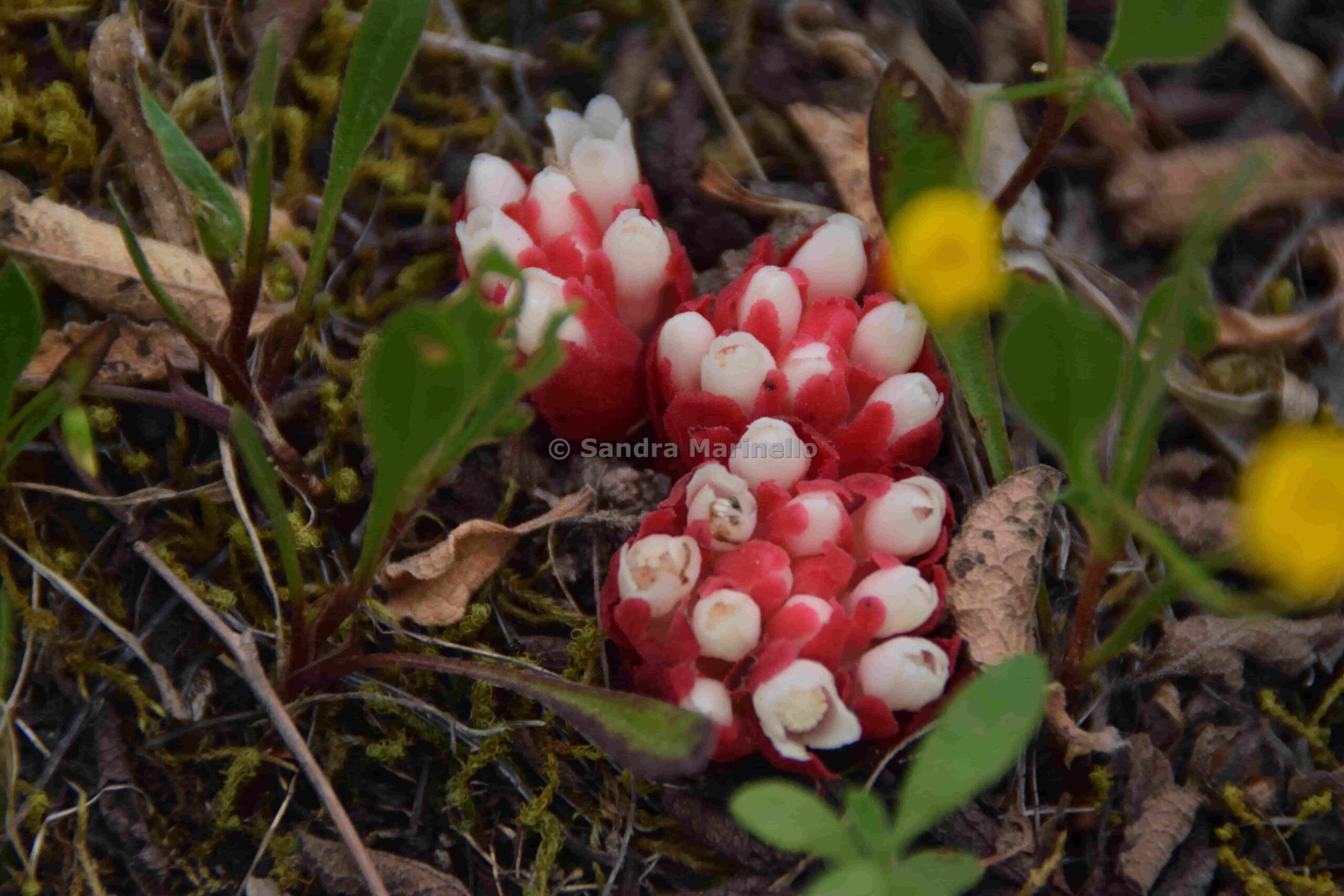
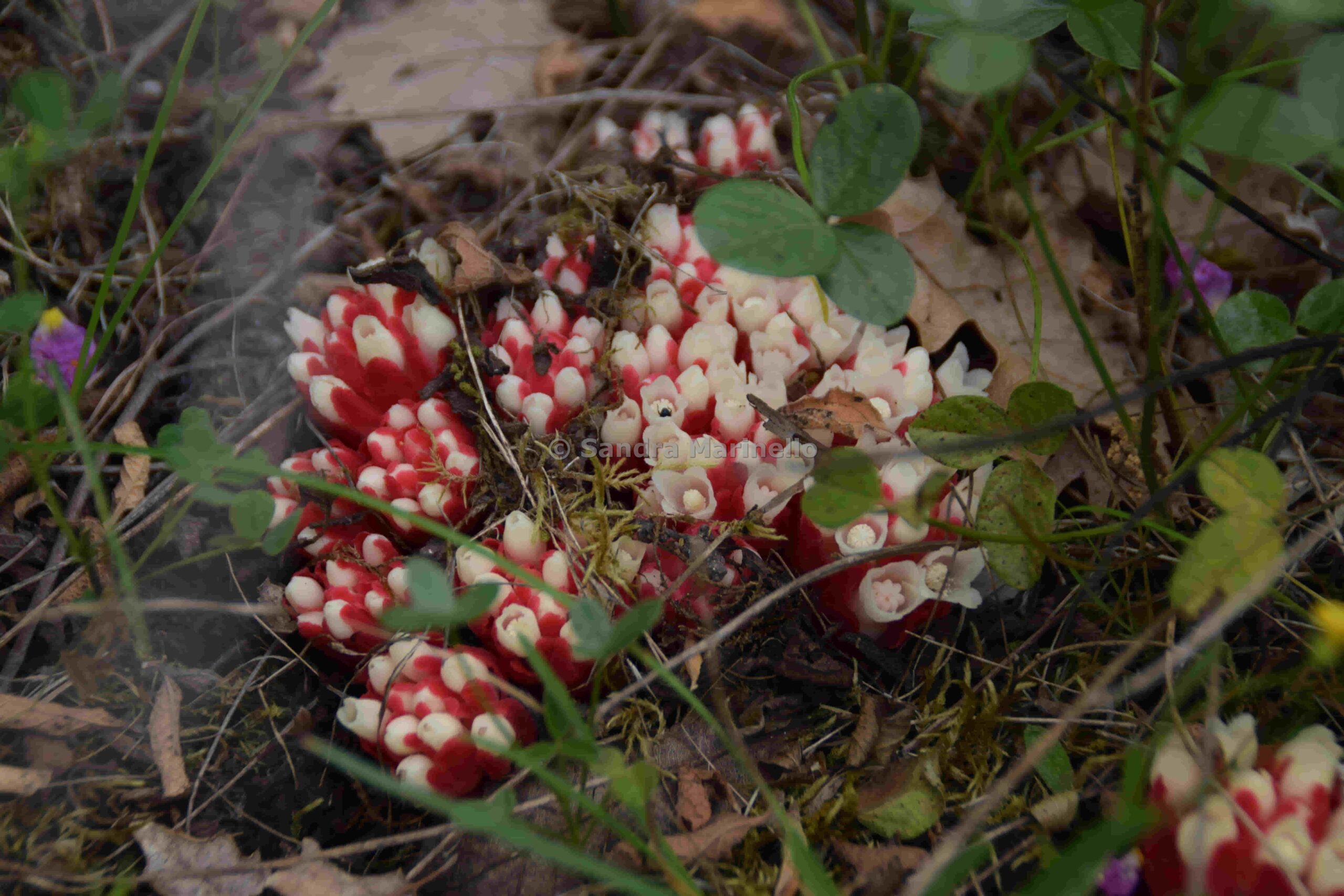
Cytinus (Cytinus hypocistis subsp. ruber)
Description: Parasitic plant lacking chlorophyll, with a bright red fleshy body and small whitish flowers inside. It develops at the base of shrubs such as rockroses (Cistus spp.).
Period: Flowers between April and June.
Habitat: Well-preserved Mediterranean scrub, on dry and calcareous soils.
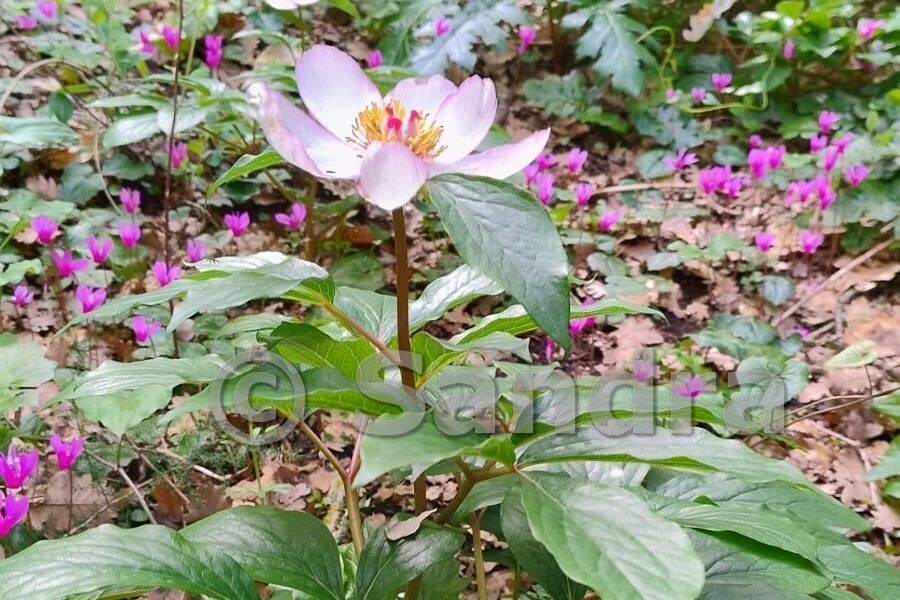
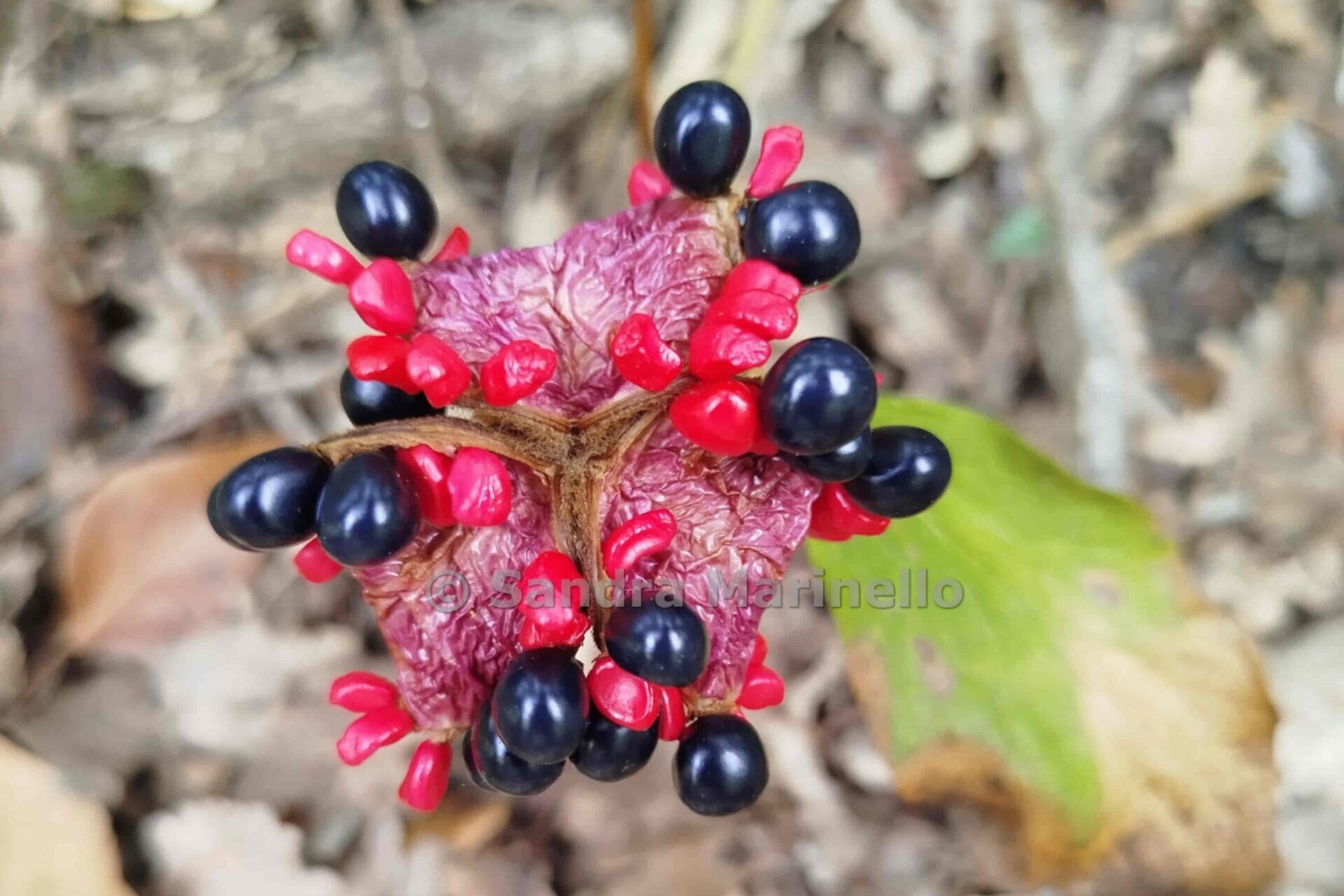
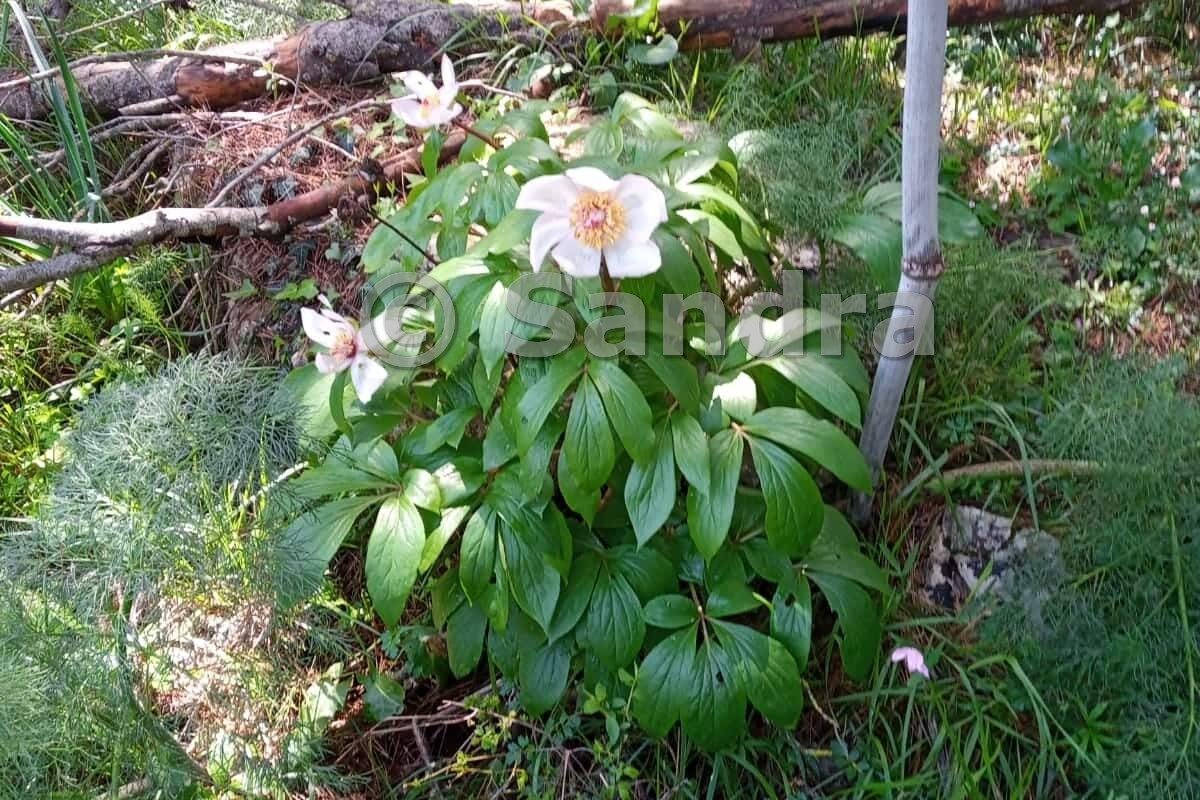
Male peony (Paeonia mascula)
Description: Perennial plant with large bright pink flowers and showy yellow stamens. A rare and protected species.
Period: Flowers between April and June.
Habitat: Hill and mountain forests, in cool and shaded areas.
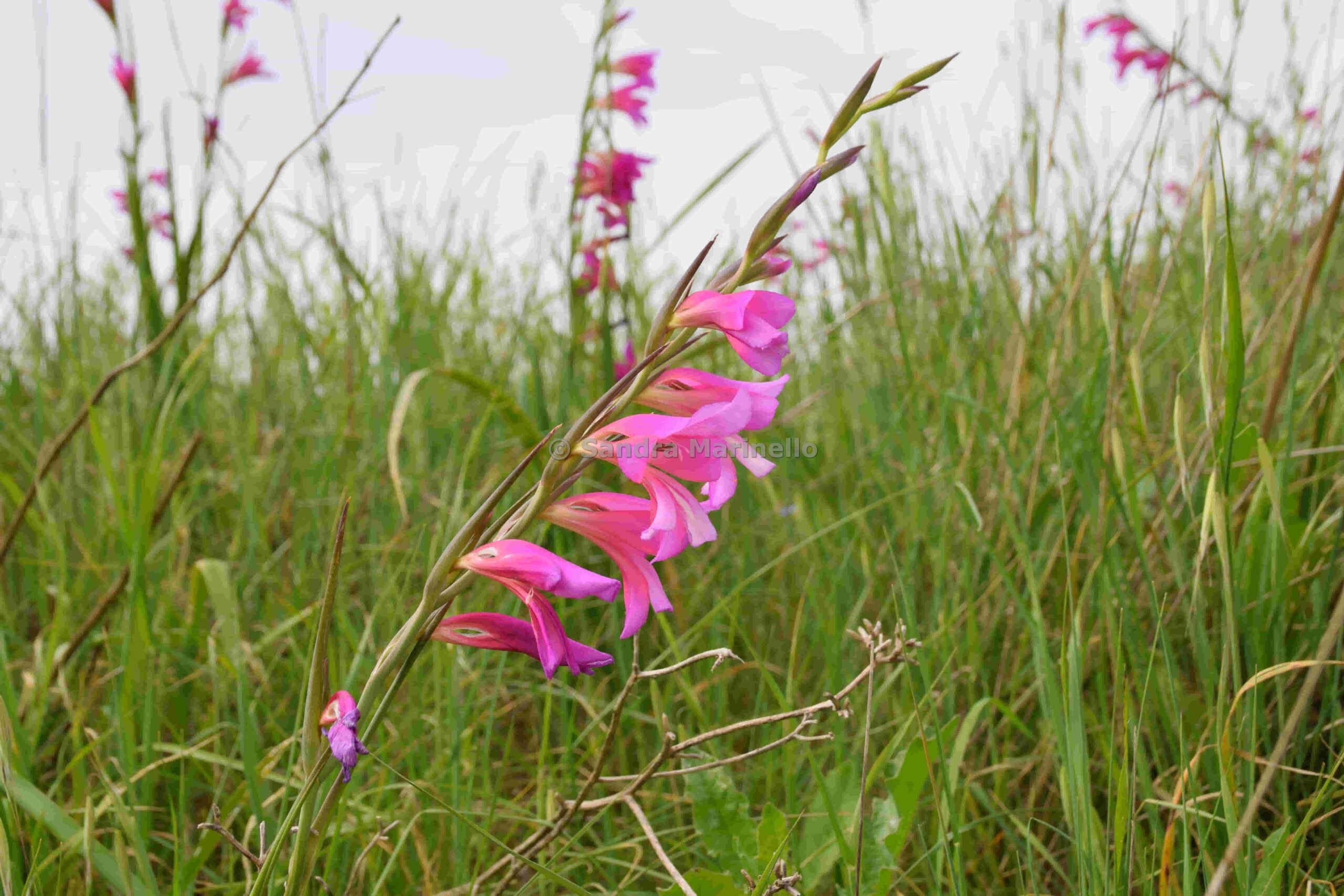
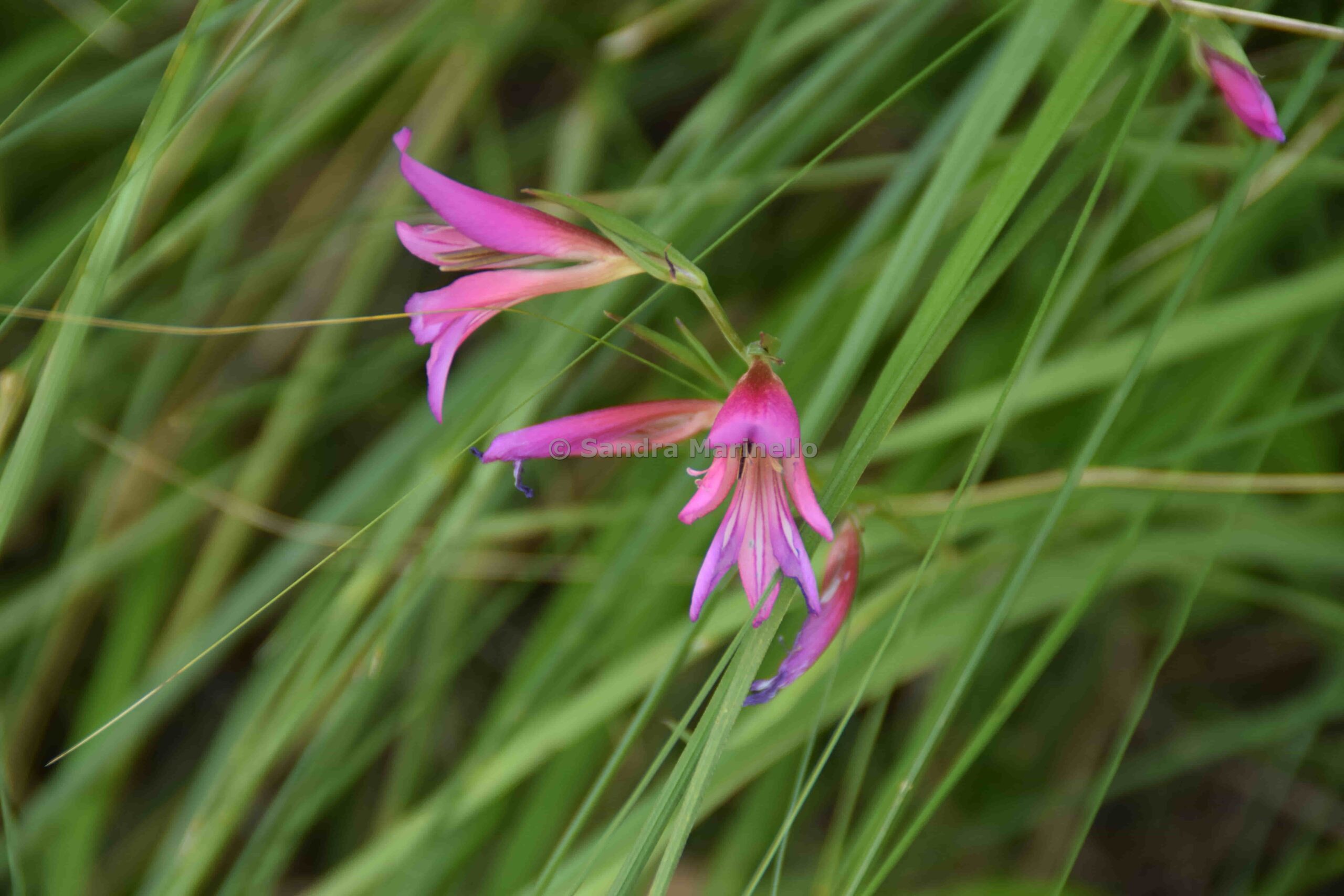
Field gladiolus (Gladiolus italicus)
Description: Herbaceous plant with pink to violet flowers arranged on one side of the stem. Elegant and slender, resembling a small lily.
Period: Flowers between April and June.
Habitat: Fallow fields, roadsides, and cultivated lands, even on dry soils.
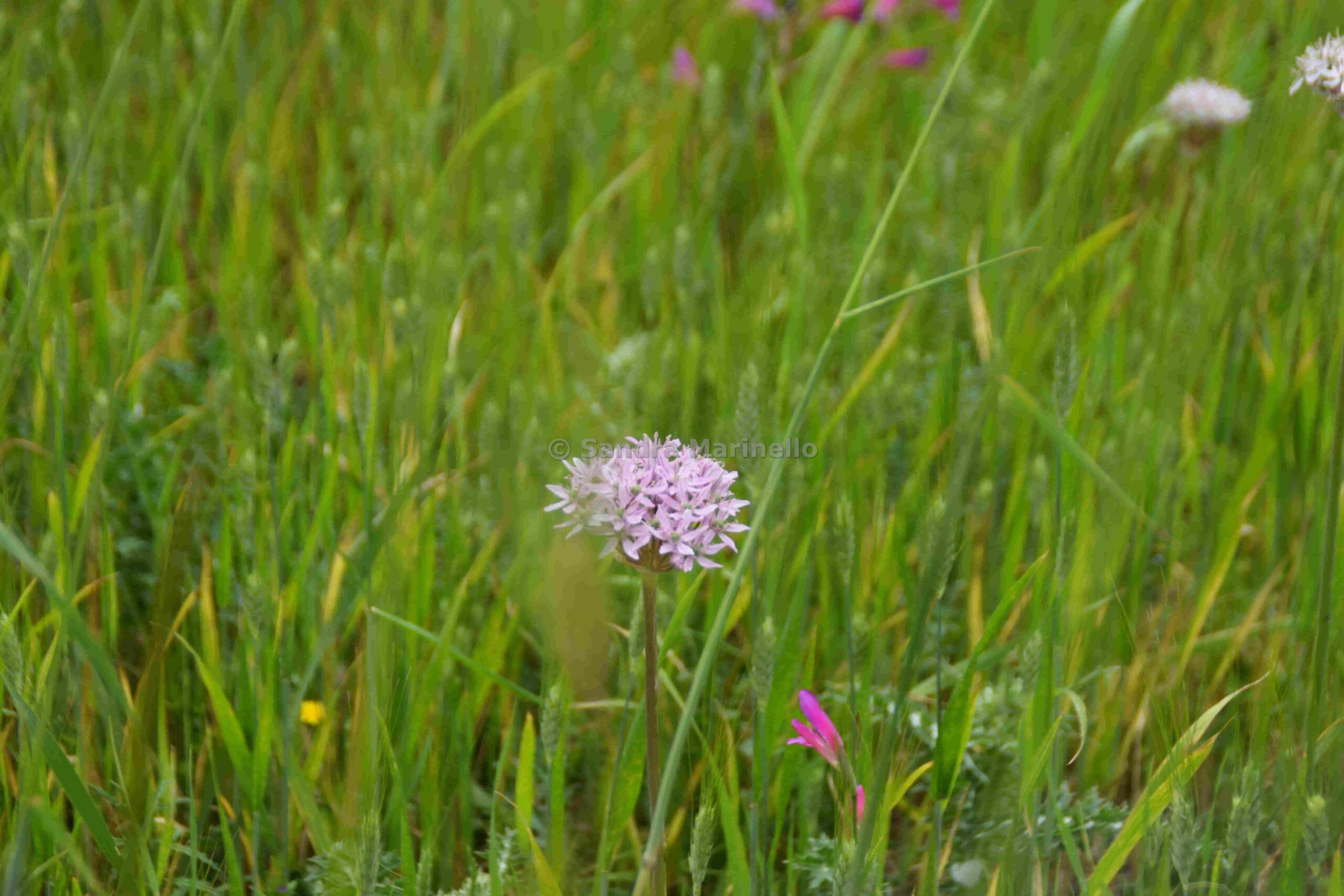
Black garlic (Allium nigrum)
Description: Bulbous plant with globular inflorescences of pale pink or whitish color.
Period: May to July.
Habitat: Wastelands, field edges, calcareous or clay soils.
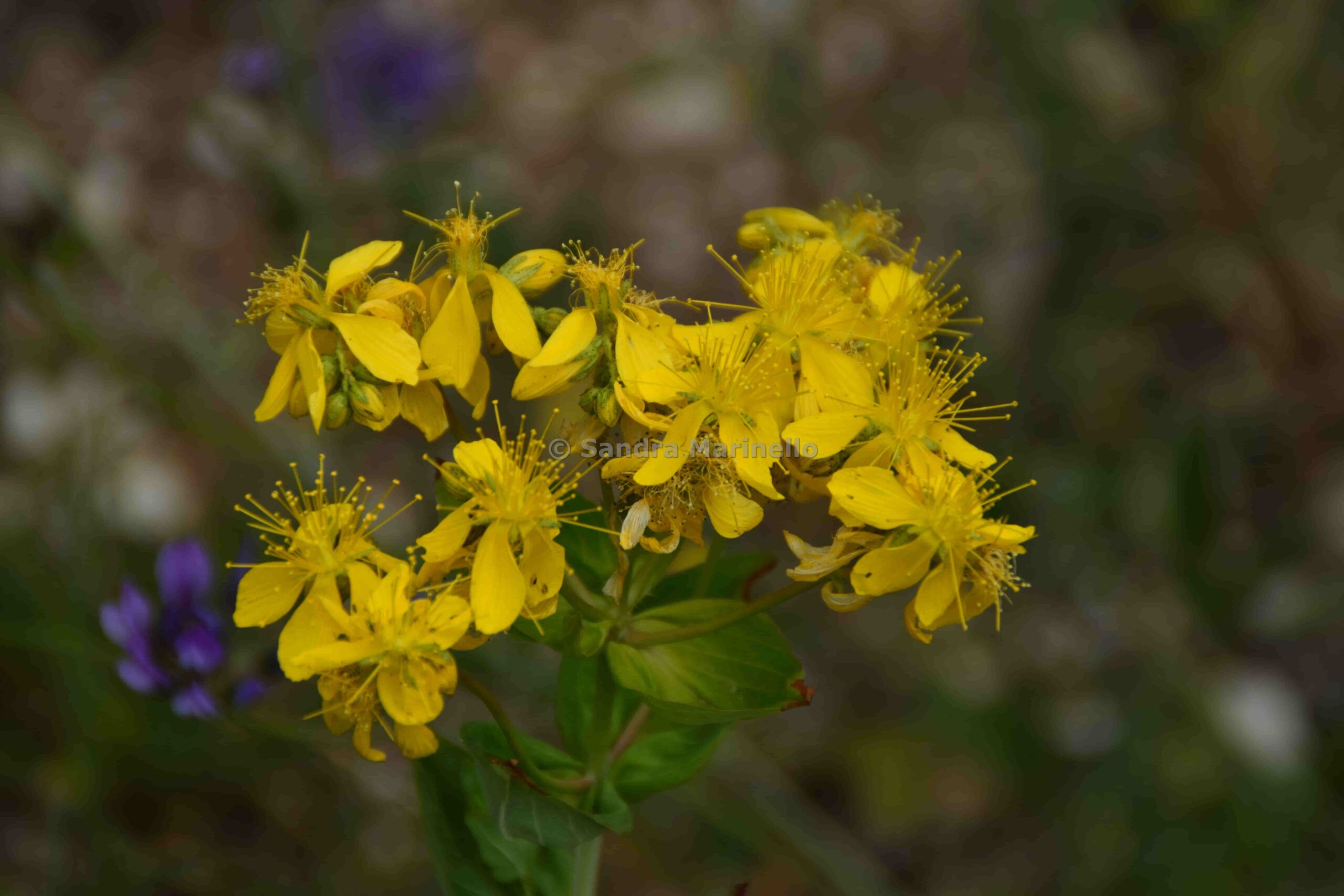
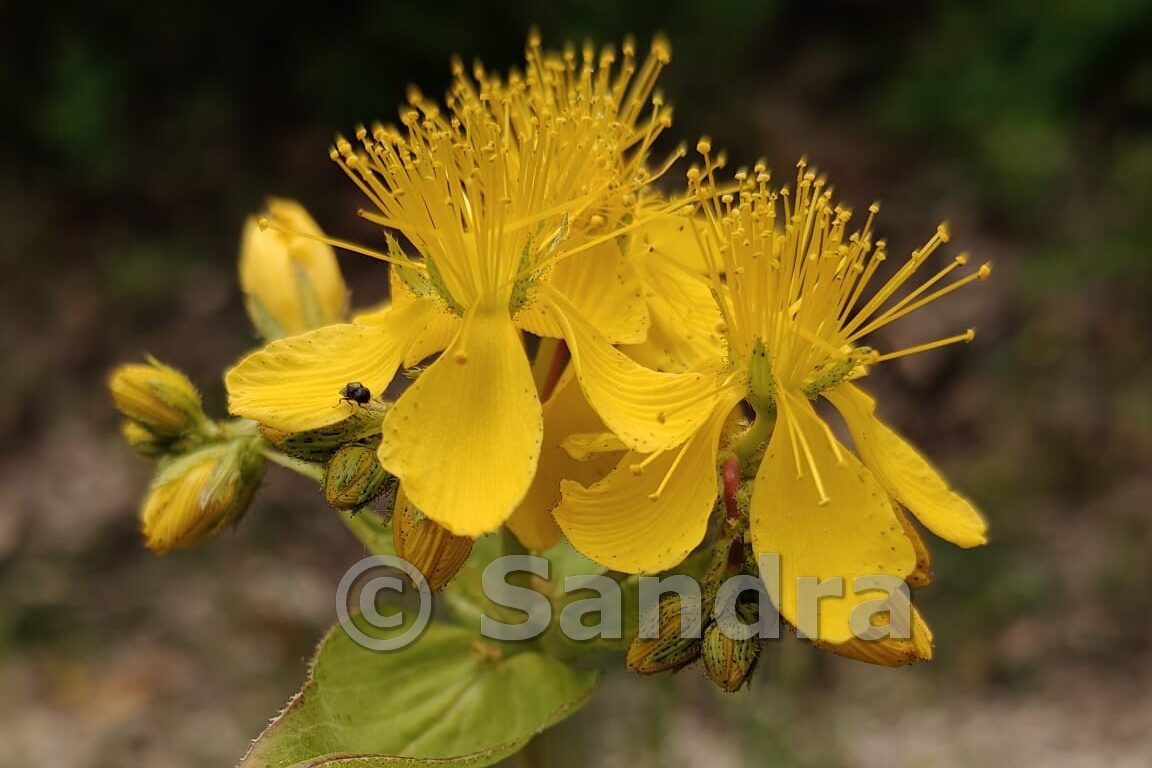
St. John’s Wort (Hypericum perforatum)
Description: Plant with yellow five-petaled flowers and “perforated” leaves visible against the light. Also known as St. John’s Wort.
Period: Flowers between June and August.
Habitat: Meadows, field edges, hillsides, even in dry environments.
Toxicity / Uses: Fresh flowers are used to produce St. John’s Wort oil, beneficial for burns, wounds, and skin inflammations. Internal use should only be under medical supervision.
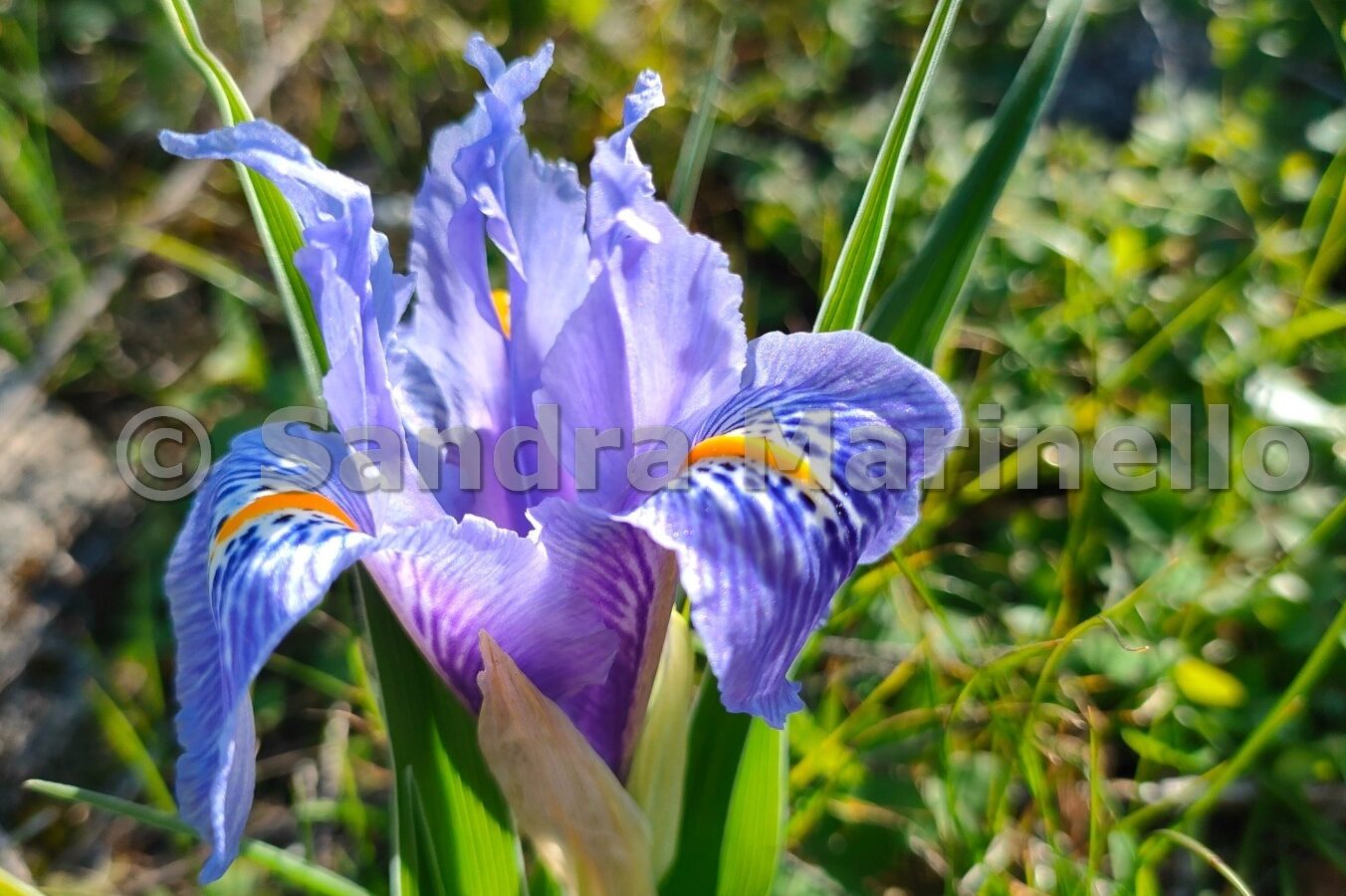
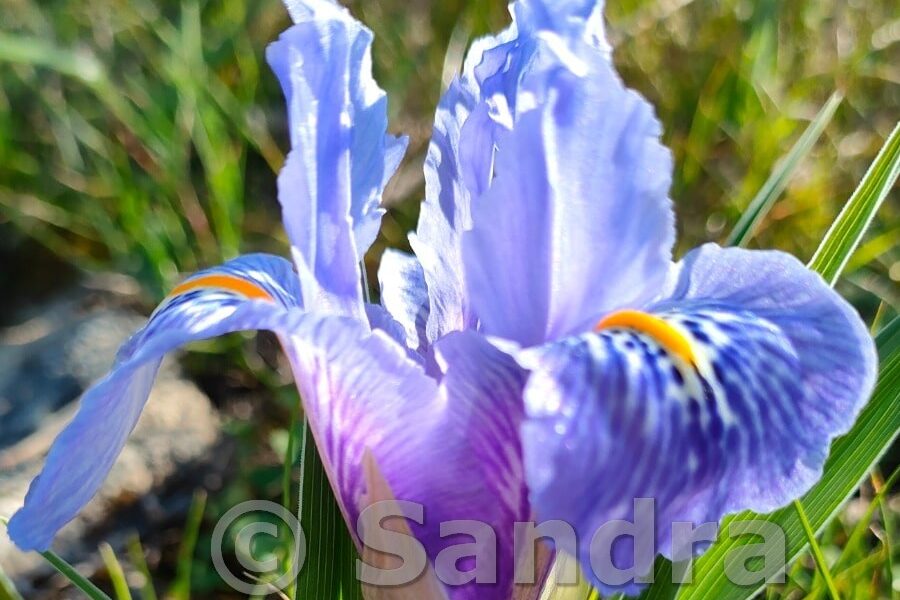
Bulbous iris (Iris planifolia)
Description: Mediterranean species of the Iridaceae family, with flat leaves and iris-shaped flowers that are blue-violet, sometimes white, featuring elegant petals with golden crests.
Period: Blooms between December and February in the wild, sometimes extending to March.
Habitat: Rocky slopes, humid hills in winter and dry in summer, well-drained soils.
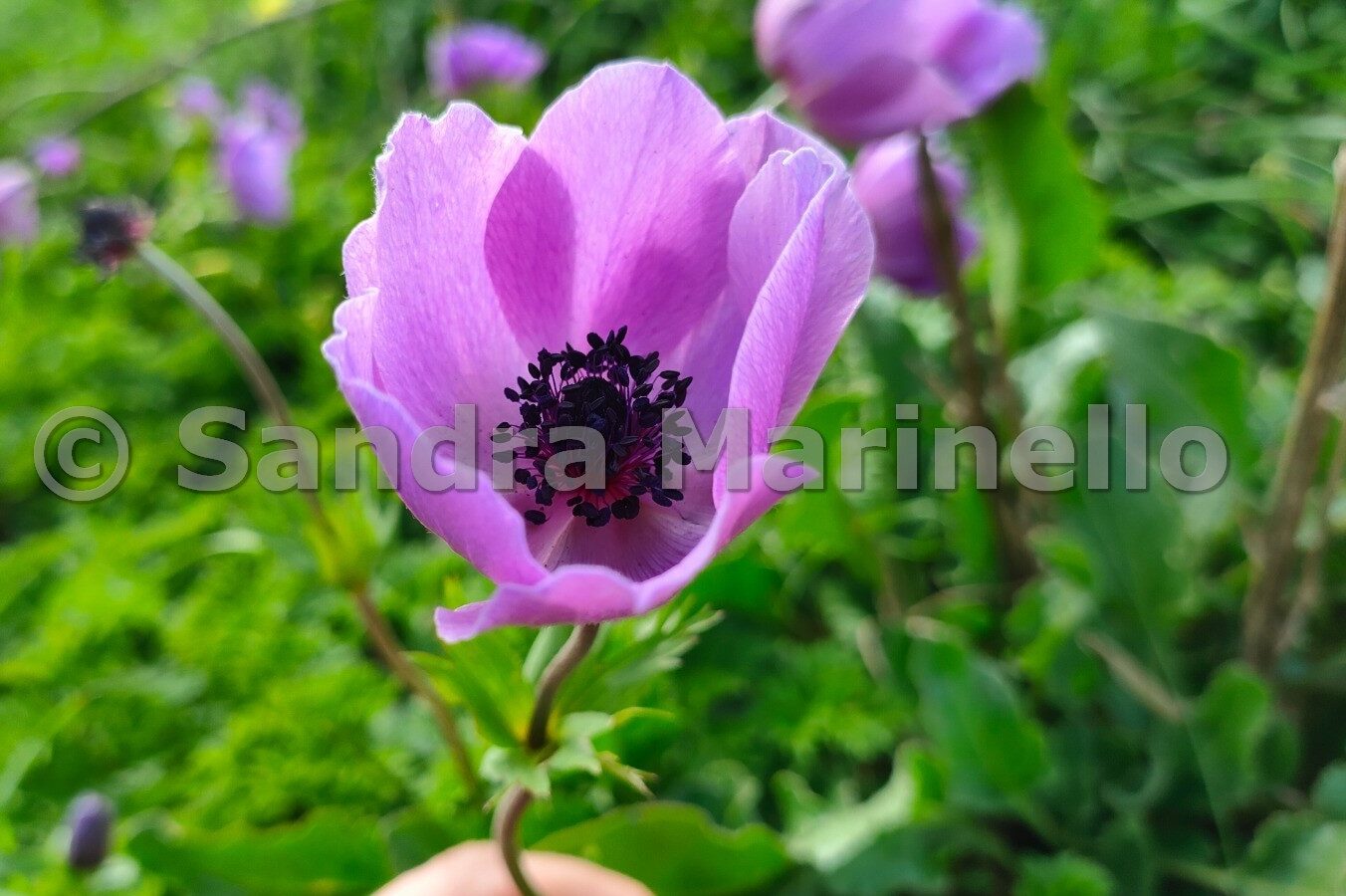
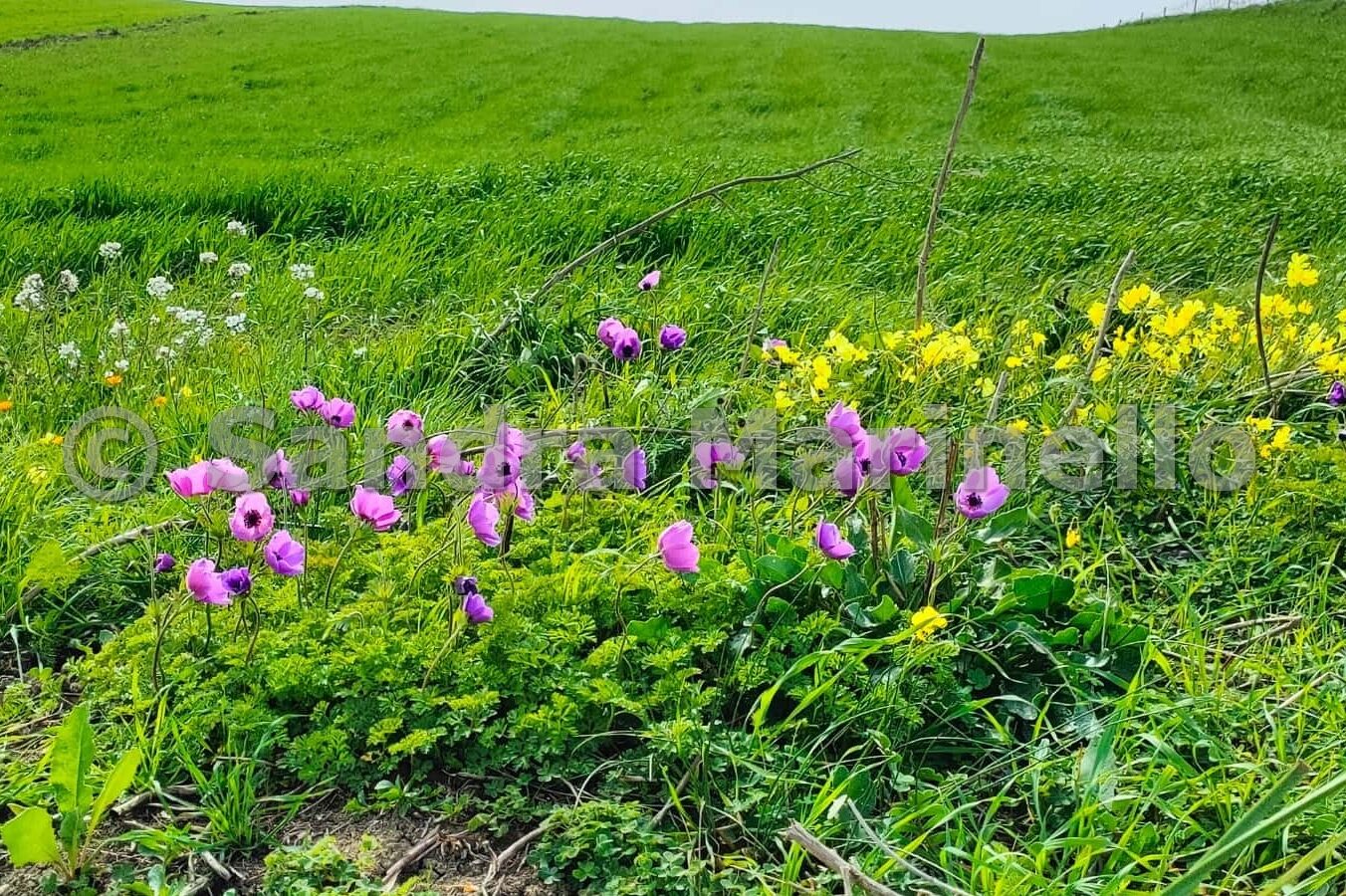
Florist’s anemone (Anemone coronaria)
Description: Perennial herbaceous plant with tuberous roots and single flowers of vivid colors with a dark center.
Period: Blooms from April to June, but can also be spotted in autumn.
Habitat: Open fields, edges of cultivated lands, calcareous and rough slopes.
Orchids
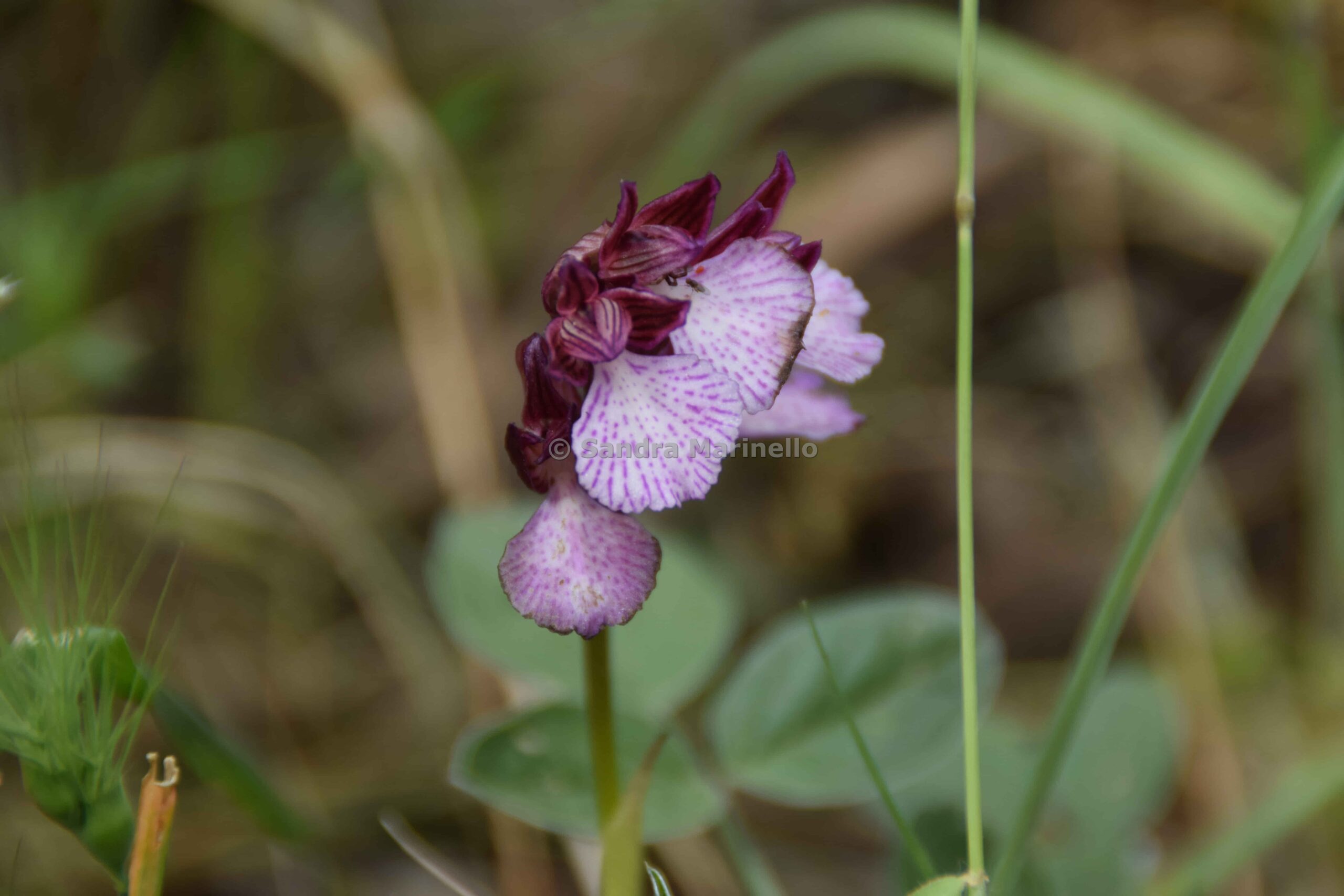
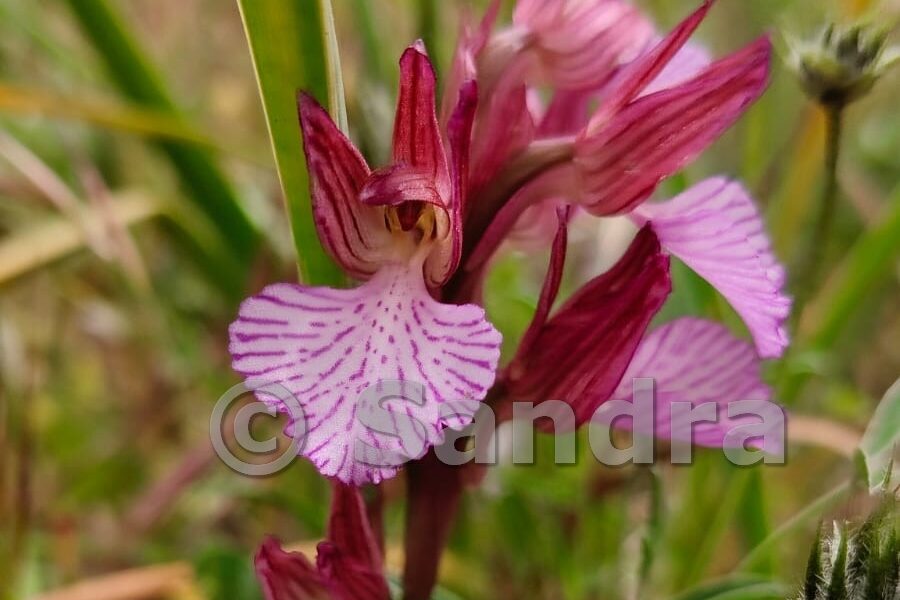
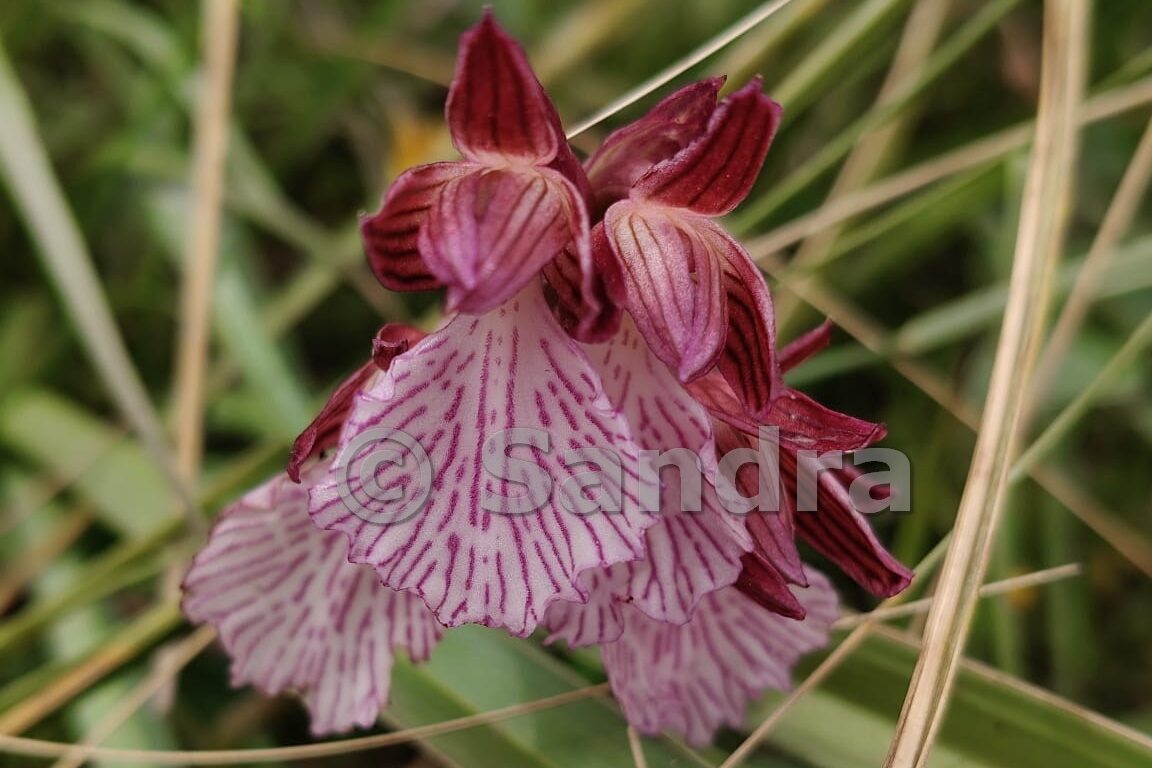
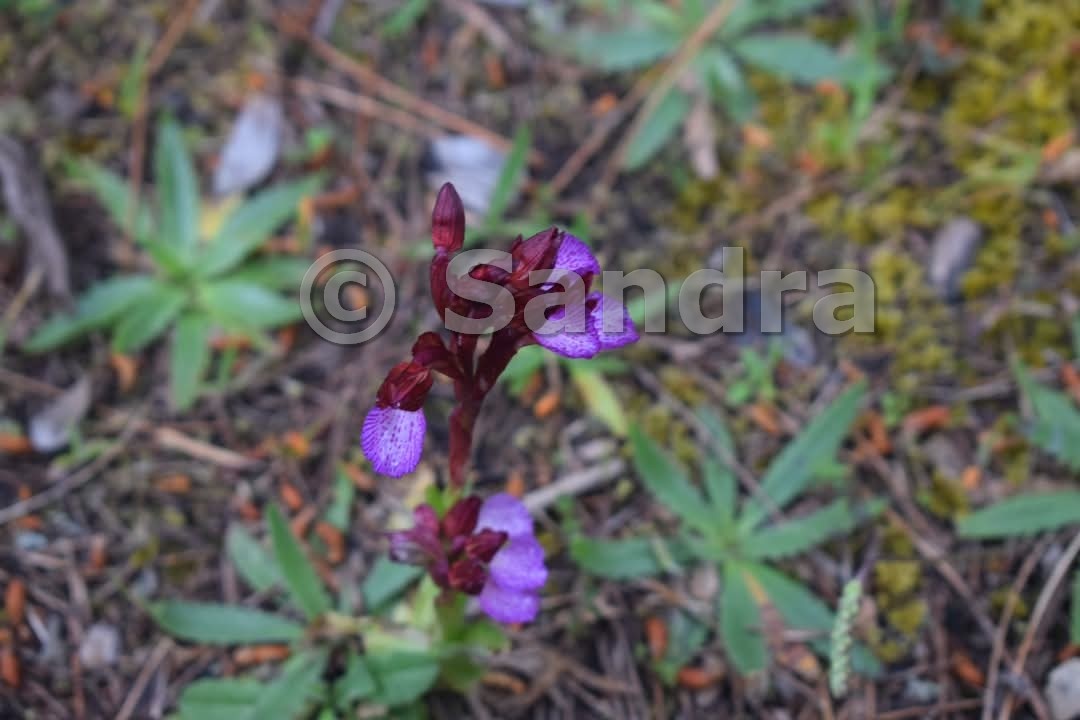
Butterfly orchid (Anacamptis papilionacea)
Description: A wild orchid with purple-violet flowers featuring a large labellum resembling butterfly wings. Very striking, often showing darker veins.
Period: April – June
Habitat: Dry meadows, forest edges, and olive groves on calcareous soils.
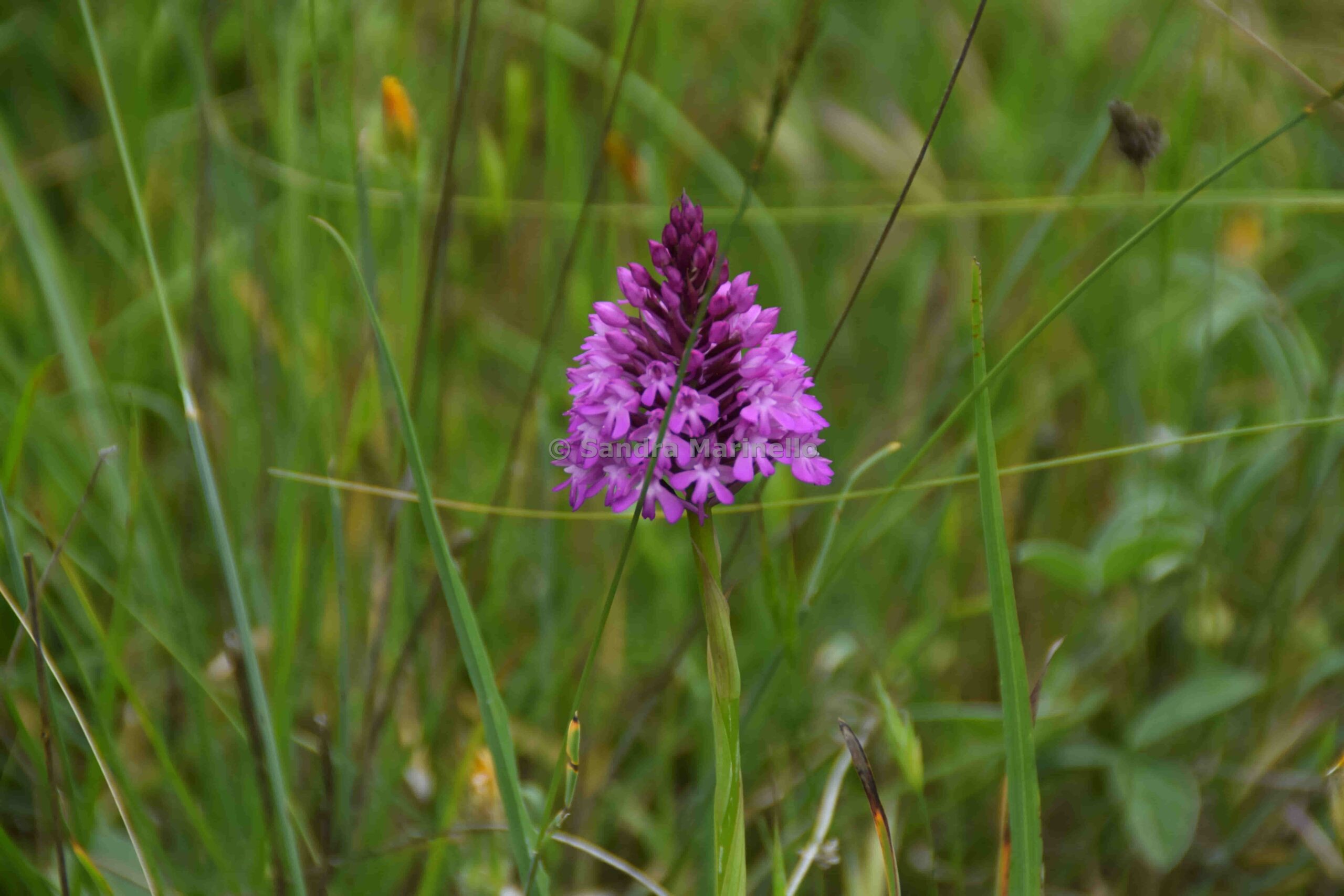
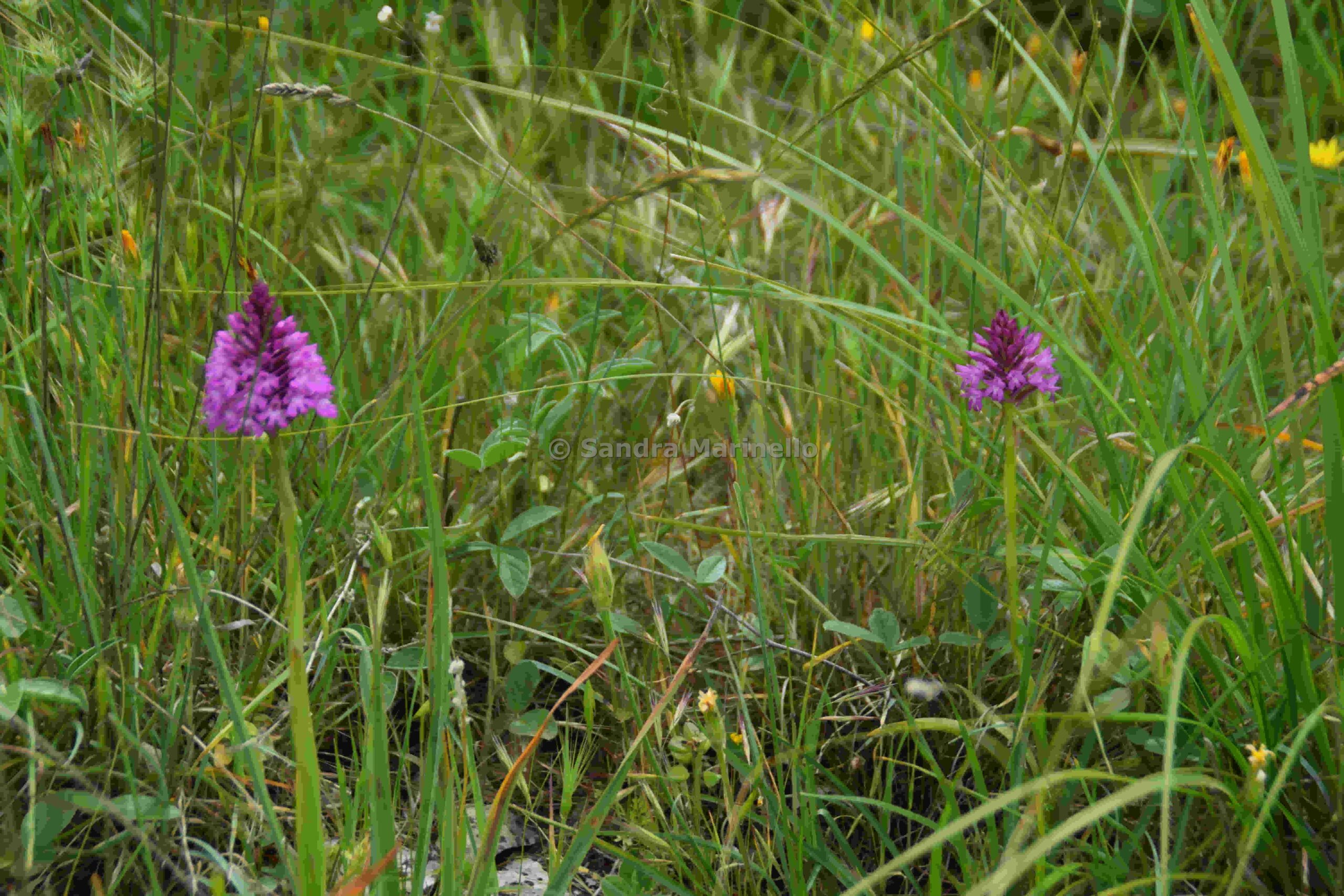
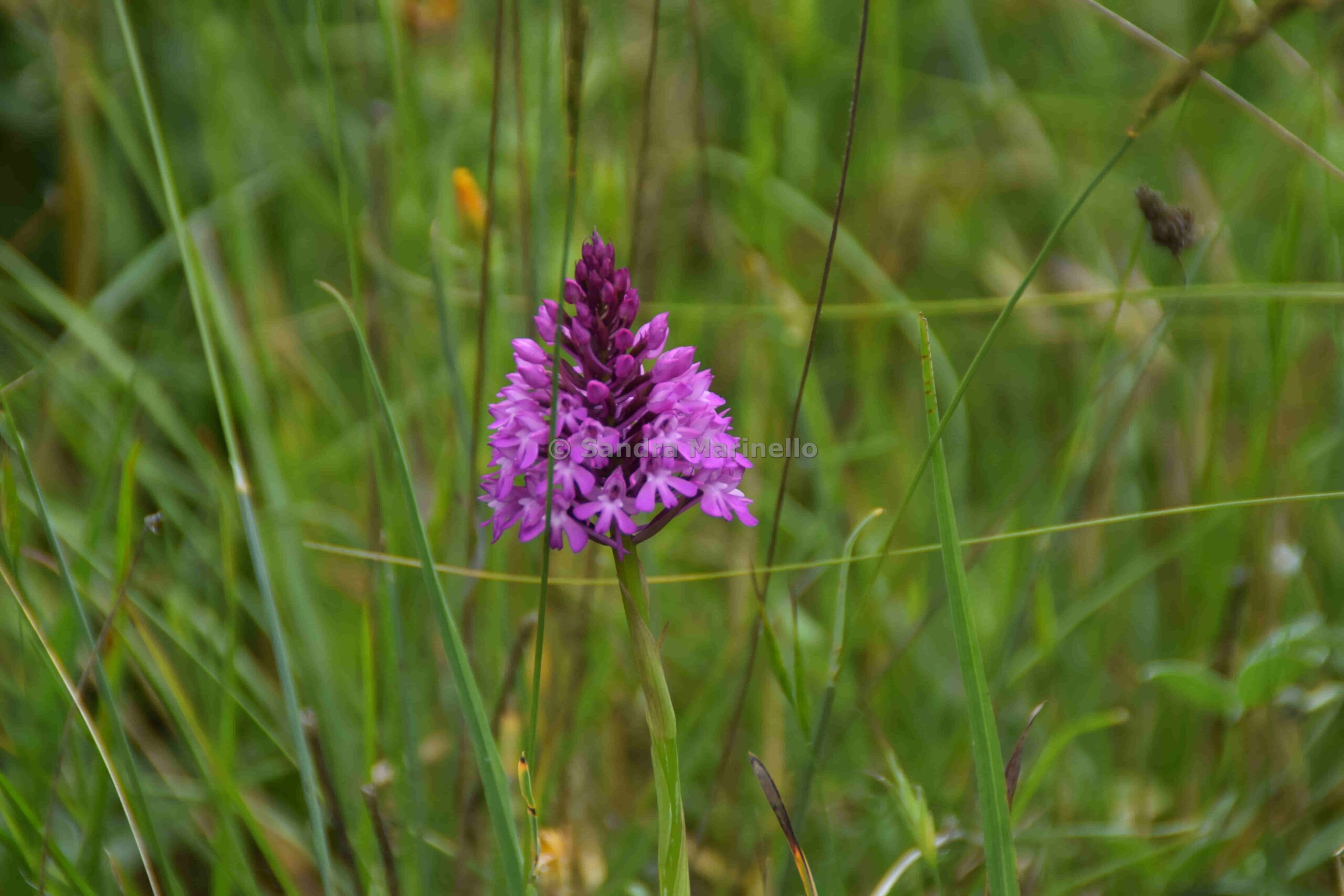
Pyramidal orchid (Anacamptis pyramidalis)
Description: A wild orchid easily recognized by its conical or pyramidal inflorescence, composed of numerous small pink or fuchsia flowers. The leaves are linear and basal.
Period: Flowering from April to June.
Habitat: Poor meadows, sunny pastures, forest edges, often on calcareous soils.
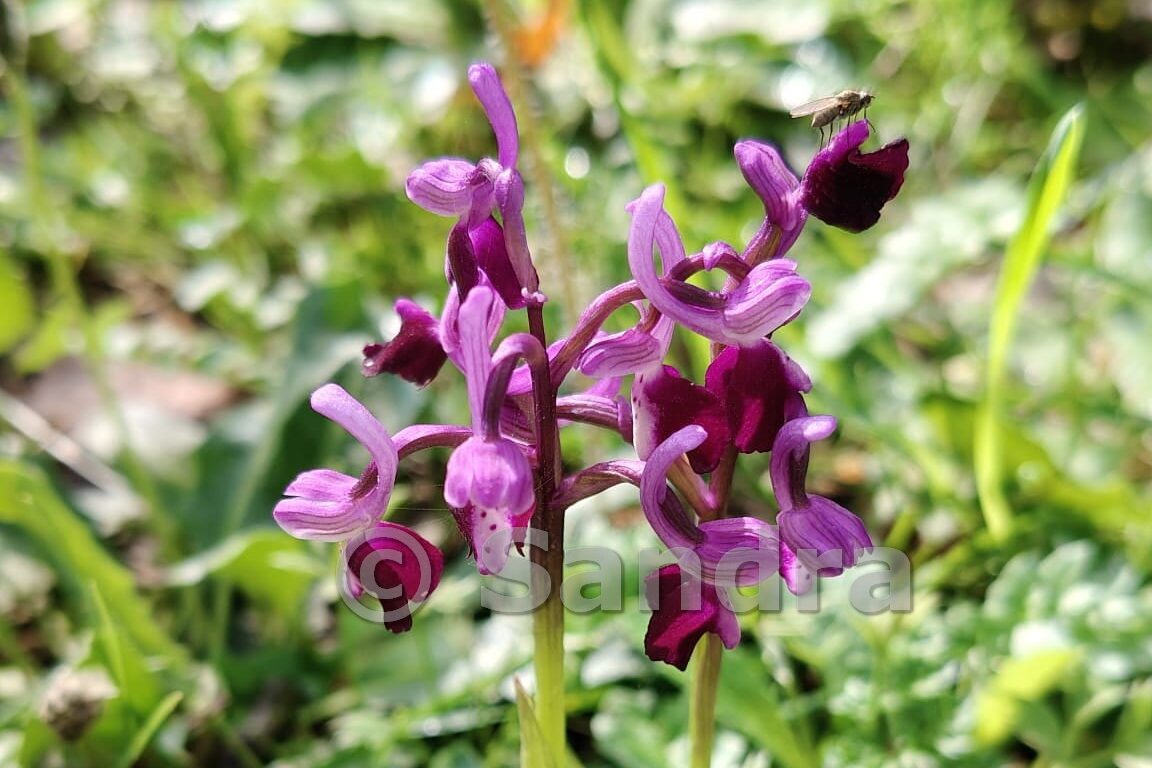
Green-winged orchid (Anacamptis morio)
Description: A wild orchid with pinkish-purple flowers marked by dark streaks, among the first to bloom in spring.
Period: Flowering from March to May.
Habitat: Meadows, sparse pastures, sunny clearings on calcareous soil.
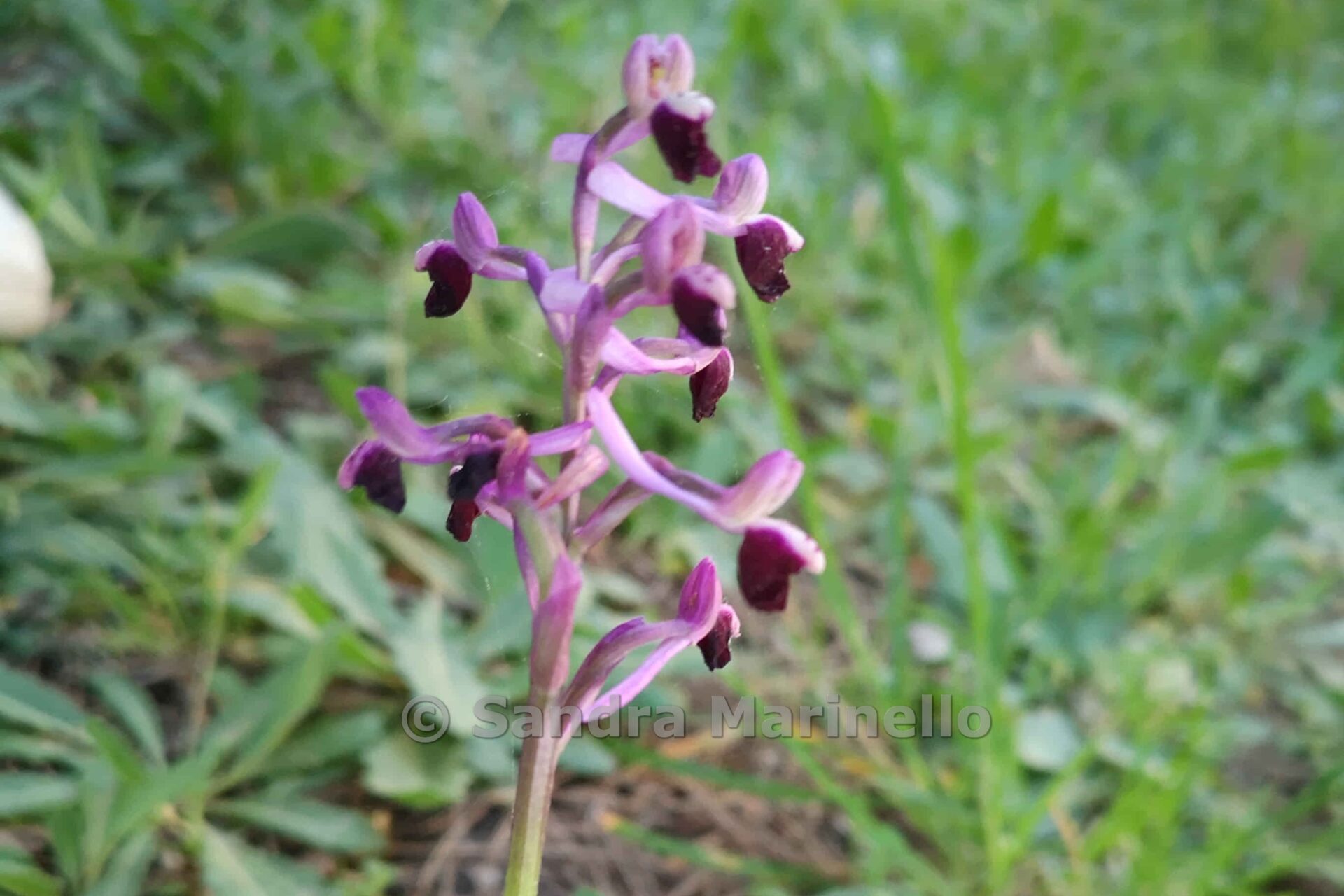
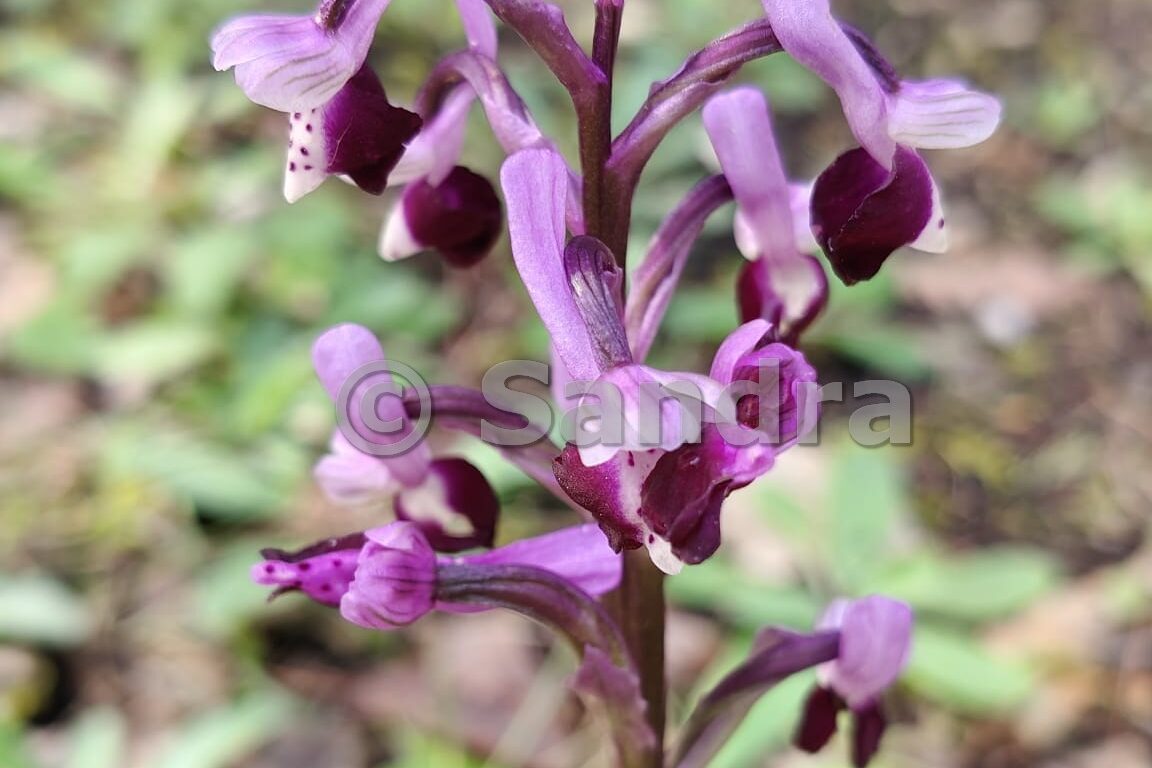
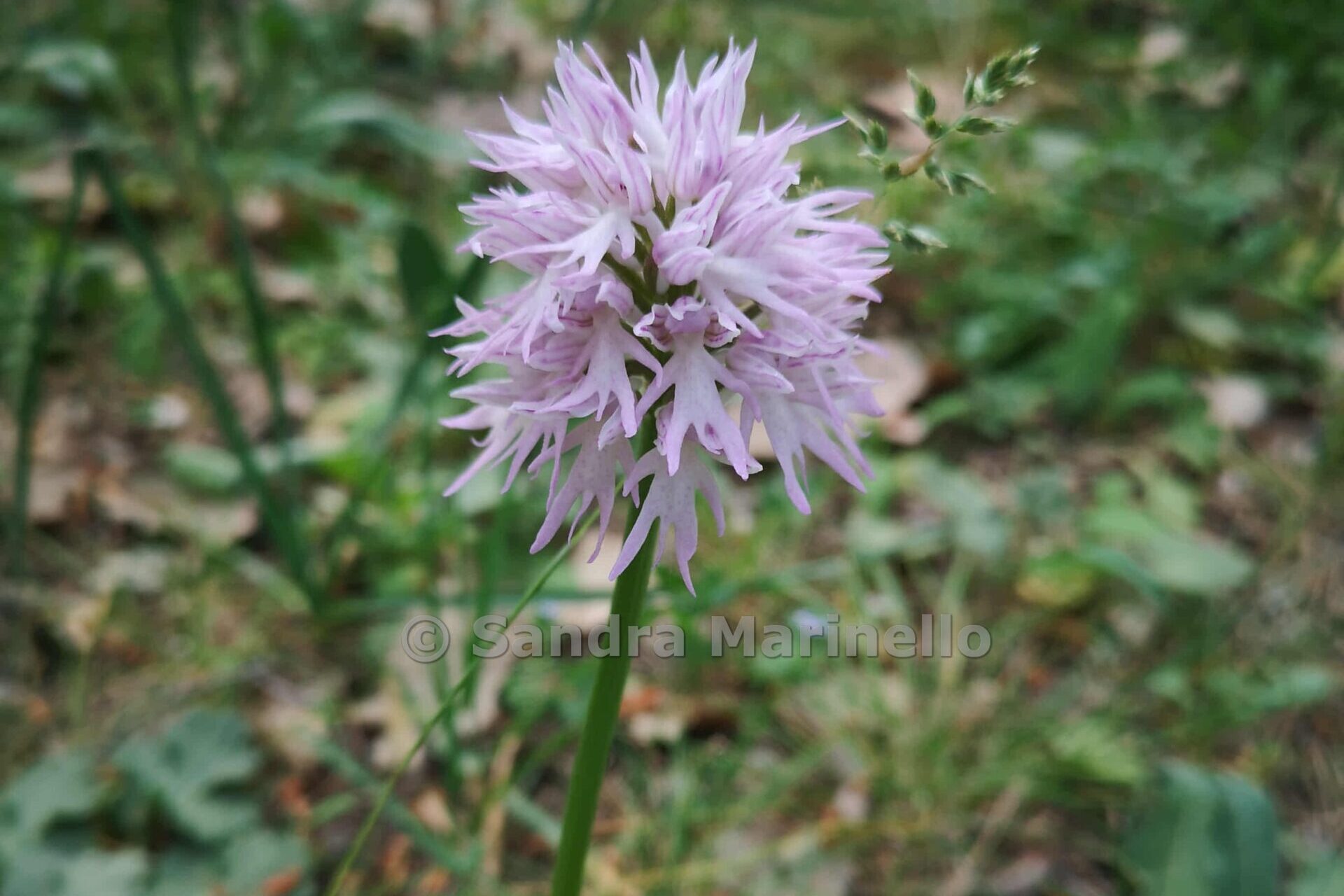
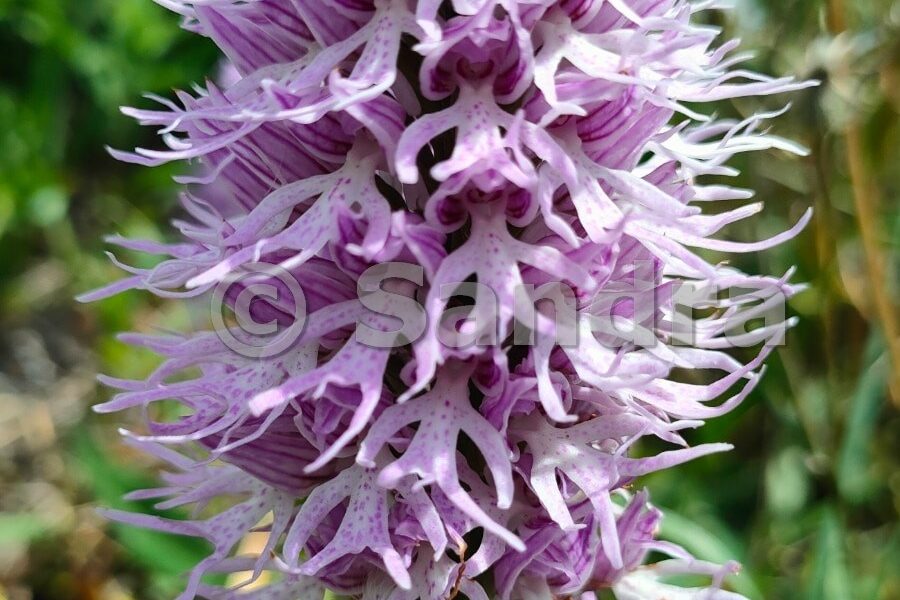
Naked man orchid (Orchis italica)
Description: Herbaceous orchid with pink or lilac flowers grouped in dense inflorescences shaped like a little “man,” hence the common name “Naked Man Orchid.”
Period: Flowering from April to June.
Habitat: Sunny meadows, olive groves, and forest clearings.
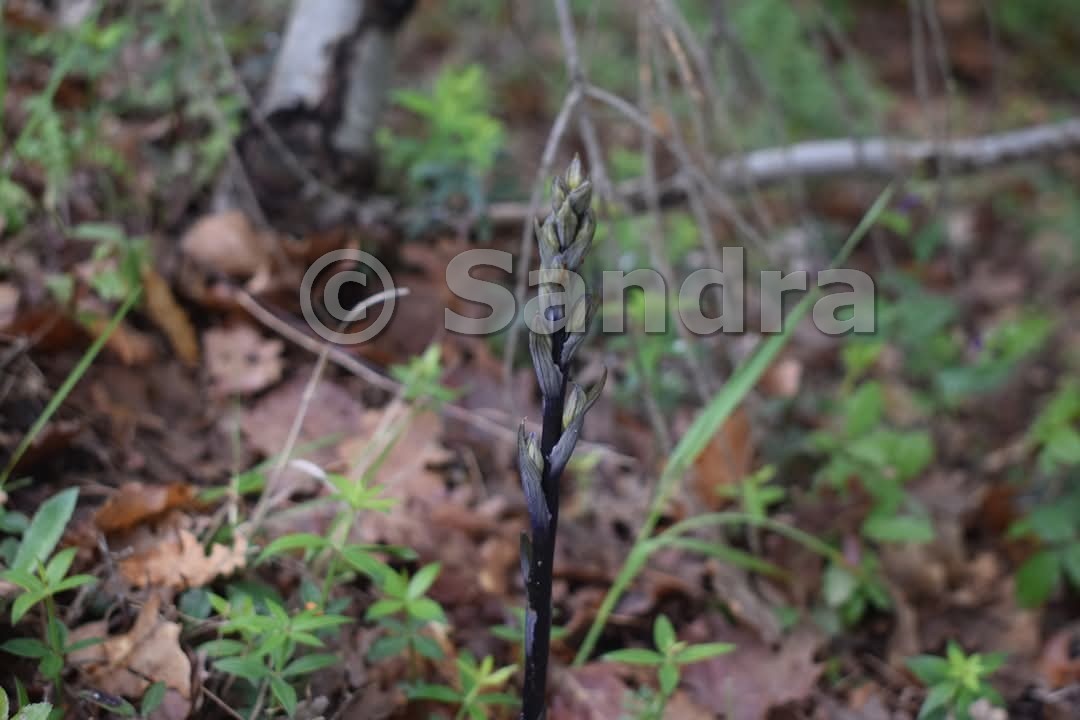
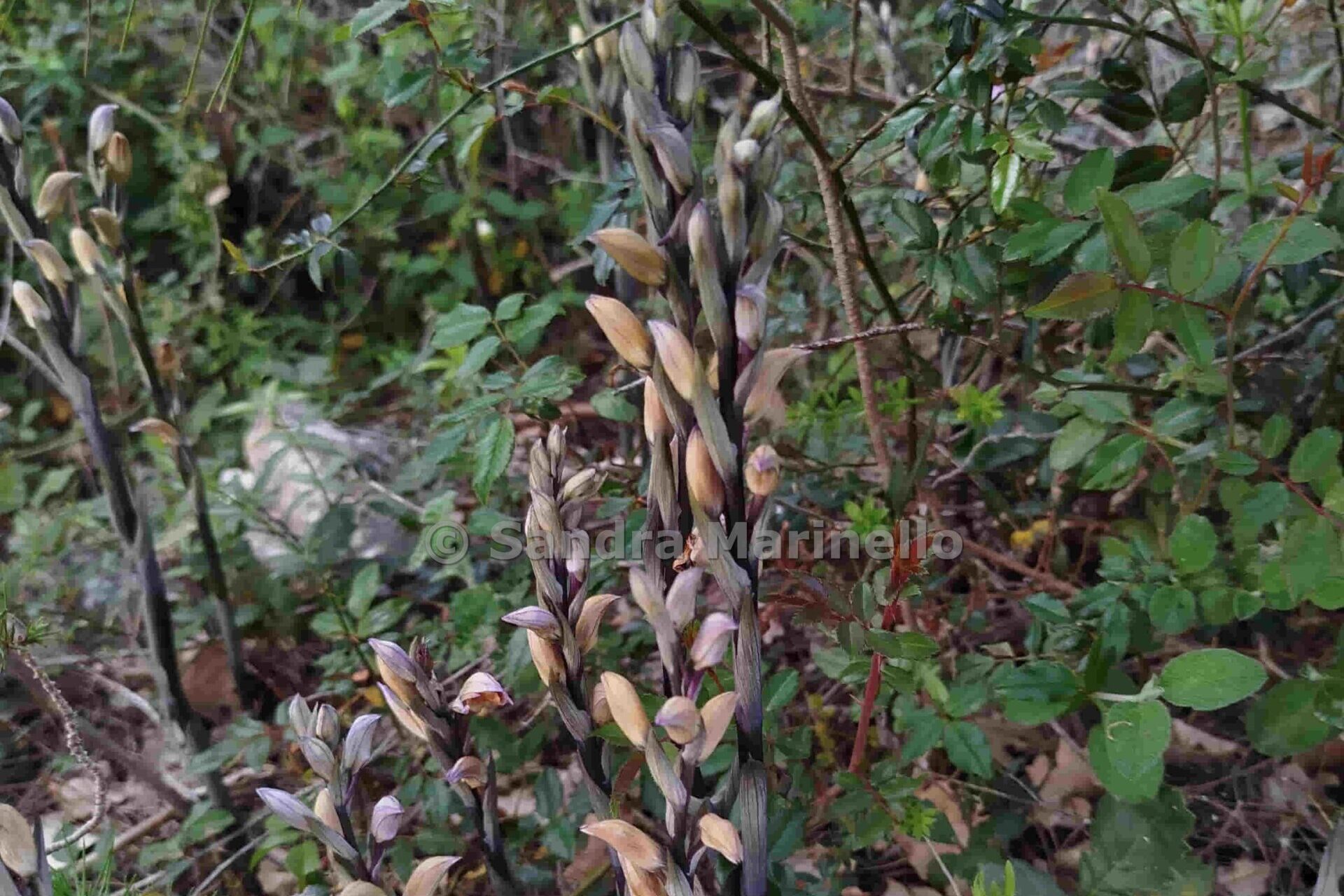
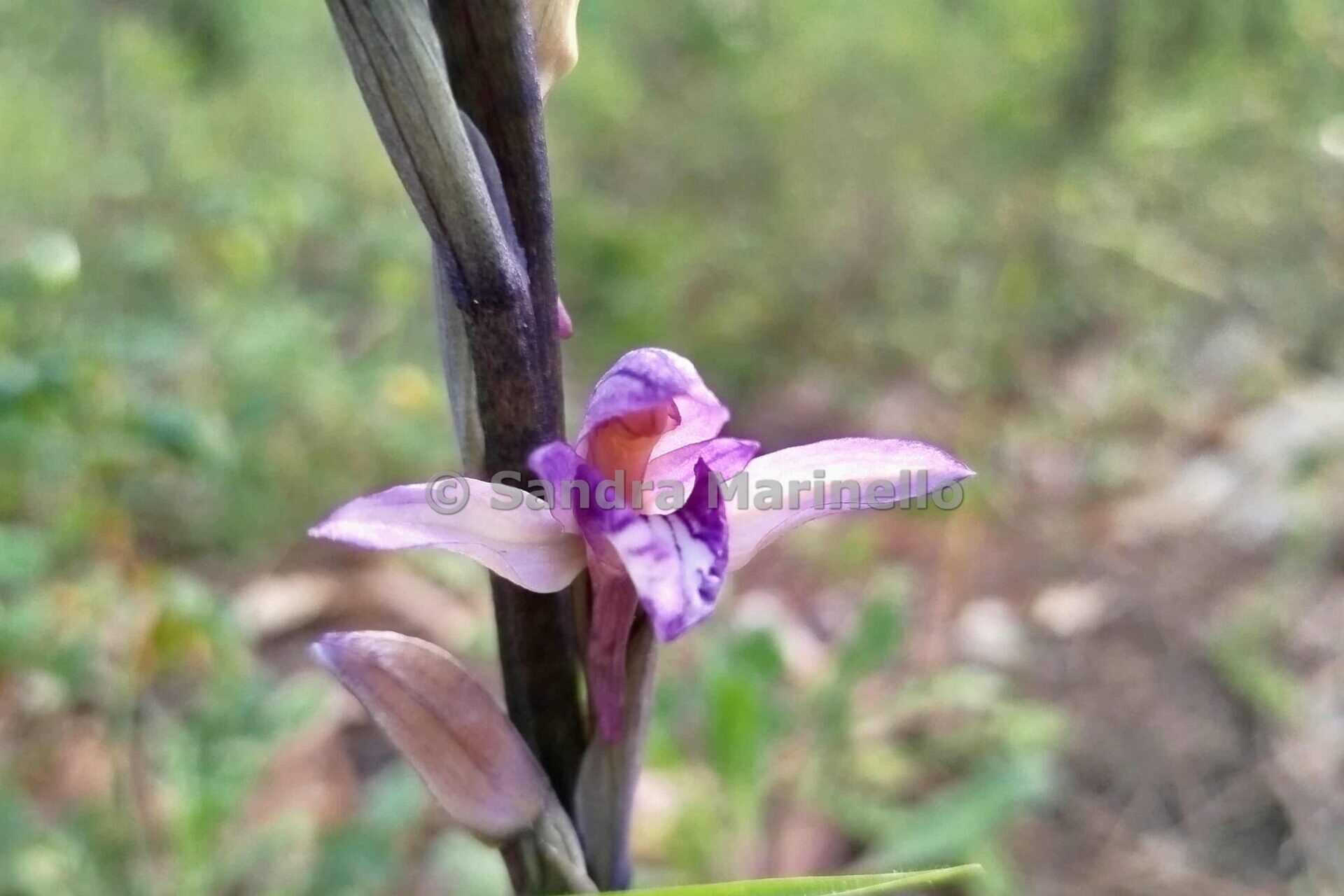
Violet limodore (Limodorum abortivum)
Description: Saprophytic orchid with violet-blue coloration, lacking green leaves. Lives in symbiosis with fungi. Rare and protected species.
Period: Flowering from April to June.
Habitat: Light forests, calcareous soils.
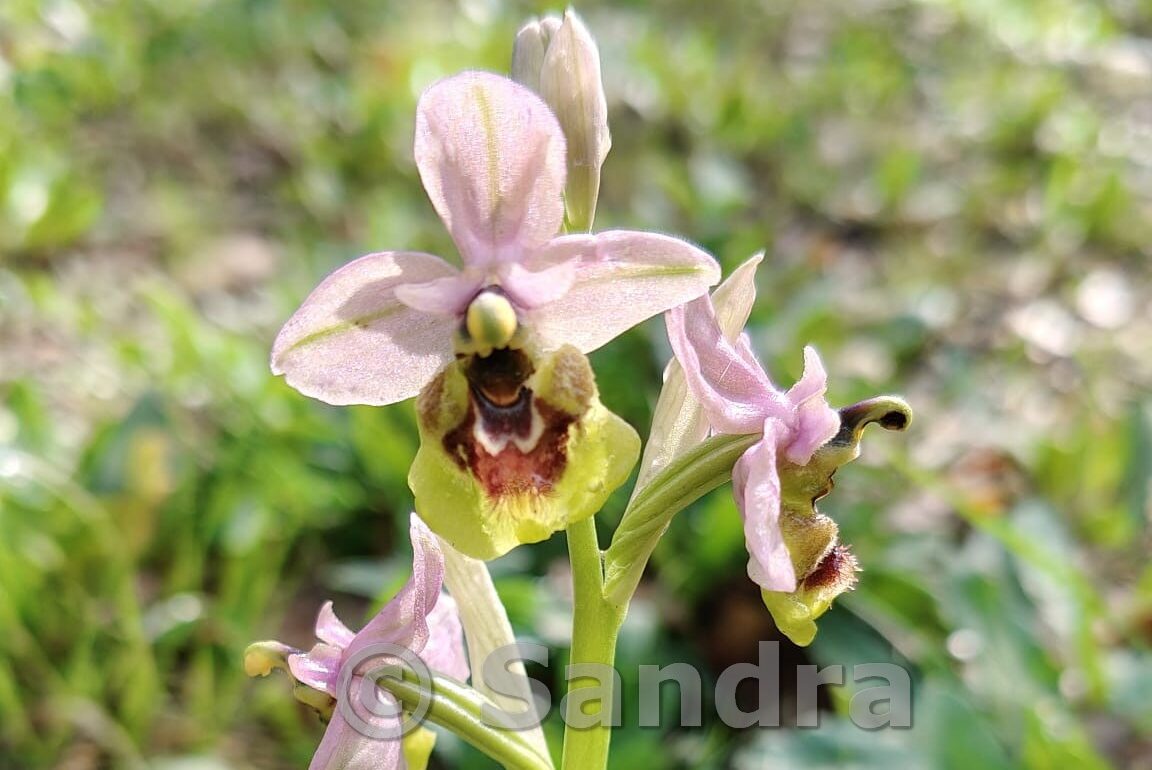
Sawfly orchid (Ophrys tenthredinifera)
Description: A wild orchid easily recognizable by its large, velvety labellum, colored brown-pink with patterns resembling the body of an insect (wasp), and by its pinkish-purple sepals. This mimicry helps attract specific pollinators (solitary wasps).
Period: Flowering from February to May.
Habitat: Dry meadows, pastures, woodland clearings, on well-drained calcareous soils. Prefers open and sunny environments.

Roses
Small balsam rose (Rosa micrantha)
Description: A wild rose with small pink flowers and velvety leaves. The fruits are small, red, and persistent. A rather rare species, found in dry and steep areas, often not easily visible.
Period: May – July
Habitat: Meadows, hedgerows, dry and rocky places.
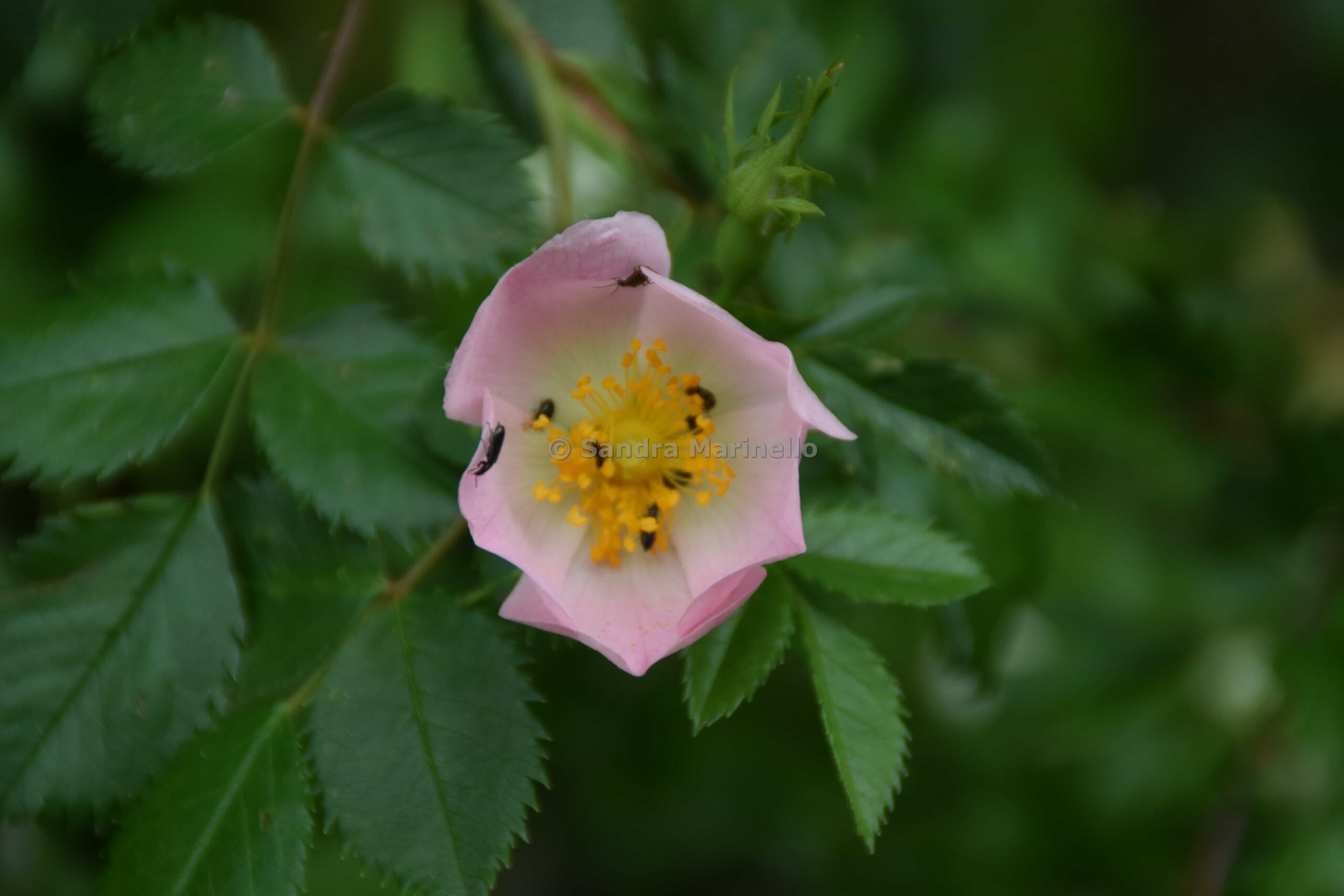
Fir rose (Rosa abietina)
Description: A wild rose typical of mountainous areas, with bright pink flowers and a bushy growth habit. Very rare in western Sicily, it can be found in shady and cooler environments, usually in higher or more humid zones.
Period: May – July
Habitat: Mountain forests, clearings, cool environments.